Royal Alcázar of Seville Entry Ticket
- Entry ticket
- Mobile voucher
- Valid same day
Real Alcázar — Skip-the-Line Reserved Entry & Guided Tours
Past the León Gate you step, where sultans and kings once walked.
Compare fares, pick the fit — all bookings are mobile-voucher and eligible for free cancellation where shown.
3 hr
3 hr 30 min
Choosing real alcazar skip the line access mostly comes down to one decision: General Admission alone, or General Admission plus the Cuarto Real Alto add-on. Both use timed entry, but only one includes a guided pass into the palace's upper floor.
| General Admission Ground floor & gardens |
Top pick General Admission + Cuarto Real Alto Ground floor, gardens & upper royal rooms |
|
|---|---|---|
| Areas included | Ground-floor palaces and gardens | Adds ~15-room upper floor (Cuarto Real Alto) |
| Booking flexibility | Any 30-minute slot, same-day options | Fixed guided-tour slot, book weeks ahead |
| Sell-out speed | 300+ tickets per slot | Only 20 tickets per tour slot |
| Guided vs self-guided | Self-guided, audio guide optional | Compulsory short guided tour upstairs |
| Best for | Budget visitors, flexible schedules | First-timers wanting the full royal apartments |
| See tickets & prices |
Verdict: Add the Cuarto Real Alto only if you book it the moment your real alcazar skip the line tickets go on sale, since the upper rooms sell out far faster than General Admission alone.
Worth it for most first-time visitors
A real alcazar skip the line ticket builds on the 15.5 EUR general admission, and the base value is already strong. That fee opens the whole complex: the Mudéjar palace of Pedro I, the Gothic halls, the vast Islamic-influenced gardens, and the tilework of the Patio de las Doncellas. For a working royal residence and UNESCO World Heritage site, few European landmarks give you that spread of Moorish and Christian architecture for the price. Book a Seville Alcazar tour or an entry pass and you mainly buy back time otherwise lost in a slow queue outside. Real alcazar skip the line tours pay off for summer travelers, families with limited patience, and anyone on a tight day. Some visitors expect furnished rooms and find the interiors sparse; you are paying for the space and craftsmanship, not the furniture.
Bottom line: For summer and peak-season visits, a real alcazar skip the line ticket is worth the modest premium, though budget travelers arriving at the 09:30 opening can skip it.
If only one fits the itinerary, most travelers splitting days between Seville and Granada should prioritize real alcazar skip the line tickets first — the Alhambra needs more lead time and a full extra day. Both belong on a broader Andalusia landmarks route, but the Alcázar's Mudéjar palaces are easier to slot into a shorter Seville stay than the Alhambra's sprawling Nasrid complex.
|
Top pick Real Alcázar |
Alhambra, Granada | |
|---|---|---|
| Architectural style | Mudéjar palaces, Christian-Islamic fusion | Nasrid Moorish palaces, military fortress |
| Booking difficulty | Moderate — book days ahead | High — sells out months ahead |
| City setting | Central Seville, Patio de Banderas | Hilltop above Granada, separate complex |
| Price | 15.5 EUR general admission | 21 EUR general admission |
| Typical visit duration | 1.5–2.5 hours | 3–5 hours |
| Best for | Palace interiors, gardens, shorter visits | Full-day Moorish history immersion |
| See tickets & prices |
Verdict: The Alcázar rewards a relaxed half-day in central Seville, while the Alhambra demands advance planning and most of a day in Granada, so pick the Alcázar if time is tight and the Alhambra if a full Granada day is already on the itinerary.
Hand-picked experiences loved by thousands of travelers
1.5 hours
Explore Europe's oldest active royal palace with an expert guide through stunning architectural treasures
3 hours
Free Cancellation
Fast-track entry to Seville's legendary monuments with an intimate small-group experience
10-11 hours
Discover Andalusia's captivating capital on a guided day excursion featuring UNESCO palace access
1 to 2 hours
Free Cancellation
Explore two UNESCO treasures with an expert guide: Europe's oldest working royal palace and a Gothic masterpiece
Enter through the Lion's Gate and clear the security checkpoint before reaching the Patio de la Montería.
Explore the Patio de las Doncellas, the Salón de Embajadores, and the Patio de las Muñecas, the ornamental heart of the complex.
Walk through the Salones de Carlos V and the Tapestry Room, then find the Virgin of the Navigators painting.
Descend to the cool underground cisterns beneath the Patio del Crucero for a break from the heat.
Wander the formal gardens, the Estanque de Mercurio, and the Galería del Grutesco before exiting near the Patio de Banderas.
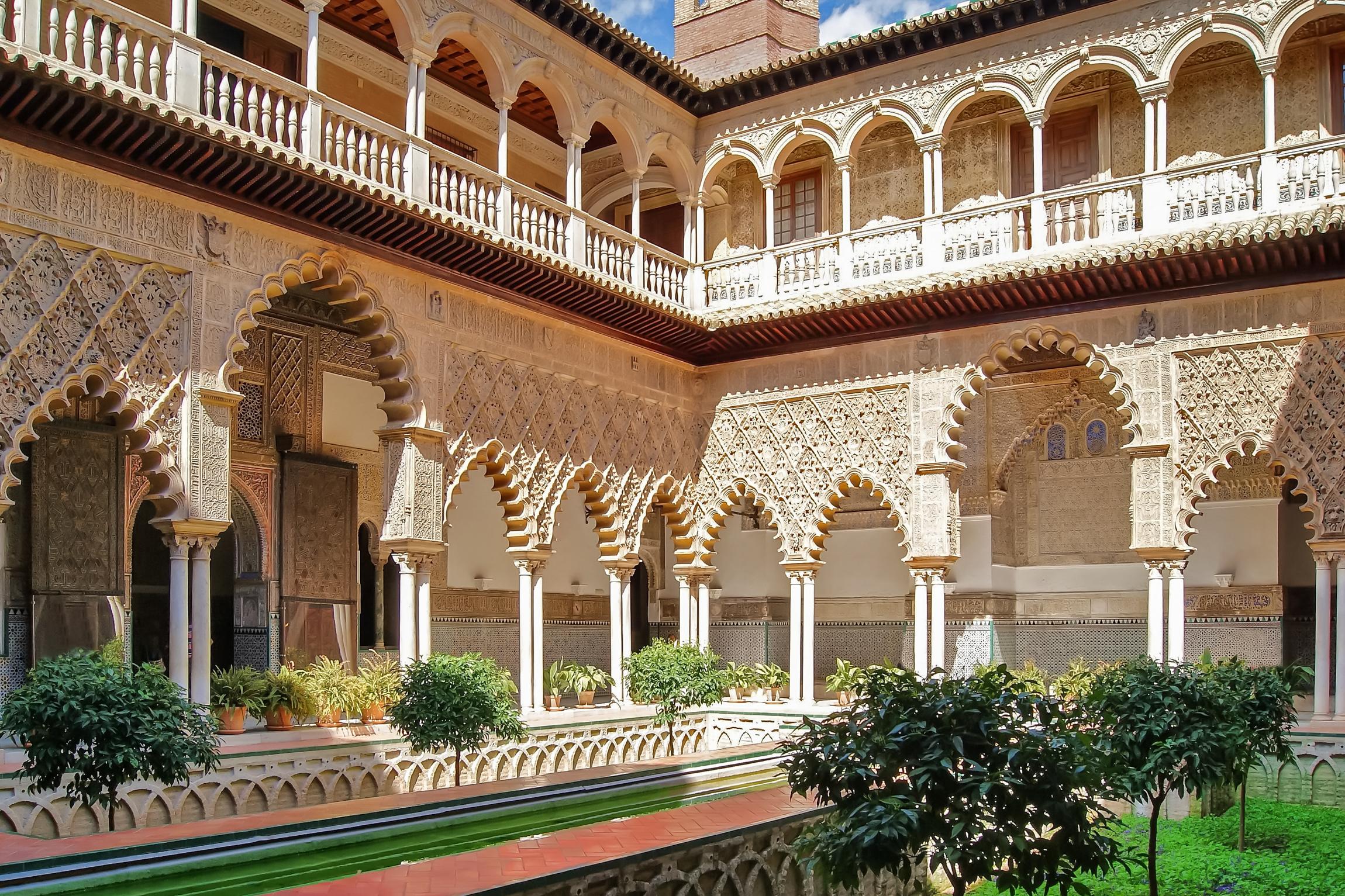
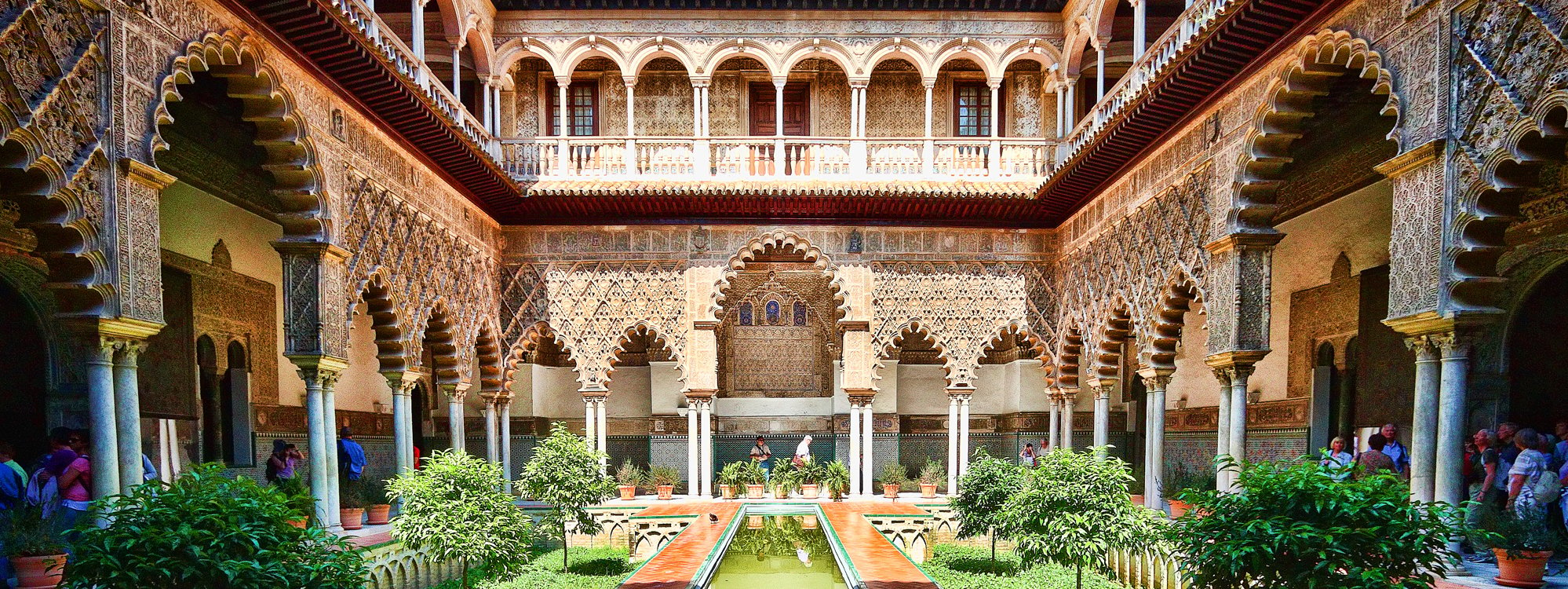
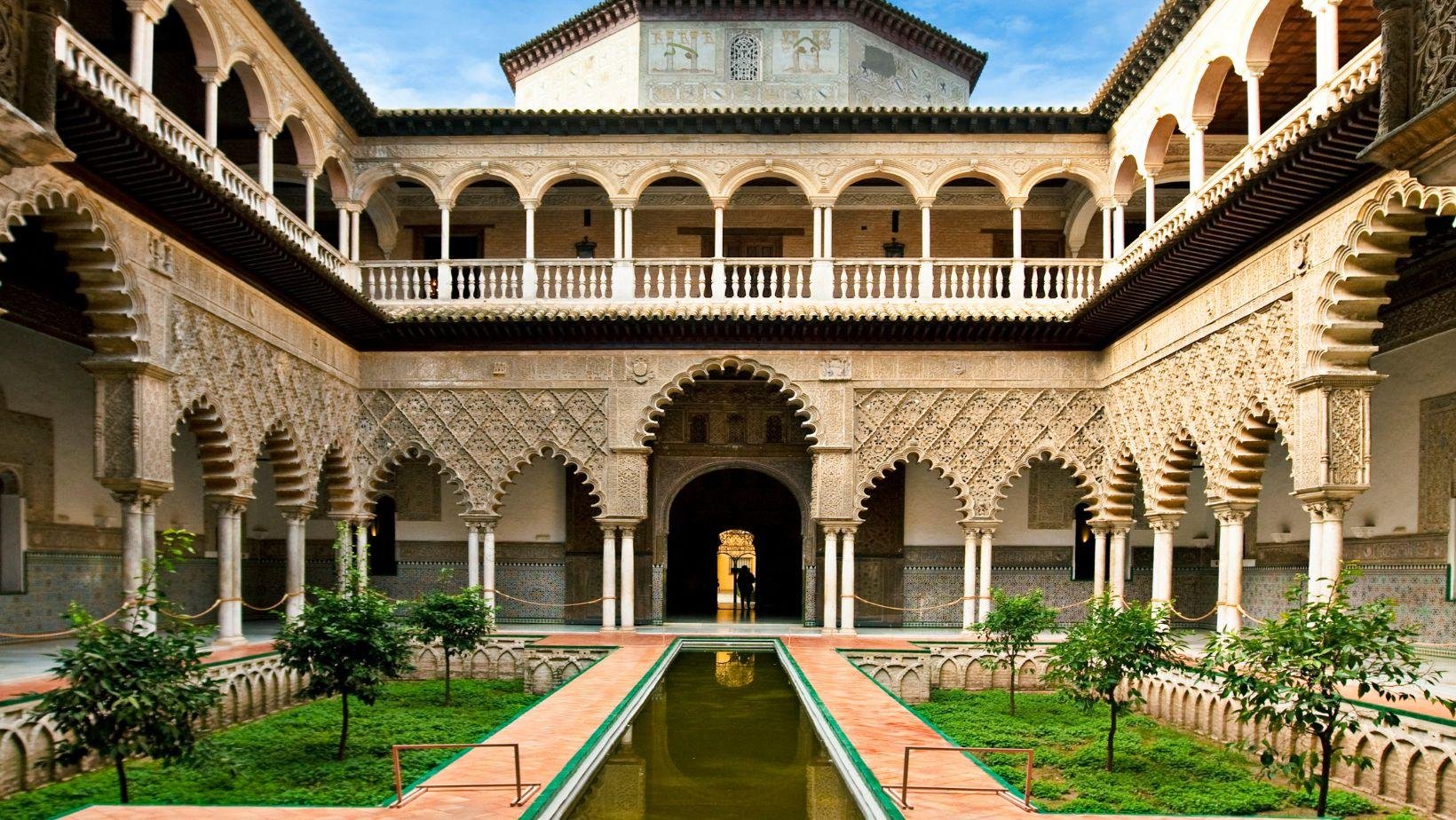
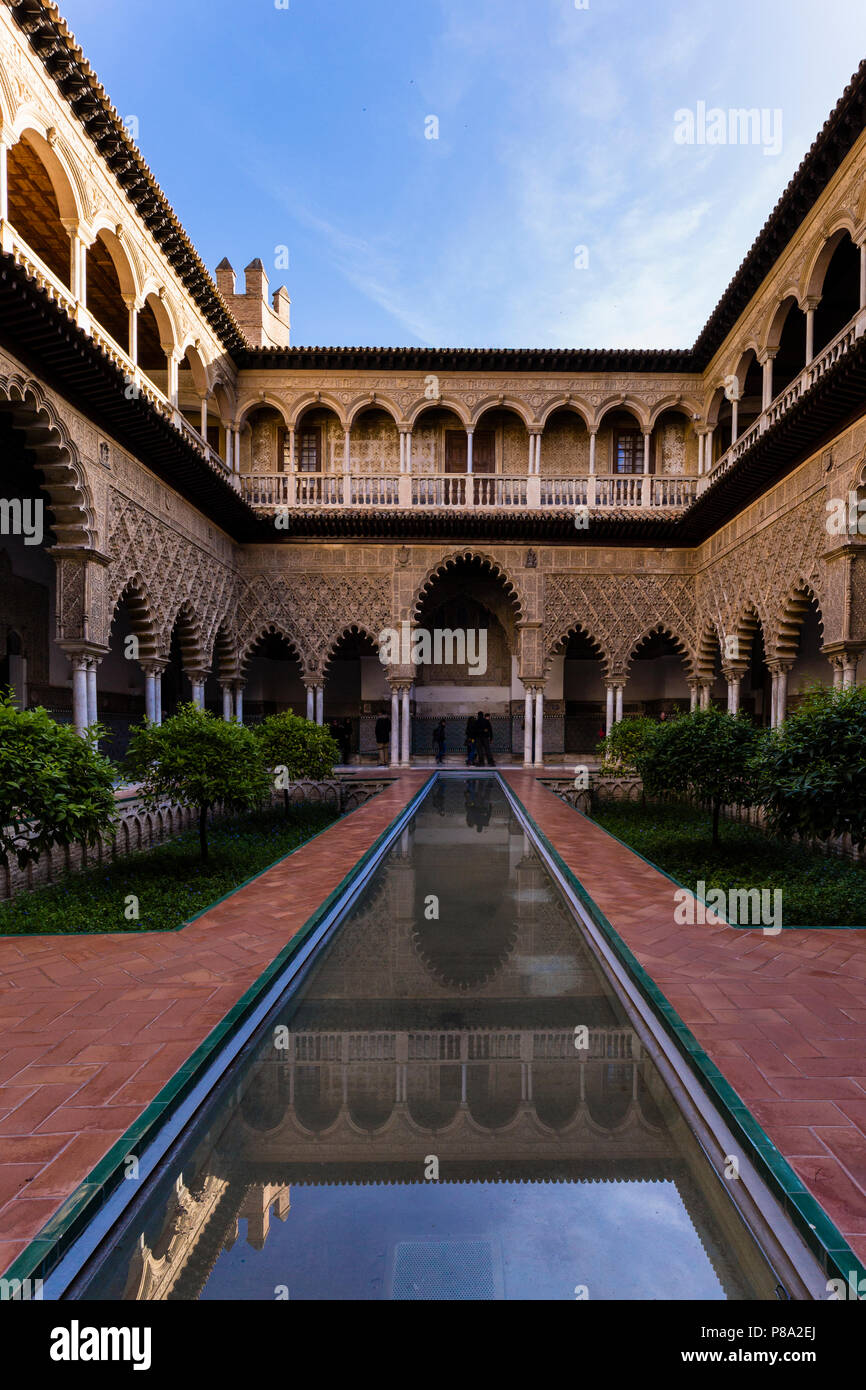
This sunken-pool courtyard at the heart of the Mudéjar Palace of Don Pedro carries inscriptions on its lower story referring to Pedro I as a sultan, a nod to the deliberate Islamic-style propaganda of his Christian reign. It has appeared on screen in Kingdom of Heaven and Game of Thrones.
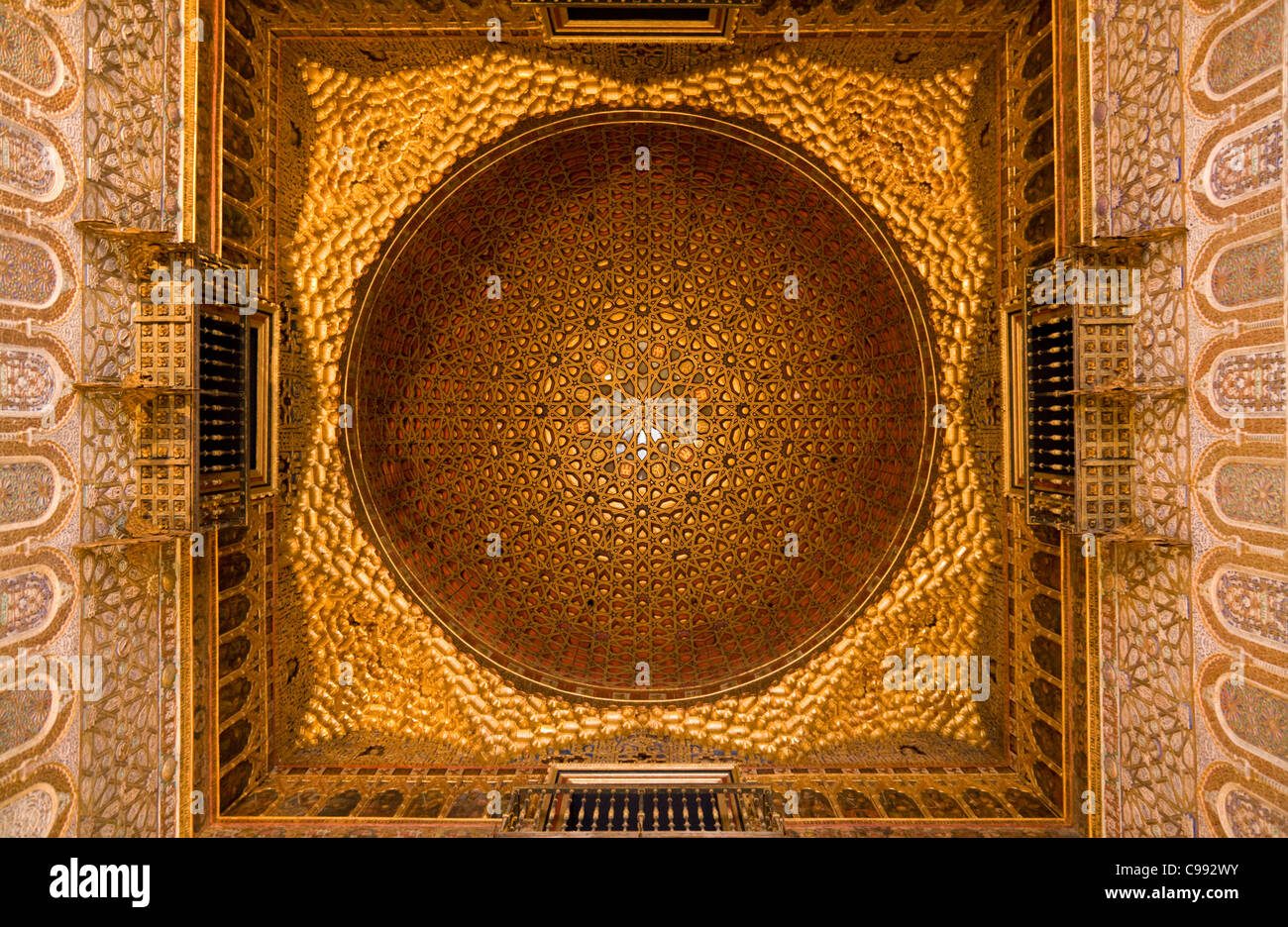
Believed to be the throne room of Pedro I, this domed hall features a gilded wooden ceiling added in 1427 with star patterns symbolizing the universe. It is widely considered the single most elaborate room in the entire palace complex.
These underground vaulted cisterns beneath the Patio del Crucero sit several degrees cooler than the courtyards above and take their name from Pedro I's mistress, María de Padilla. Legend holds she bathed here, and admirers reportedly drank the bathwater out of devotion.
Named the Courtyard of the Dolls for tiny carved faces hidden in its arch decoration, this small columned patio marks the private, residential end of the Mudéjar Palace. Locating all the faces has become a minor tradition among repeat visitors.
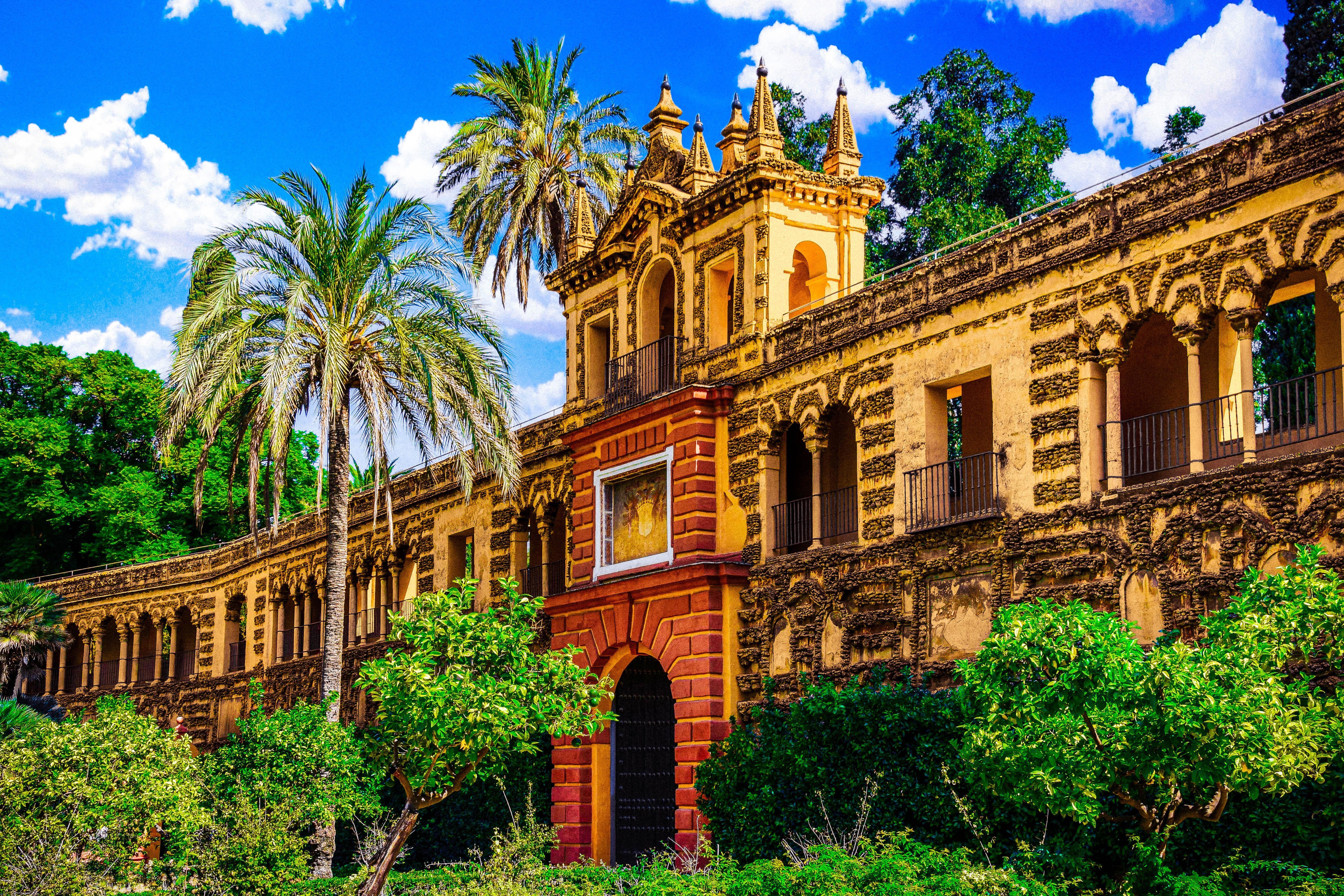
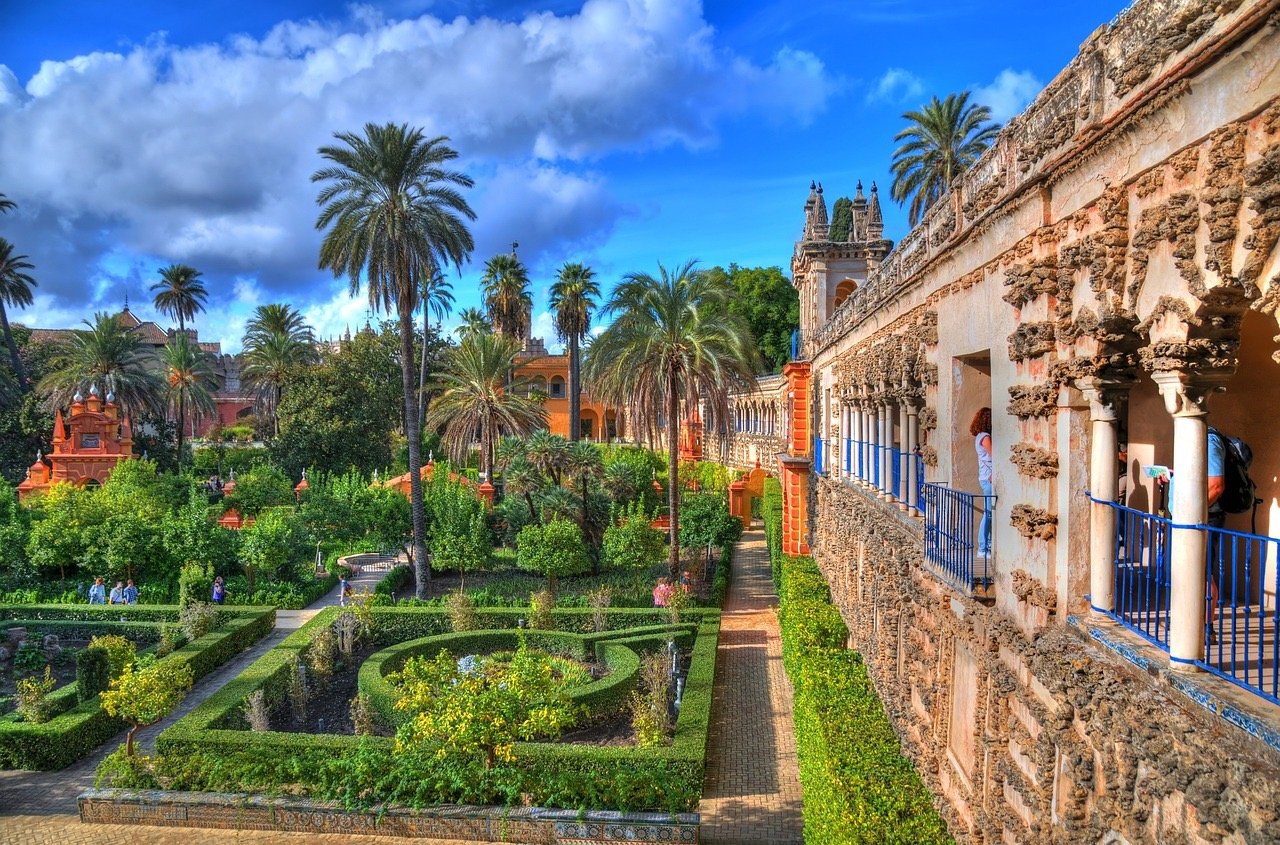
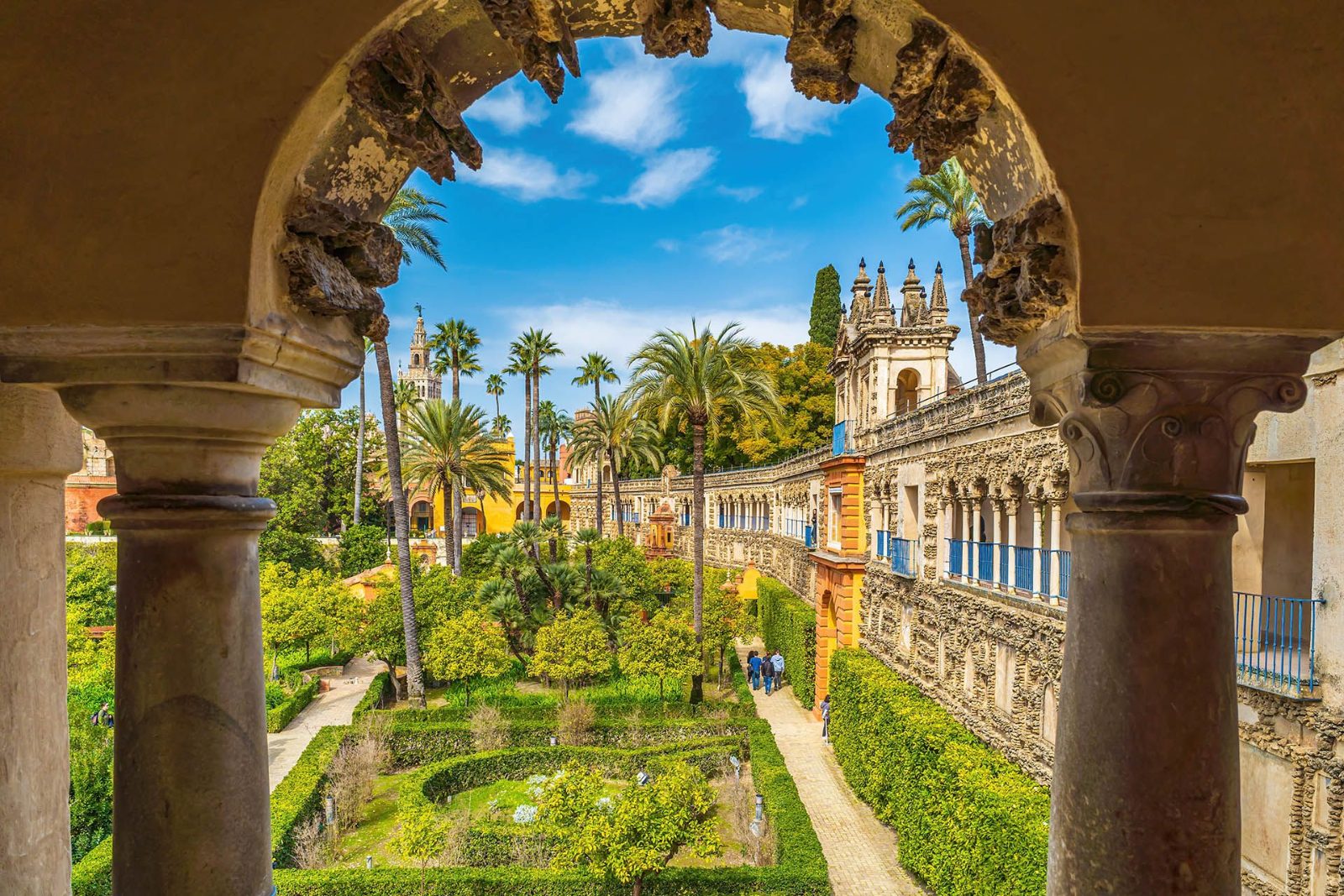
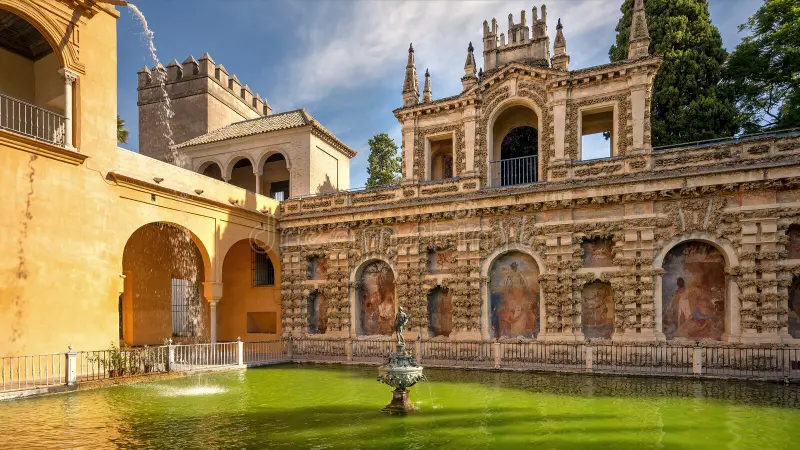
Spanning roughly thirteen distinct garden sections, the grounds include the Estanque de Mercurio pond, a hedge maze, and the Galería del Grutesco, a raised 16th-century gallery built atop an old Islamic-era city wall. A sour orange tree here is reputed to have been planted by Pedro I over six centuries ago.
This chamber holds the Virgin of the Navigators, painted around 1531 and considered one of the earliest known artworks to depict Christopher Columbus. Most visitors move through quickly, unaware it commemorates the founding of Spain's House of Trade.
You approach across the Patio de Banderas and join the reserved-entry lane at the Puerta del León, the lion above the gate marking your way in. With a real alcazar skip the line tour, you scan your voucher and pass the general queue in minutes rather than the hour it can swell to by midday. You cross the Patio de la Montería and pause where the crenellated façade of Pedro's palace rises in brick and carved stone. Inside, you slow down. You stand at the edge of the Patio de las Doncellas and watch the arcade double itself in the still water. You tilt your head back in the Salón de Embajadores until the cedar dome resolves into stars. You trace the cool tiled dados with a fingertip where the crowds thin. Then you walk out into the gardens. You follow the raised walkway of the Galería del Grutesco, look down over clipped myrtle and orange trees, and find a bench near the Mercury pool. You listen for the parakeets that nest in the palms. By the time you leave through the Apeadero, you have covered a millennium on foot and barely noticed the ground shift beneath you.
All the details about your upcoming adventure in one place
A real alcazar skip the line pass moves you past the queue at Seville's royal palace and into the Mudéjar courtyards, Patio de las Doncellas, and the tiled Salón de Embajadores. These real alcazar skip the line tickets bundle timed entry with a guide who unpacks the Almohad walls, the Gothic vaults, and the layered Islamic and Christian craftsmanship behind this UNESCO landmark. Alcázar de Sevilla guided tours keep the pace easy while covering the Ambassadors' Hall azulejos, the Casa de Contratación, and the palace's role among Seville landmarks.
The Real Alcázar is the oldest royal palace still in use in Europe, and Spain's monarchs keep private apartments on its upper floor to this day. That single fact frames everything below it: a working residence layered over eleven centuries of construction, where Almohad foundations, Christian remodelling, and Renaissance additions occupy the same walls without ever resolving into one style. Why the palace matters now is partly a story of survival. When Ferdinand III took Seville in 1248, he inherited a Moorish citadel rather than razing it, and his successors chose to build within the Islamic grammar rather than against it. Pedro I of Castile commissioned the Palacio del Rey Don Pedro in 1364 using craftsmen from Granada and Toledo, producing a Mudéjar masterpiece — Christian patronage, Islamic hands, Arabic inscriptions praising a Catholic king. Real alcazar skip the line visitors move through that contradiction room by room, and the tension is the point. UNESCO inscribed the complex, together with the Cathedral and the Archivo de Indias, on its World Heritage list in 1987. Architecturally, the site rewards slow looking. The Patio de las Doncellas, the ceremonial heart of Pedro's palace, centres on a long reflecting pool flanked by sunken gardens, its arcades carved in plasterwork so fine it reads as lace. The Salón de Embajadores rises to a gilded half-orange dome of interlaced cedar, a representation of the cosmos assembled in 1427. Beyond the built rooms, the gardens stretch across terraces planted with orange, myrtle, and palm, threaded by the Galería del Grutesco and fed by pools that once cooled the summer air by evaporation alone. The tilework alone spans centuries of azulejo technique, from cuerda seca to later Triana glazes. Modern audiences know these courtyards from screens as much as guidebooks: the palace stood in for the Water Gardens of Dorne, and skip-the-line real alcázar traffic climbed sharply once those scenes aired. Yet the crowds that a real alcazar skip the line arrangement is designed to bypass are drawn by something older than television — a continuity of use that most European monuments lost centuries ago. Guests booking alcázar de sevilla entradas today enter a monument that has never stopped being lived in, its Gothic vaults, Mudéjar arches, and baroque staircases still absorbing footsteps. Among Seville landmarks it stands almost alone in that respect, a building that reads less as a preserved ruin than as an argument, still ongoing, about who a place belongs to and which of its many pasts should speak loudest.

A working residence where Arabic inscriptions praise a Catholic king — the contradiction is the point.
There is no formal dress code for the Real Alcázar, but shoulders and knees are appreciated as a courtesy in the older religious spaces such as the Chapel of the Gothic Palace. Comfortable, flat shoes are strongly recommended given the uneven stone and tiled floors across the Patio de las Doncellas and the gardens.
All visitors pass through a security checkpoint at the Puerta del León entrance, and a physical ID (passport, DNI, or NIE) may be requested. Small day bags and handbags are permitted after screening, but large backpacks and suitcases must be left at the cloakroom near the entrance since storage space is limited during summer.
Personal, non-flash photography is allowed throughout most of the complex, including the Patio de las Doncellas and the Salón de Embajadores. Tripods, selfie sticks, and drones are not permitted, and flash is restricted in rooms with sensitive plasterwork or painted ceilings.
Children generally enter free or at a reduced rate, and the hedge maze in the gardens is a popular spot for kids to explore after the palace rooms. Strollers are permitted but can be cumbersome on the cobbled patios and narrow doorways of the Mudéjar Palace, so a baby carrier is often more practical.
Ground-floor palace rooms, the Patio de las Doncellas, and most garden pathways are wheelchair accessible via ramps, but some upper galleries and the underground Baños de Doña María de Padilla involve steps that limit full access. Accessible restrooms are available near the main entrance, and staff at Puerta del León can advise on the best route for visitors with mobility needs.
Outside food and drink beyond water and light snacks is generally discouraged inside the monument, though there is a small café in the gardens serving coffee, drinks, and ice cream with limited shaded seating. For full meals, cafés and restaurants cluster just outside the walls around Plaza del Triunfo and Barrio Santa Cruz.
Book early for real alcazar skip the line entry
Mid-week, generally calmer
Busier with weekend arrivals
Peak day, largest tour groups
Popular with day-trippers from Cádiz
Hours
Open daily 09:30–19:00
Walk · 10-20 min from city centre · Free
The Alcázar sits in Seville's historic centre directly beside the Cathedral and La Giralda, reachable on foot from most Barrio Santa Cruz and city-centre hotels. Follow signs toward Patio de Banderas once near the Cathedral.
Public transport · 15-25 min · 1.5-2 EUR per ride
Bus lines C3, C4, and 3 stop within a few minutes' walk of Puerta de Jerez, close to the Patio de Banderas entrance. Metro line 1 (Puerta de Jerez station) is another short walk away.
Taxi · 10-15 min from most hotels · 8-12 EUR
Taxis and rideshare drop-offs are easiest at Puerta de Jerez or Avenida de la Constitución, a short walk from the entrance since the immediate approach is pedestrianized.
Bike · 10-15 min · 1 EUR per ride, subscription needed
Seville's SEVICI bike-share system has docking stations near Puerta de Jerez and along Avenida de la Constitución, both a few minutes from the entrance.
Tickets for the Real Alcázar are non-refundable and cannot be exchanged or rescheduled once purchased, including entry booked at the 15.5 EUR general admission rate. Time slots are fixed, so plan your arrival window before completing checkout.
Recommended time
2-3 hours
Two to three hours covers the palace rooms, the courtyards, and a proper wander through the gardens without feeling rushed. Arriving with real alcazar skip the line tickets between 09:30 and 10:30 lets you clear the entrance fast and get through the palace interiors before tour groups fill the halls, so subtract time from the queue side of your visit rather than the palace itself. Add an extra 45–60 minutes if the gardens are a priority, since they're where crowds thin out and lingering feels worthwhile. Arriving mid-morning or midday almost always means a longer wait than an early skip-the-line entry.
Crowd levels through the day
Weather · crowds · average price — dots go green to amber to red as each metric rises.
March and April bring mild temperatures around 18-24°C alongside Semana Santa and Feria de Abril crowds, so early booking matters. Gardens are in full bloom, making this a popular but rewarding season.
June through August sees temperatures regularly above 35°C at midday, so the extended 09:30–19:00 hours help visitors spread out across cooler morning and evening slots. This is peak tourist season with the heaviest daily visitor numbers.
September and October offer cooler weather in the low-to-mid 20s°C with noticeably thinner crowds than spring or summer. This shoulder season is often considered the most comfortable time to explore the gardens at length.
November through February has cooler days averaging 12-17°C and the lightest crowds of the year, aside from local holidays. Shorter daylight hours mean the palace rooms can feel dim in the late afternoon.
Reserve real alcazar skip the line tickets in advance through the official site to secure a fixed 30-minute entry window, since walk-up availability is limited in summer.
Patio de Banderas s/n, 41004 Sevilla, Spain
Main visitor entrance and security checkpoint; arrive at your booked time slot
Get directionsPatio de Banderas s/n, 41004 Sevilla, Spain
Shaded courtyard just outside the entrance, common spot to regroup before or after visiting
Get directionsThe site begins with defence, not display. Around 913, the Umayyad governors of Seville raised a walled enclosure on the Guadalquivir plain. The Almohads expanded it in the twelfth century, leaving the Patio del Yeso and stretches of rammed-earth wall that still stand. Ferdinand III took the city in 1248, and Christian kings moved into the Moorish rooms rather than razing them. This layering of faiths defines every visitor's real alcazar skip the line route through the courtyards today. The decisive builder was Pedro I of Castile. From 1364 he commissioned the Palacio del Rey Don Pedro, importing craftsmen from Granada and Toledo. Their carved stucco, azulejo tilework, and coffered ceilings produced the Mudéjar style at its height. An Arabic inscription praising the sultan runs beside Castilian heraldry across the same façade, completed around 1366. Later monarchs kept adding: the Catholic Monarchs founded the Casa de Contratación here in 1503 to govern trade with the Americas, and Charles V built Renaissance apartments for his 1526 marriage to Isabella of Portugal. Misfortune shadowed the fabric. The 1755 Lisbon earthquake cracked vaults and towers, forcing eighteenth-century repairs that reshaped several halls. Restorers of the nineteenth and twentieth centuries sometimes guessed at lost detail, and scholars still debate their liberties. UNESCO inscribed the complex in 1987, recognising this dialogue between Islamic and Christian art. Many who book real alcazar skip the line tickets come chiefly for the Salón de Embajadores and its gilded dome. What survives is singular: the oldest royal palace in Europe still in use, since the Spanish royal family retains the upper Cuarto Real Alto. A visitor on a Seville palace tour walks Almohad foundations, Pedro's Mudéjar halls, and Habsburg staterooms in one circuit. Guided real alcazar skip the line tours trace that sequence chronologically, while independent holders of real alcazar skip the line tour passes wander the Seville landmarks at their own pace. The Casa de Contratación and Patio de las Doncellas remain the surest anchors of the story.
Umayyad governors raise the first fortified enclosure beside the Guadalquivir.
Almohad rulers expand the fortress, building the surviving Patio del Yeso.
Ferdinand III captures Seville and Christian kings occupy the Moorish palace.
Pedro I builds his Mudéjar palace with craftsmen from Granada and Toledo.
The Catholic Monarchs found the Casa de Contratación to govern American trade.
Charles V adds Renaissance apartments for his marriage to Isabella of Portugal.
The Lisbon earthquake cracks vaults, forcing extensive eighteenth-century repairs.
UNESCO inscribes the complex on the World Heritage List.
The rectangular courtyard's reflecting pool and sunken gardens frame the lacy polylobed arches on both levels; stand at the short end near the entrance so the pool leads the eye straight down the gallery. Symmetry is strongest shooting low, close to the water's edge. Arrive right after opening so the courtyard reads empty, since it is the single busiest room on any real alcazar skip the line visit.
Stand centered under the gilded wooden dome and shoot straight up to catch the full star-shaped octagram pattern radiating from the middle. The room's perfect symmetry also rewards a shot from the doorway showing horseshoe arches on either side.
These vaulted underground cisterns beneath the Patio del Crucero throw soft arch reflections across the still water; a phone braced on the stone ledge works nearly as well as a tripod for a symmetrical long exposure. Reached via the gardens, this spot doubles as a cool break from the Seville heat.
This raised gallery along the old Almohad wall looks back over the Jardín de las Damas and the Mercury pool, giving a wide elevated view of clipped hedges and orange trees. Climb the stairs at either end of the wall for the best vantage point.
The tiled blue dome and arcaded galleries of this Mudéjar-style garden pavilion reflect in its square pool, making a clean, quiet frame away from the palace crowds. Shoot from the pool's edge for the full reflection.
Real experiences from real travelers
We booked the first entry of the morning and the real alcazar skip the line queue moved us past a hundred people waiting in the July heat. By 9:30 the Patio de las Doncellas was still quiet and cool. The tilework in the ambassadors hall stopped me in my tracks.
The Reales Alcázares are gorgeous, though by noon the courtyards filled up fast. Our reales alcázares de sevilla entrada felt smoother than the standard line, which spilled out onto the Plaza del Triunfo. The Mudéjar plasterwork detail is finer in person than any photo shows.
Even in summer the Alcázar gardens stayed shaded under the orange trees and palms. The real alcazar skip the line tickets saved us standing in direct sun outside the Puerta del León. The Galería de Grutesco arcade smelled of jasmine when we walked through.
Coming from a rainy Seville afternoon, stepping into the Salón de Embajadores under that gilded dome felt like another world. One of the better seville landmarks we saw all week. The azulejo tiles and horseshoe arches reward a slow look.
Our real alcazar skip the line entry took maybe three minutes while the general queue snaked around the Patio de Banderas. The reflecting pool in the maidens courtyard was mirror-still in the morning. Bring water because the stone patios hold the heat.
Visited in early November and the light through the arches was soft and low. A seville alcazar tour guide near us pointed out the Almohad palace foundations we would have missed. The Estanque de Mercurio pond had ducks and hardly any crowd.
The upper royal quarters and the baths were the surprise highlight. Recognized several courtyards from a TV series shot here. The skip-the-line alcazar entrance let us wander at our own pace rather than shuffling in a mass.
Late entry near closing meant the setting sun lit the sebka lattice on the Palacio de Don Pedro façade. Fewer people than the morning rush too. These real alcazar skip the line tours are the sensible way to handle a UNESCO site in high season.
The Alcázar itself is remarkable, especially the ceilings, but even with a timed ticket the narrow passages between rooms bottlenecked. Go for the gardens which give you room to breathe. Worth reading up on the Pedro I history before you arrive.
Traveled with two kids and the real alcazar skip the line tour meant no meltdown waiting outside. The gardens have peacocks and fountains that kept them happy for an hour. Cool tiled halls were a relief from the Andalusian afternoon sun.
Everything you need to know for your journey
The Real Alcázar is open daily from 09:30 to 19:00, seven days a week, with the last entries scheduled ahead of the closing time to allow visitors to complete a full circuit.
General admission for a real alcazar skip the line ticket is 15.5 EUR per person, with discounted or free entry available for certain age groups and residents.
Ground-floor palace rooms and most garden paths are wheelchair accessible via ramps, though the underground Baños de Doña María de Padilla and some upper galleries involve steps that limit full access.
Large backpacks, suitcases, tripods, selfie sticks, drones, and outside food beyond light snacks are not permitted through the Puerta del León security checkpoint.
Personal, non-flash photography is allowed throughout most of the complex, including the Patio de las Doncellas and Salón de Embajadores, though tripods and flash are restricted in certain rooms.
Arriving right at the 09:30 opening is the best window to explore the Real Alcázar before tour groups fill the courtyards, and this is when a real alcazar skip the line entry pays off the most.
There's no strict dress code, though comfortable flat shoes are recommended for the uneven stone floors, and covering shoulders and knees is a courtesy in the chapel areas.
Outside meals aren't permitted inside the monument, but a small café in the gardens serves coffee, drinks, and light snacks with limited shaded seating.
The Alcázar sits in Seville's historic centre next to the Cathedral, reachable on foot from most central hotels, or by bus lines C3, C4, and 3 to Puerta de Jerez.
Yes, the palace rooms and hedge maze in the gardens appeal to children, though strollers can be awkward on the narrow doorways and cobbled courtyards.
Tickets, including the 15.5 EUR general admission rate, are non-refundable and cannot be exchanged or rescheduled once purchased, so confirm your date and time slot before booking.
The Seville Cathedral, La Giralda, and the Archivo General de Indias share the same UNESCO World Heritage designation and sit within a five-minute walk of the Alcázar entrance.
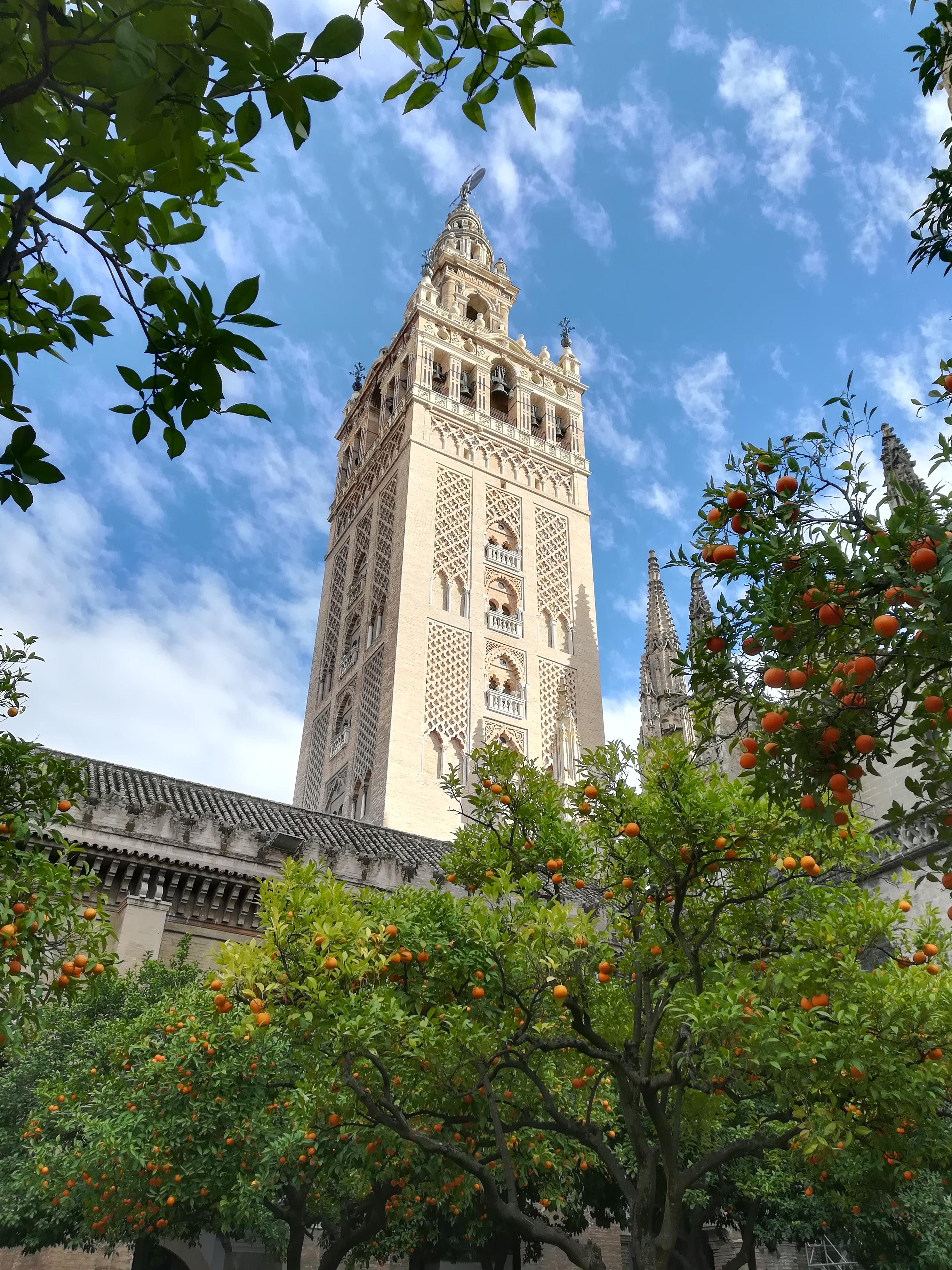
The world's largest Gothic cathedral holds the tomb of Christopher Columbus and anchors the same UNESCO World Heritage designation as the Alcázar. Its Giralda bell tower was originally a 12th-century minaret.
This bell tower rises above the Cathedral and offers panoramic views of Seville from a series of ramps rather than stairs. It was built as a minaret for the city's Almohad-era mosque.
This Renaissance building houses colonial-era documents chronicling Spain's exploration of the Americas and forms part of the same UNESCO site as the Alcázar. Its collection includes original manuscripts signed by Columbus.
Seville's former Jewish quarter is a maze of narrow whitewashed streets, small plazas, and orange trees just east of the Alcázar walls. It's dense with tapas bars and artisan shops.
A sweeping semicircular plaza built for the 1929 Ibero-American Exposition, featuring tiled alcoves representing Spanish provinces and a canal crossed by ornamental bridges.
A historic 1920s hotel with Mudéjar-style architecture and a courtyard garden, steps from the Alcázar walls.
A dense cluster of boutique hotels and guesthouses in Seville's old Jewish quarter, walkable to the Alcázar and Cathedral.
A design-focused hotel directly facing the Cathedral with a rooftop bar overlooking La Giralda.
A more affordable, local neighborhood across the Guadalquivir river with easy tram or walking access to the old town.
Join thousands of happy travelers who have discovered this incredible experience
Book Your Experience Now