3 hr
Cathedral, Giralda Tower & Royal Alcázar Guided Tour with Priority Entry
- Expert local guide
- Small group
- Skip-the-line access
- Free cancellation
Alcazar And Cathedral Seville Tickets — Reserved Entry to the Real Alcázar
Where Mudéjar arches hold the light, and gardens keep the shade.
Compare fares, pick the fit — all bookings are mobile-voucher and eligible for free cancellation where shown.
3 hr
3 hr 30 min
Choosing among alcazar and cathedral seville tickets comes down to how much you want unlocked beyond the ground-floor palace and gardens. General admission covers the Mudéjar palaces and grounds at your own pace, while add-ons open the Cuarto Real Alto's upper royal rooms or extend into a Giralda skip-the-line seville landmarks route.
| General Admission (Self-guided) |
Top pick General Admission + Cuarto Real Alto (Timed upper-floor add-on) |
Alcázar + Cathedral + Giralda Combo (Dual-monument access) | |
|---|---|---|---|
| What's included | Ground-floor palaces and gardens only | Ground floor plus Royal Upper Rooms | Alcázar, Cathedral, and Giralda tower access |
| Access to Cuarto Real Alto | — | ✓ separate timed slot, audioguide included | — (booked independently if wanted) |
| Skip-the-line | — standard queue at Lion's Gate | — standard queue, separate line for upper floor | ✓ guided-lane entry at both monuments |
| Best for | Budget-minded, flexible pacing | First-timers wanting the fullest palace picture | Visitors prioritizing dual-monument coverage in one trip |
| Combine with Cathedral | Book separately, own timed entry | Book separately, own timed entry | ✓ single booking covers both monuments |
| See tickets & prices |
Verdict: First-time visitors get the most complete alcazar and cathedral seville tickets tour by adding the Cuarto Real Alto to general admission, while those short on planning time may prefer the combined Alcázar and Cathedral route instead.
Worth it for most first-time visitors
At 15.5 EUR general admission, alcazar and cathedral seville tickets deliver rare value density. Your fee buys entry to a working royal palace layering Mudéjar architecture, tilework, and Almohad walls with a sprawling garden system you could wander for hours. Few Seville landmarks pack this much per euro: the Patio de las Doncellas, ornate Salón de Embajadores, and the palm-shaded grounds alone justify the price. For first-timers, the value math is simple; comparable European palaces charge double for less. Weigh it against your interests, though. If Mudéjar detail and courtyard geometry bore you, or you resent shuffling through crowded halls, the calculus shifts. Booking one of the guided alcazar and cathedral seville tickets tours adds context but also cost. Those chasing the royal upper apartments face a separate reservation. For anyone drawn to Andalusian craft and living history, this remains one of Spain's better-value entries.
Bottom line: For 15.5 EUR, the alcazar and cathedral seville tickets tour repays curious visitors many times over — skippable only if palace detail leaves you cold.
Hand-picked experiences loved by thousands of travelers
Self-paced
Explore one of the world's largest cathedrals, climb the iconic Giralda bell tower, and see the tomb of Columbus.
4.5 hours
Experience Seville's top three landmarks with an expert guide in one comprehensive half-day walking tour
3 hours
Free Cancellation
Visit two of Seville's most celebrated monuments with priority access and an intimate group experience
3 hours
Explore Seville's two iconic UNESCO sites with a private guide and skip-the-line access
10 - 11 hours
Discover Andalusia's captivating capital on a full-day excursion featuring palace access and guided exploration
Enter through the lion-tile gate into the Patio del León, the first courtyard of the complex
Move through the Patio de las Doncellas and Salón de Embajadores, the palace's most photographed rooms
Walk the later Christian-era halls with large woven tapestry panels added under Charles V
Descend to the underground rainwater cisterns beneath the Patio del Crucero, notably cooler than street level
Wander the terraced gardens, pavilions, and the older Patio del Yeso spur near the entrance
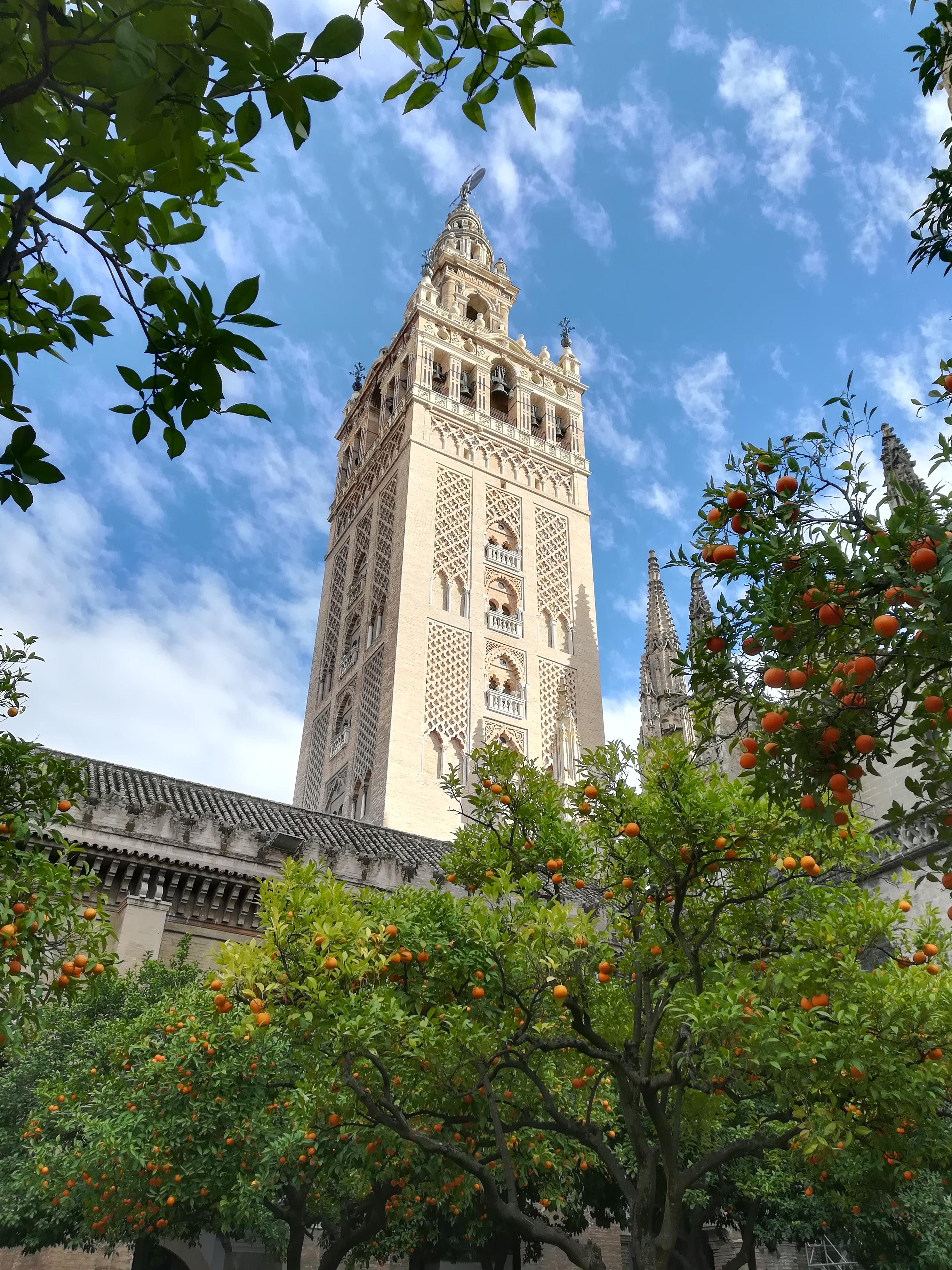
Leave through the orange-tree courtyard with views back toward the Giralda
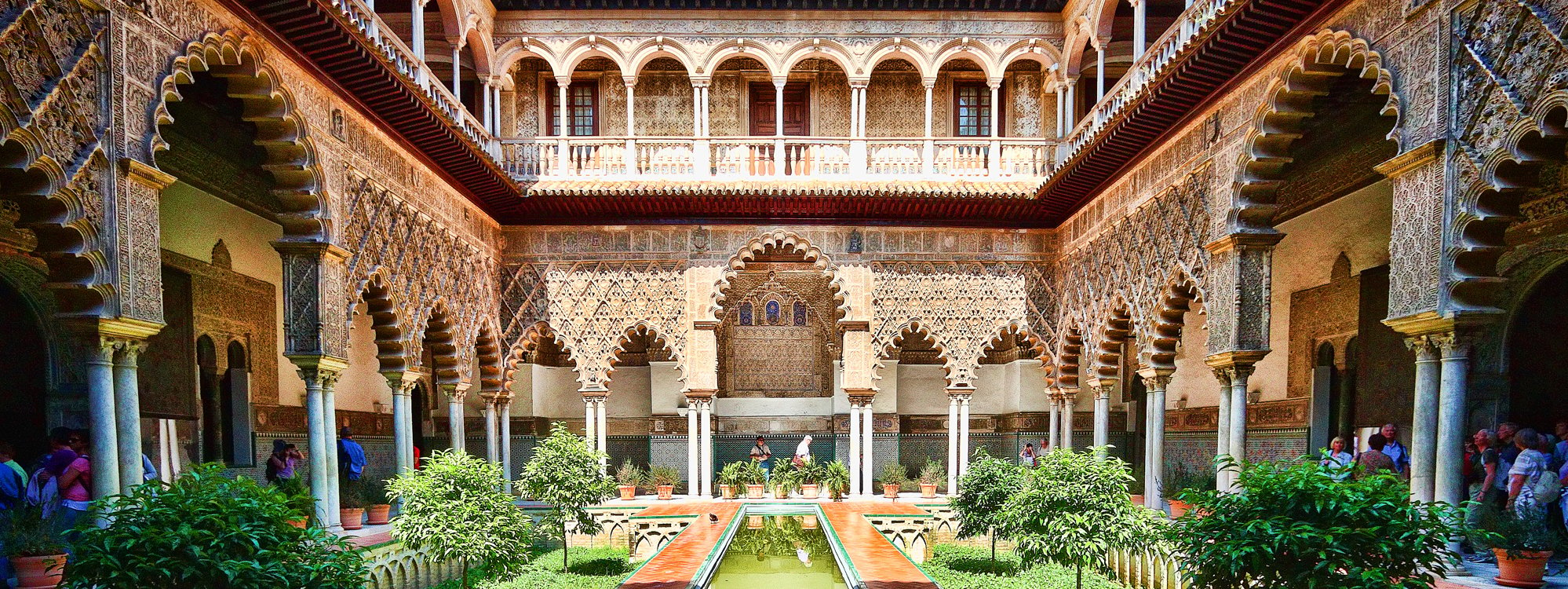
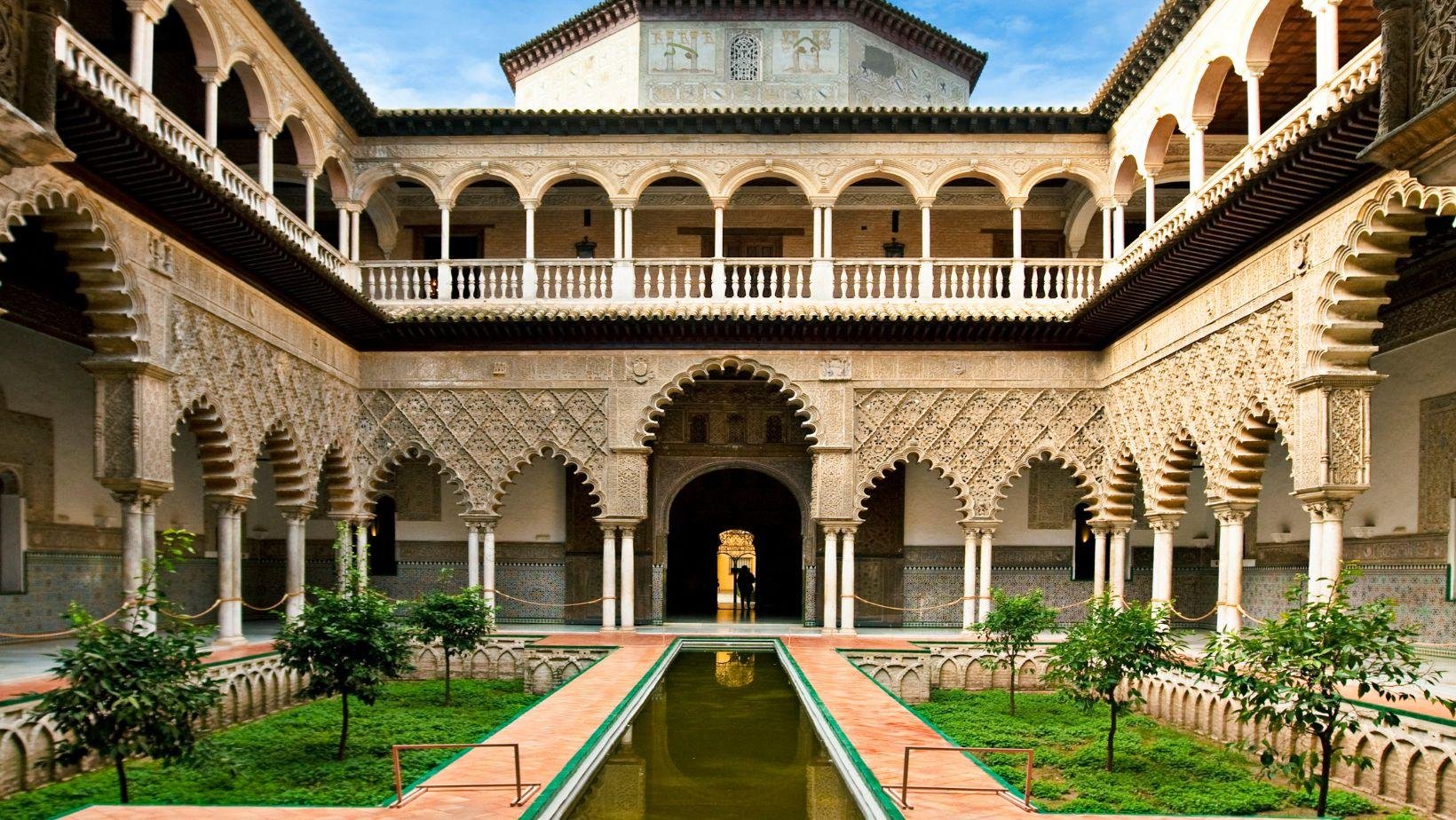
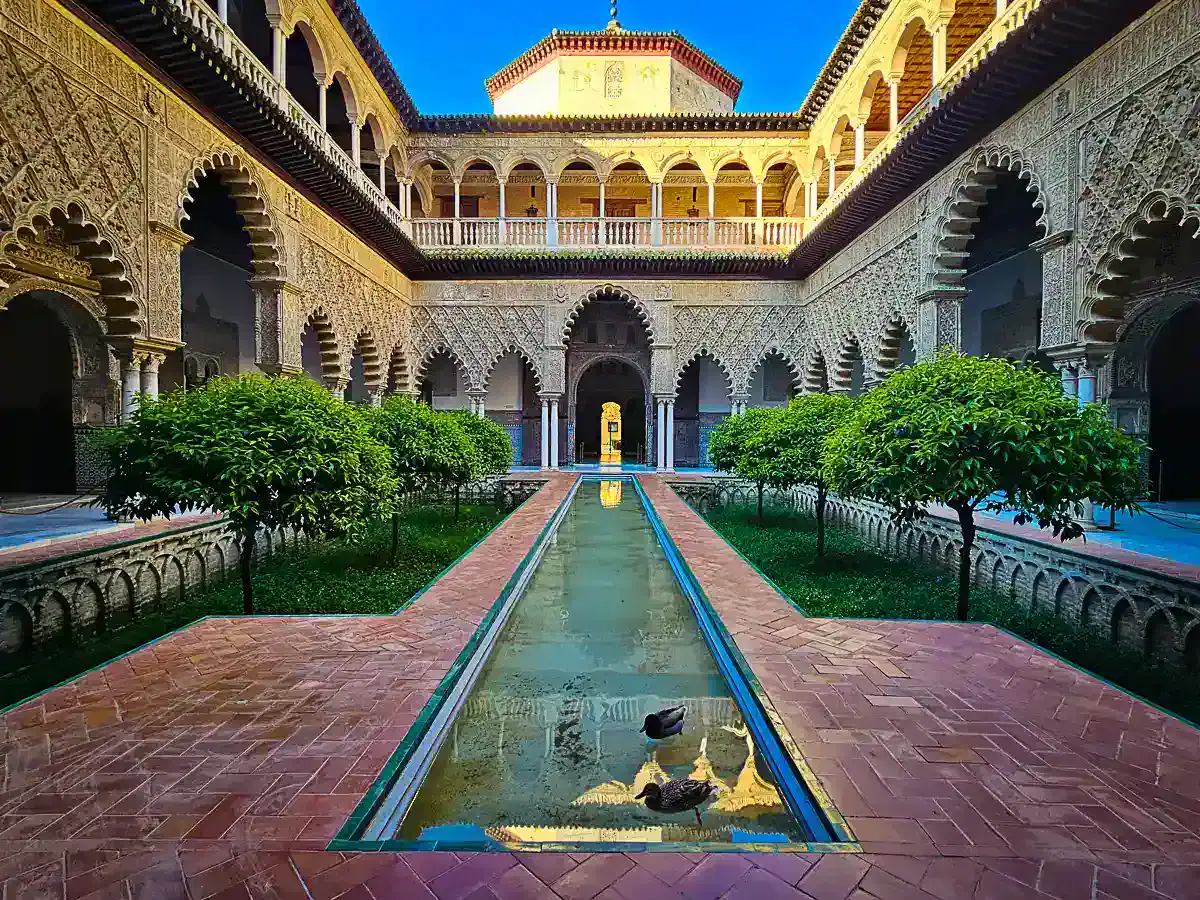
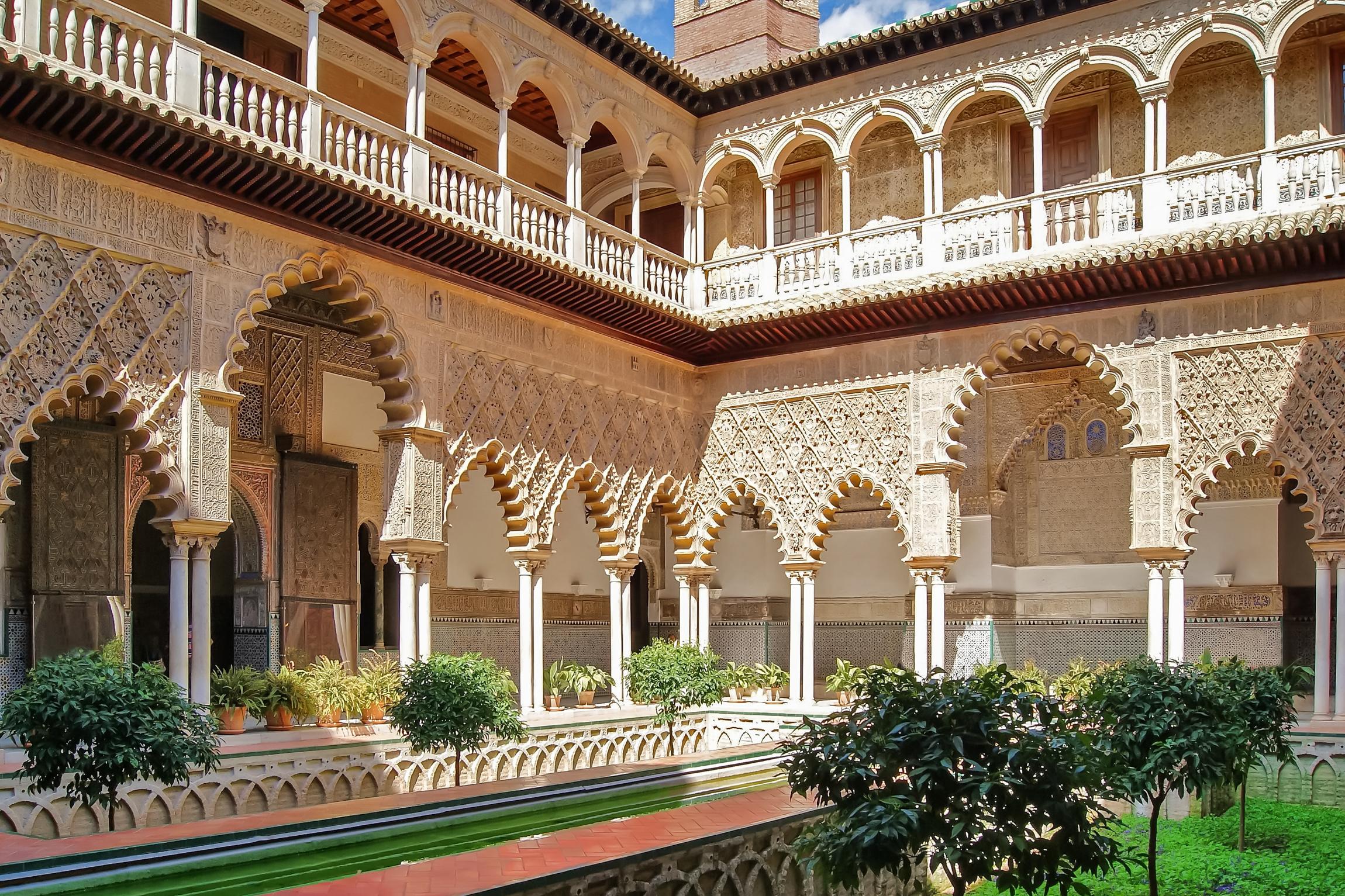
The Courtyard of the Maidens forms the ceremonial heart of Pedro I's 14th-century Mudéjar Palace, its lower arcade carved with inscriptions honoring the Christian king in Arabic script styled as if he were a sultan. A rectangular reflecting pool and sunken garden section were only rediscovered and restored in the early 2000s after centuries hidden beneath a later Renaissance-era upper floor.
The Hall of Ambassadors was the palace's grand reception room, capped by a gilded wooden half-dome ceiling representing the cosmos, added under Pedro I in the 14th century atop 11th-century Almohad foundations. Diplomats received here would have stood beneath more than 600 years of continuously gilded coffering.
These underground rainwater cisterns beneath the Patio del Crucero date to the 12th-century Almohad period and run roughly 15 degrees Celsius cooler than street level, making them the coolest spot in the entire complex. Legend holds that Pedro I offered courtiers water from the baths where his mistress María de Padilla once bathed.
The Courtyard of the Dolls sits within the later central palace section, named for two tiny carved faces hidden in the base of one archway that visitors often spend minutes searching for. Its slender marble columns and detailed stucco work show a fusion of Mudéjar and Italian Renaissance influences brought in under Luis de Vega.
The oldest surviving section of the entire complex, this plaster-courtyard predates Pedro I's palace by roughly two centuries and survives from the original 12th-century Almohad residence on the site. It sits down a side spur near the entrance that a large share of visitors walk straight past.
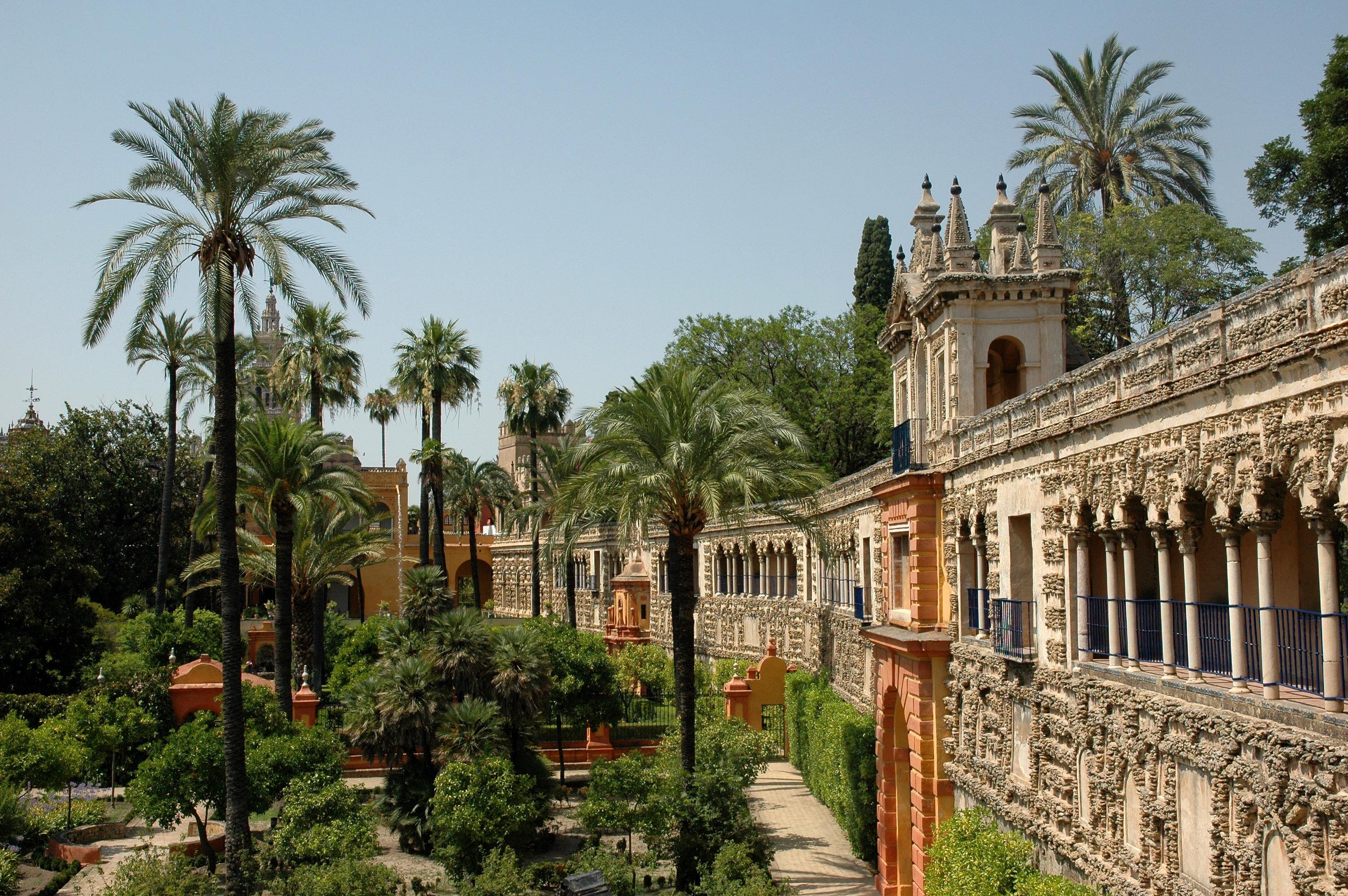
Spanning roughly 17,000 square meters across terraced levels, the gardens layer more than 1,000 years of horticultural history, from Moorish orchard-gardens to Renaissance pavilions and later English-style plantings. Peacocks roam freely among fountains and hedge mazes that have appeared in multiple film and television productions.
You enter through the Puerta del León on Patio de Banderas, the lion tile above you, and pass into the Patio de la Montería before the first courtyard opens. Arrive between 09:30 and 11:00 and you slip in ahead of the tour groups, the stone still cool before the midday heat settles over the city. You cross into the Palace of Pedro I and slow at the Patio de las Doncellas, where the long reflecting pool doubles the arcades overhead. You tilt your head back in the Salón de Embajadores to take in the gilded wooden dome, then trace the azulejo dados with a fingertip as you move room to room. You step outside into the gardens and the temperature drops under the orange trees. You follow the raised walkway of the Galería del Grutesco, pause at Mercury's pool, and let the myrtle hedges guide you toward the far walls. Skip-the-line real alcázar entry saves you the queue at the gate, so more of your morning goes to the courtyards themselves. Holding alcazar and cathedral seville tickets, you climb back toward the exit past the tapestries, unhurried, the palace emptying its shade behind you.
All the details about your upcoming adventure in one place
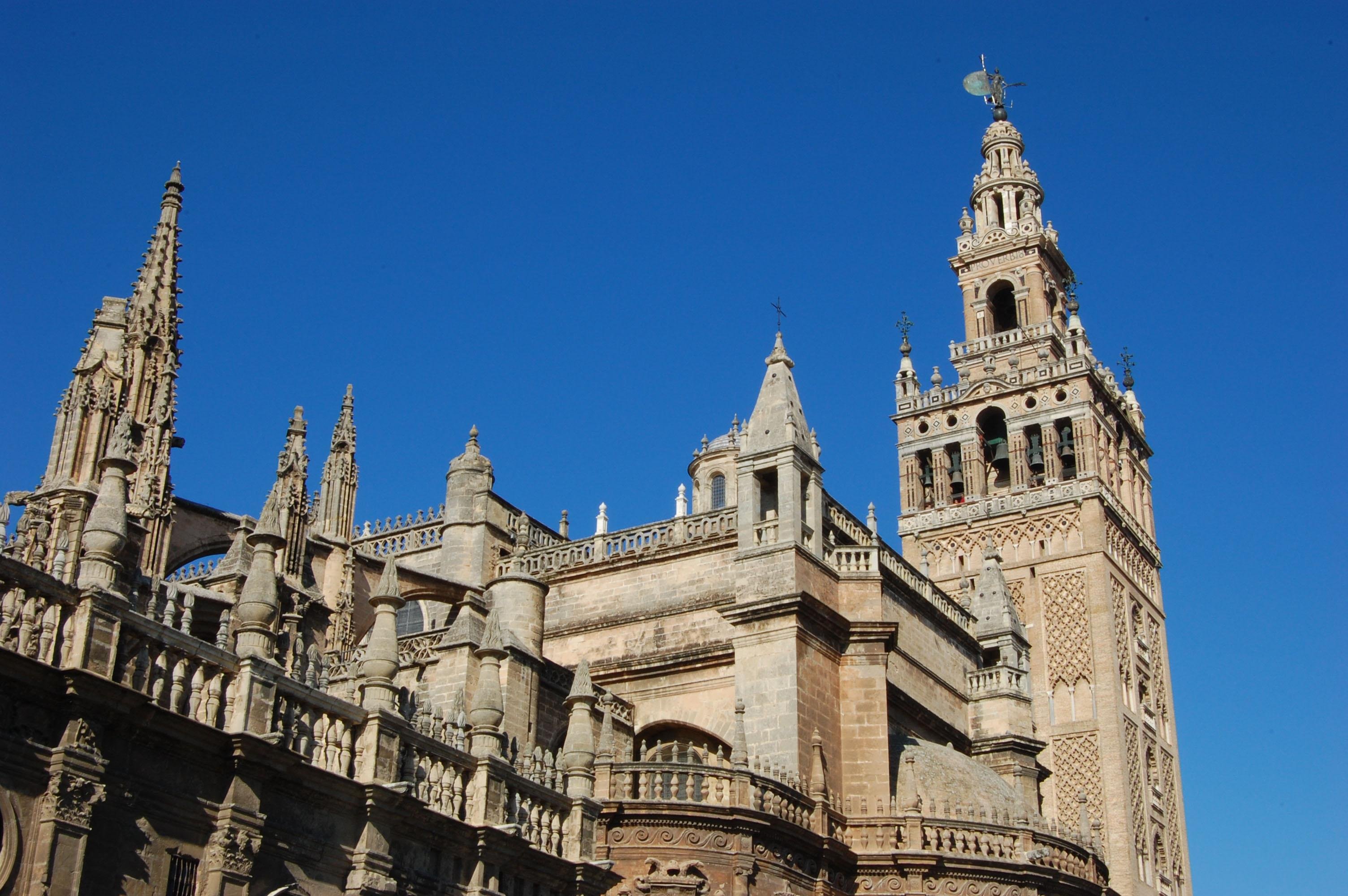
The alcazar and cathedral seville tickets pair two of Andalusia's most celebrated landmarks, the Mudéjar palace complex of the Real Alcázar and the Gothic Seville Cathedral with its Giralda bell tower. Guided Seville monuments tours lead you through royal courtyards, tiled halls, and the Patio de las Doncellas before crossing to Christopher Columbus's tomb and the cathedral's soaring nave. These alcazar and cathedral seville tickets tours give access to two UNESCO World Heritage sites within a short walk of each other in the historic center.
The Real Alcázar is the oldest royal palace still in use in Europe, and Spain's monarchs keep private apartments on its upper floor to this day. Its foundations rest on a tenth-century Muslim fortress, and successive rulers built over one another rather than clearing the ground, leaving a palace that reads like a layered manuscript. The heart of the complex is the Palace of Pedro I, raised in the 1360s by Castilian Christian kings who summoned Muslim craftsmen from Granada and Toledo. The result is Mudéjar architecture in its purest form: horseshoe arches, carved stucco, and cedar ceilings assembled by Islamic hands for a Christian court. Arabic inscriptions praising Allah share walls with Castilian heraldry, a contradiction the builders saw no need to resolve. This coexistence is why the site earned UNESCO World Heritage status in 1987, listed alongside the neighbouring Seville Cathedral and the Archivo de Indias. Travellers weighing alcazar and cathedral seville tickets are, in effect, buying passage into three centuries of overlapping empires within a few hundred metres. Why the palace still matters is partly a matter of endurance. The Patio de las Doncellas, its reflecting pool flanked by scalloped arcades, was buried under paving for centuries and rediscovered only in the 2000s. The Salón de Embajadores crowns its throne room with a gilded half-orange dome of interlaced wood, one of the finest carpentry ceilings in the Iberian world. Beyond the rooms lie the gardens, where Mercury's pool, hedged mazes, and the Galería del Grutesco stretch toward the old city walls, orange trees and myrtle scenting the air that visitors browsing real alcázar entradas come to walk through. Architectural depth rewards a slow eye. The Casa de Contratación once governed every ship bound for the Americas from these halls, and Isabella of Castile received navigators here. Charles V held his wedding in the palace in 1526 and added a Renaissance gallery that sits, unbothered, beside Almohad brickwork. Film crews later borrowed the courtyards for the kingdom of Dorne, and the tilework that draws modern cameras is the same azulejo tradition that decorated the palace six hundred years ago. Among Seville landmarks, few compress so much continuity into a single walled precinct, which is why demand for alcazar and cathedral seville tickets tours stays high across every season and why the guided alcazar and cathedral seville tickets tour remains the surest way to read the layers correctly.
Arabic inscriptions praising Allah share walls with Castilian heraldry, a contradiction the builders saw no need to resolve.
There's no formal dress code for the Real Alcázar, but comfortable footwear is essential given the uneven stone courtyards and long garden paths. Light, breathable clothing suits Seville's summer heat, since much of the route between palace rooms crosses open-air patios with no shade.
All visitors pass through an airport-style security check with bag scanners at the Puerta del León entrance before entering the Patio del León. Backpacks and bags are permitted but subject to inspection, and staff may ask to open bags at random during busy periods.
Personal photography and video without flash are allowed throughout the palace rooms, courtyards, and gardens, including the Patio de las Doncellas and Salón de Embajadores. Tripods, selfie sticks, and professional lighting rigs require prior written authorization from the Patronato del Real Alcázar.
Strollers are permitted throughout most of the palace and gardens, though the Baños de Doña María de Padilla and a few narrow doorways may require folding a stroller briefly. Children under a certain age receive free or reduced admission at the gate.
Most ground-floor routes through the Mudéjar Palace, Gothic Palace, and gardens are wheelchair accessible via ramps, though some upper galleries and the Patio del Yeso spur involve steps with no lift alternative. Accessible restrooms are located near the garden exit close to the Baños de Doña María de Padilla.
A small on-site cafeteria near the garden exit sells drinks, snacks, and light meals, but outside food is not permitted in the palace interiors. Water bottles are allowed and recommended, especially given Seville's high summer temperatures across the open-air garden sections.
Quieter than weekends
Popular guided-tour day
Slightly quieter midweek
Tour groups pick up
Busiest day of the week
Some free-entry slots for locals
Hours: 09:30–19:00 daily
location
Public transport · 10-15 min · EUR 1.35-1.60 single fare
Take Metro Line 1 to Puerta de Jerez station, about a 5-minute walk to the entrance, or Tram T1 to the San Bernardo or Archivo de Indias stop directly opposite the palace.
Walk · 7 min · Free
From Plaza Nueva in the city center, it's roughly a 7-minute walk through Barrio Santa Cruz to the Puerta del León entrance.
Car · Varies with traffic · EUR 2-3/hour
The Alcázar has no dedicated on-site parking; the nearest option is the Paseo de Colón or Cano y Cueto underground garages a short walk away.
Taxi · 10-20 min from most hotels · EUR 8-15
Taxis can drop off near Plaza del Triunfo or Puerta de Jerez, both under a 10-minute walk from the entrance.
Tickets for the Real Alcázar are generally non-refundable and non-transferable once the timed entry slot has passed, though most official and authorized resellers allow free cancellation up to 24 hours before the visit. The general admission fee is 15.5 EUR per adult at the gate, and refund eligibility depends on where the ticket was purchased.
Recommended time
2-2.5 hours
Budget 2 to 2.5 hours for a self-guided walk through the palaces and gardens, and lean toward the longer end if you plan to sit in the Patio de las Doncellas or wander the full Jardines del Alcázar rather than skim them. Anyone booking alcazar and cathedral seville tickets for a single morning should treat the palace rooms as the first 60-90 minutes and the gardens as the remaining hour, since the gardens absorb crowds better than the narrow interior corridors. Arriving in the 09:30-11:00 window lets you move through the Mudejar halls before tour buses unload, so the walk feels closer to 2 hours than 2.5. Queues at the gate rarely vanish entirely, but they thin fastest right at opening and again just after 11:00.
Crowd levels through the day
Weather · crowds · average price — dots go green to amber to red as each metric rises.
March through May brings mild temperatures around 20–25°C and the gardens in full bloom, though this is also peak tourist season with the largest crowds of the year.
June through August is Seville's hottest stretch, often exceeding 38°C by midday, but early mornings right at the 09:30 opening remain bearable and tourist numbers drop noticeably in July and August.
September and October offer a good balance of cooler weather in the low-to-mid 20s°C and thinning crowds after the summer peak.
November through February sees the fewest visitors and mild daytime temperatures around 15–18°C, with occasional rain but far shorter queues at the gate.
Reserve the 09:30 opening entry to walk the Patio de las Doncellas and Salón de Embajadores before tour groups arrive; queues build fast once the palace opens for the day.
This oldest surviving courtyard sits down a side spur near the entrance that most visitors walk past on the way to the main palace rooms.
The garden sections offer little shade in summer, and the on-site cafeteria is the only food and drink point inside the walls.
The working royal apartments require their own limited-capacity guided ticket booked well ahead, separate from general admission.
Both sit on Plaza del Triunfo, so pairing a Real Alcázar visit with the Cathedral and Giralda climb saves a return trip across town.
These underground rainwater cisterns beneath the Patio del Crucero run noticeably cooler than the open courtyards above.
Original palace flooring in several rooms is uneven and can be slippery when wet after rare rain, so flat shoes work best.
Plaza del Triunfo, 41004 Sevilla, Spain
Main entrance and standard meeting point for guided tours
Get directionsPatio de Banderas, s/n, 41004 Sevilla, Spain
Exit courtyard, sometimes used for pickup after combined tours
Get directionsThe Real Alcázar began not as a palace but as a fortress. Around 913, the Umayyad ruler Abd al-Rahman III ordered a defensive enclosure on the site, near the old Roman and Visigothic settlement. The Abbadid and Almohad dynasties expanded it through the 11th and 12th centuries. Almohad walls, courtyards, and the Patio del Yeso survive from that era. This Moorish foundation is why any account of alcazar and cathedral seville tickets tours must begin four centuries before Christian rule. Ferdinand III took Seville in 1248. Castilian kings then occupied the Muslim palaces. The decisive transformation came under Pedro I, called the Cruel, who between 1364 and 1366 built the Mudéjar Palace of King Pedro. He employed craftsmen from Granada and Toledo, producing carved stucco, azulejo tilework, and coffered ceilings. The Patio de las Doncellas anchors this work. Inscriptions blend Arabic and Castilian, a rare document of shared artistry among these Seville landmarks. Later centuries added Gothic and Renaissance layers. The Gothic Palace, raised under Alfonso X in the 13th century, was rebuilt after the 1755 Lisbon earthquake damaged it. Charles V married Isabella of Portugal here in 1526, prompting new Renaissance apartments and the surrounding gardens. Visitors on an alcazar and cathedral seville tickets tour move through eight centuries of overlaid styles in a single circuit. The complex is the oldest royal palace still in use in Europe. The Spanish royal family retains official apartments on the upper floor, used during visits to the city. In 1987 UNESCO inscribed the Alcázar, the adjoining Cathedral, and the Archivo de Indias as a World Heritage Site, recognising their combined Almohad, Mudéjar, and Renaissance heritage. That dual listing is one reason skip-the-line Alcázar demand runs high year round. Booked correctly, alcazar and cathedral seville tickets tickets grant access to rooms where kings ruled, married, and still lodge. Few monuments compress eleven centuries so tightly, and fewer alcazar and cathedral seville tickets remain quite so continuously inhabited.
Abd al-Rahman III orders the first fortified enclosure on the site.
Abbadid and Almohad rulers expand the walls and courtyards.
Ferdinand III captures Seville; Castilian kings occupy the palaces.
Pedro I builds the Mudéjar Palace with Granadan and Toledan craftsmen.
Charles V marries Isabella of Portugal, adding Renaissance apartments.
The Lisbon earthquake damages the Gothic Palace, forcing rebuilding.
UNESCO inscribes the Alcázar, Cathedral, and Archivo de Indias.
The Spanish royal family still keeps official apartments in use.
Stand at the south end and shoot north along the sunken reflecting pool, where the Mudejar arches and sebka tracery double in the water. The symmetry holds best from ground level, right at the pool's edge. Ducks sometimes drift across the reflection, so pause a moment before the shot.
Look straight up inside the Ambassadors' Hall to frame the gold mirrored cupola, a nine-metre wooden dome installed in 1427 above triple horseshoe arches. Position yourself center-room for a symmetrical wide shot; a wide-angle lens helps capture the full ceiling. This hall anchors most alcazar and cathedral seville tickets itineraries as the palace's most photographed interior.
Frame the slender courtyard from Salón de los Embajadores looking through, catching the delicate arcade and tiny carved faces the patio is named for. It's narrower than the other courtyards, so a vertical shot works better than wide.
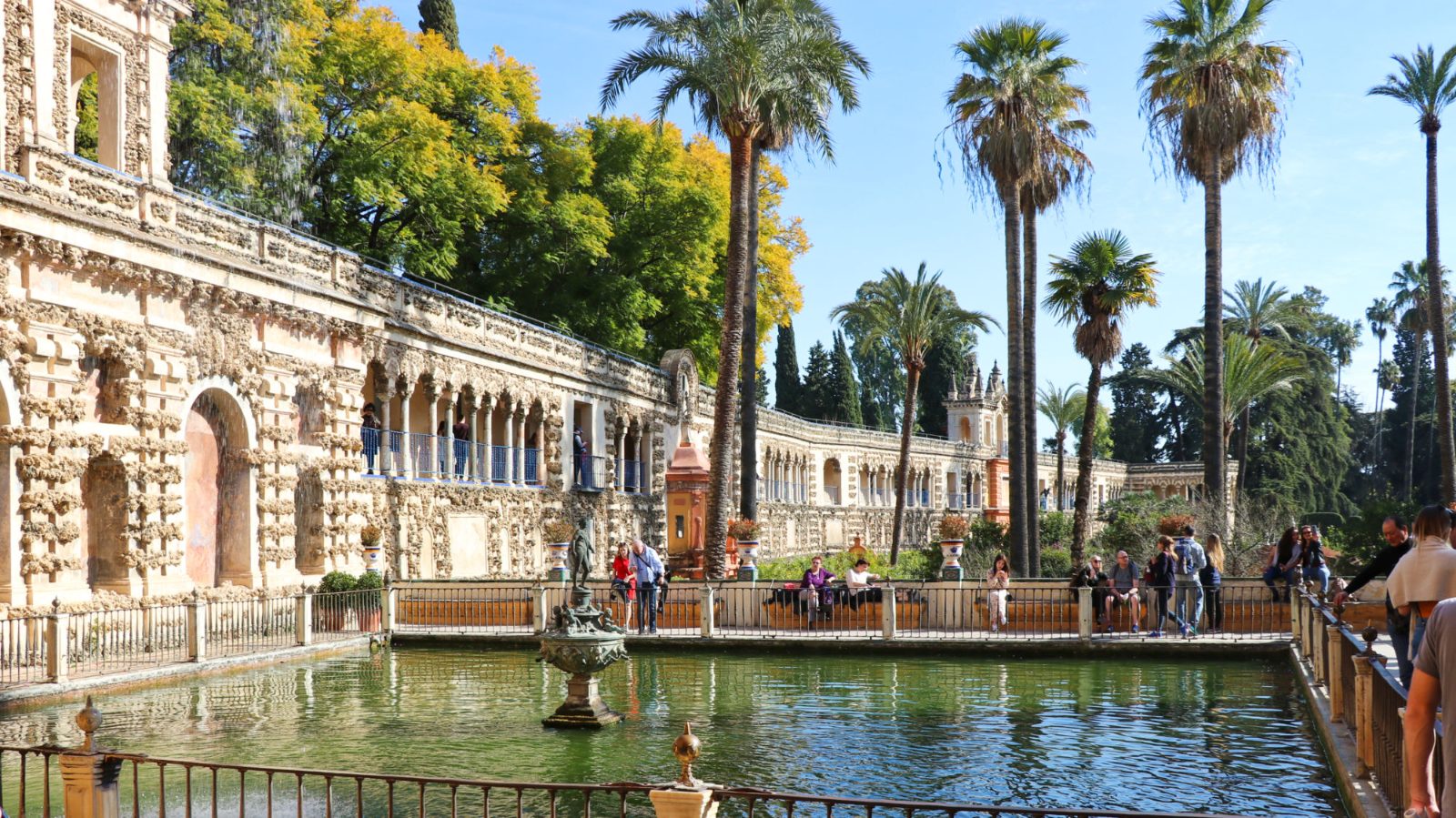
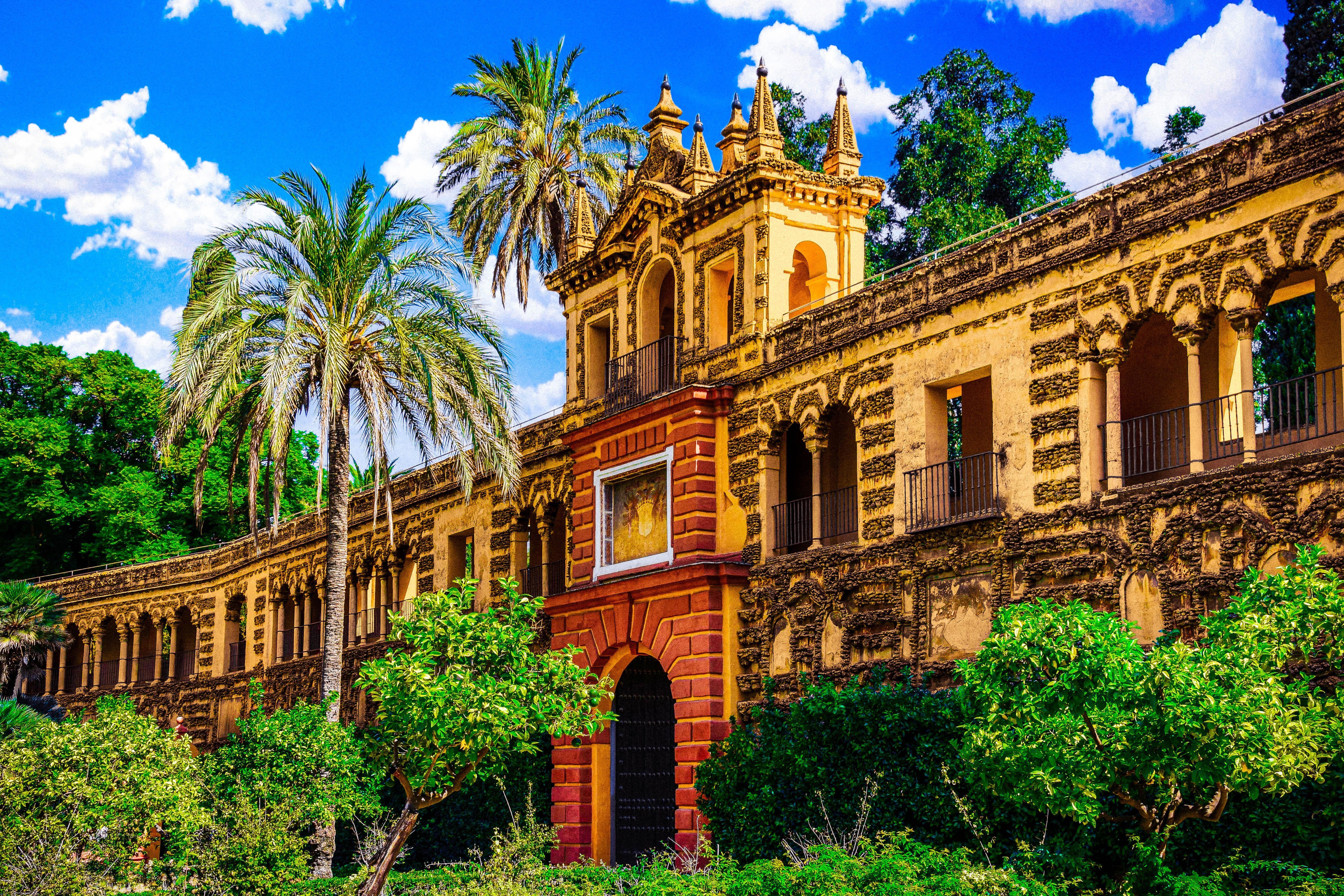
Walk along the elevated gallery built atop the old Almohad wall for an overlook across the historic gardens, then shoot back toward the rustic grotto-textured wall itself. The Estanque de Mercurio and its fountain sit just below, making a strong foreground.
Shoot the Mercury Pool with the bronze fountain in the foreground and the Grutesco Gallery wall filling the background; this pairing is one of the garden's most reliable compositions.
Visiting Alcazar and Cathedral Seville tickets with children works best when you treat the palace rooms and gardens as two different modes: focused looking indoors, free roaming outdoors. The Mudéjar rooms wow adults but read as a maze of similar-looking halls to young kids, so build in outdoor breaks before attention fades.
Split the visit into two halves: 45-60 minutes through the Pedro I Palace rooms, then release kids into the gardens to run, hide among hedges, and reset before returning for any remaining sights.
Ages 6 and up get more from the architecture and Game of Thrones filming spots; toddlers and preschoolers do fine but will likely need the gardens as their main draw rather than the palace interiors.
The seven hectares of gardens have fountains, pavilions, and shaded paths that give kids room to burn energy after the quieter, echo-heavy palace rooms, making them a natural midpoint rather than an afterthought.
Toilets are located near the entrance and at points in the gardens, though garden facilities can be intermittently closed, so use the entrance restroom before starting the palace route.
Food options inside the grounds are limited, so pack snacks and water rather than counting on a cafe; a quick break on a garden bench works better than searching for food mid-visit.
Most of the best Alcazar and Cathedral Seville tickets tour experience is outdoors or in unheated stone rooms, so on wet days plan for a shorter loop through covered palace halls and save garden time for later.
Real experiences from real travelers
We booked alcazar and cathedral seville tickets a week ahead and it saved us standing in the July heat. The Patio de las Doncellas stays surprisingly cool with the water channel running through it, and the Mudéjar plasterwork rewards a slow look. Bring a hat for the gardens, the afternoon sun there is fierce.
The ramp up the Giralda is gentle, no real stairs until the very top, and the view over the terracotta rooftops was the highlight of our Seville landmarks day. Our combined entry meant we crossed the Plaza del Triunfo straight from the palace to the cathedral without rebooking. Go early morning if you dislike crowds.
The Alcázar gardens are wonderful in spring with orange blossom in the air, though the palace rooms got congested around midday. Buying the alcazar and cathedral seville tickets tickets online was smooth and the QR codes scanned first try. Give yourself three hours minimum for both sites.
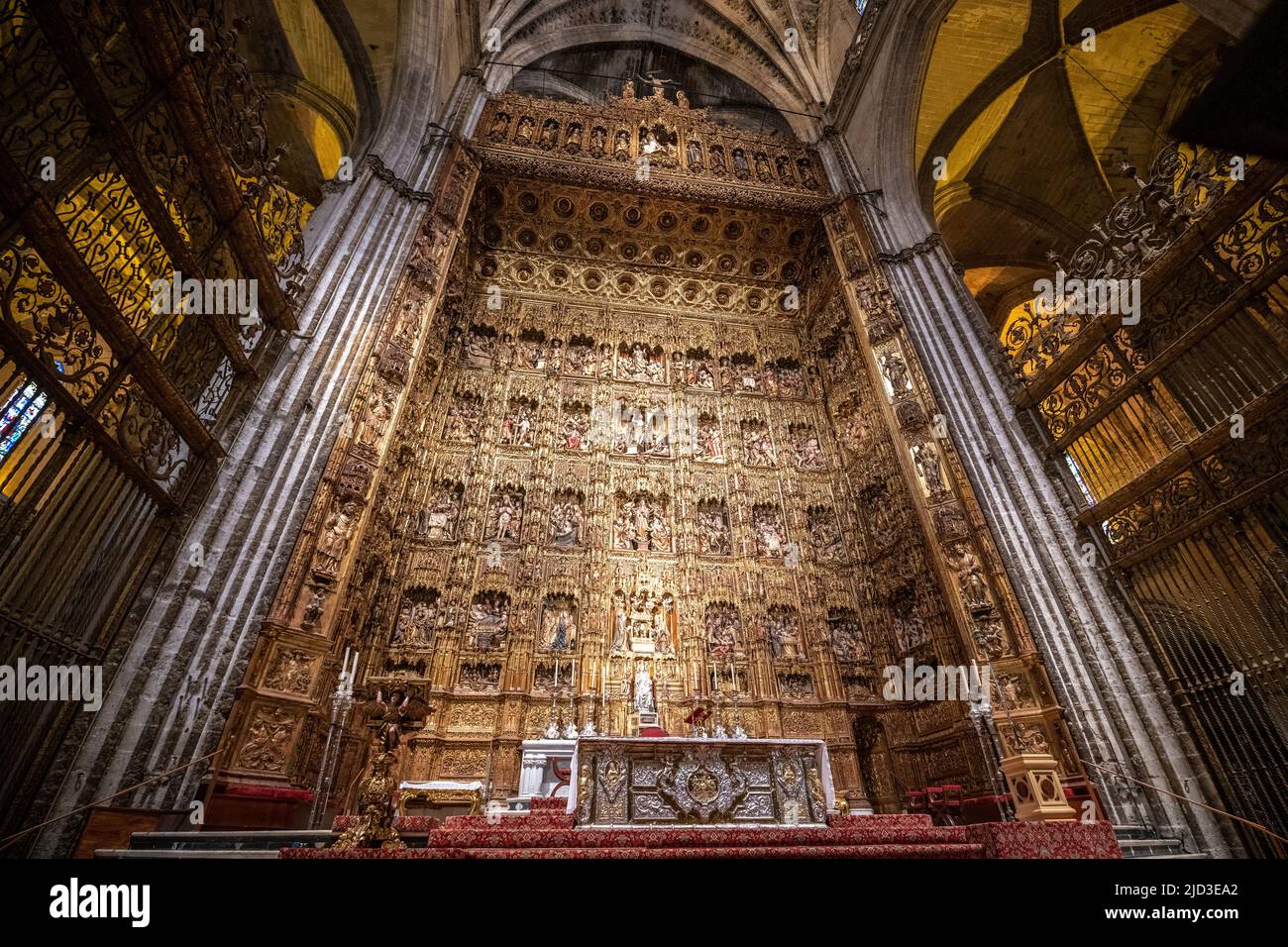
Recognised the Baños de Doña María de Padilla instantly from the show, the underground vaulted pool with its still green water is eerie and quiet. The skip-the-line Alcázar entry meant we walked past a long queue in the summer sun. The Retablo Mayor inside the cathedral is honestly overwhelming in scale.
A well organised Seville Alcázar tour let us see the Salón de Embajadores gilded dome and still reach the cathedral before closing. The bronze weathervane, the Giraldillo, catches the light beautifully at golden hour from below. We grabbed our alcazar and cathedral seville tickets tour slot for late afternoon and the light was perfect.
February was calm and grey but the Alcázar gardens still had greenery and the myrtle hedges smelled fresh after rain. The entradas Alcázar y Catedral de Sevilla we reserved online let us wander the Casa de Contratación rooms without a rush. The tomb of Columbus in the cathedral drew a small respectful crowd.
Late autumn meant softer light through the Galería de Grutesco and hardly any wait to enter. We combined the two monuments and appreciated not having to buy alcazar and cathedral seville tickets separately at two counters. The azulejo benches in the gardens are a nice spot to rest tired feet.
The coffered wooden ceiling of the Salón de Embajadores stopped us in our tracks, all geometry and gold. Our alcazar and cathedral seville tickets tours booking included a time-slot that kept the rooms manageable even in high summer. Climbing the Giralda for the rooftop panorama capped the day off.
We arrived just as the Alcázar opened and had the Patio del Yeso almost to ourselves, the lacework arches glowing in the low winter sun. The Seville landmarks combo pass made hopping to the cathedral effortless. Wear comfortable shoes, the cobbles and the tower ramp add up.
September in Seville is still warm so we did the shaded palace interiors first and the gardens later. Having the skip-the-line Alcázar entry sorted in advance was the smartest thing we did all trip. The cathedral's cool stone interior was a welcome break from the sun.
Everything you need to know for your journey
The Real Alcázar is open daily from 09:30 to 19:00, seven days a week with no weekly closure day.
The palace generally clears visitors starting shortly before the official 19:00 closing, so plan to enter with enough time to see the Mudéjar Palace and gardens comfortably.
Most ground-floor routes through the palace and gardens are wheelchair accessible via ramps, though a few upper rooms and the Patio del Yeso spur involve steps with no lift.
Yes, all visitors pass through a bag-scanner security check at the Puerta del León entrance, and large suitcases, tripods without a permit, and drones are not allowed inside.
Personal photography without flash is permitted throughout the palace rooms and gardens, though tripods and professional equipment need prior authorization.
Arriving at the 09:30 opening or visiting on a weekday morning between Tuesday and Thursday tends to avoid the largest tour groups on a Seville landmarks itinerary.
There's no strict dress code, but comfortable shoes are recommended given the uneven stone courtyards and long garden walkways.
An on-site cafeteria near the garden exit sells drinks and light snacks, though outside food isn't permitted inside the palace interiors.
Metro Line 1 to Puerta de Jerez station or Tram T1 to the San Bernardo stop both put you within a short walk of the entrance at Patio de Banderas, s/n, 41004 Sevilla, Spain.
Yes, strollers are generally permitted throughout most of the route, and children under a set age receive free or reduced admission at the gate.
Refund terms vary by ticket provider, but general admission runs 15.5 EUR per adult at the gate, and most official channels allow free cancellation up to 24 hours before the reserved time slot.
The Seville Cathedral and La Giralda sit directly across Plaza del Triunfo, and Barrio Santa Cruz's narrow streets wrap around the palace walls, making both easy same-day additions to any alcazar and cathedral seville tickets itinerary.
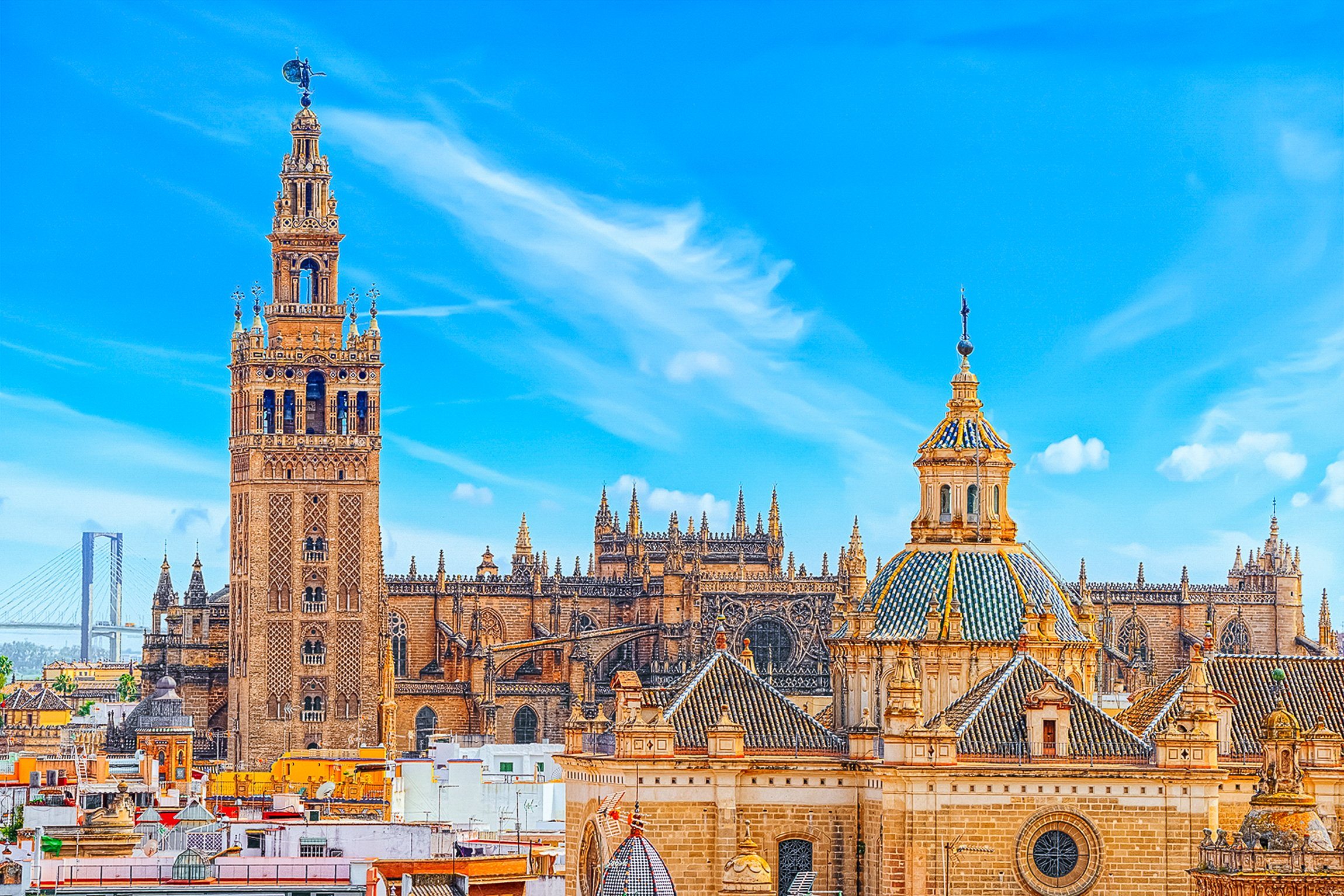
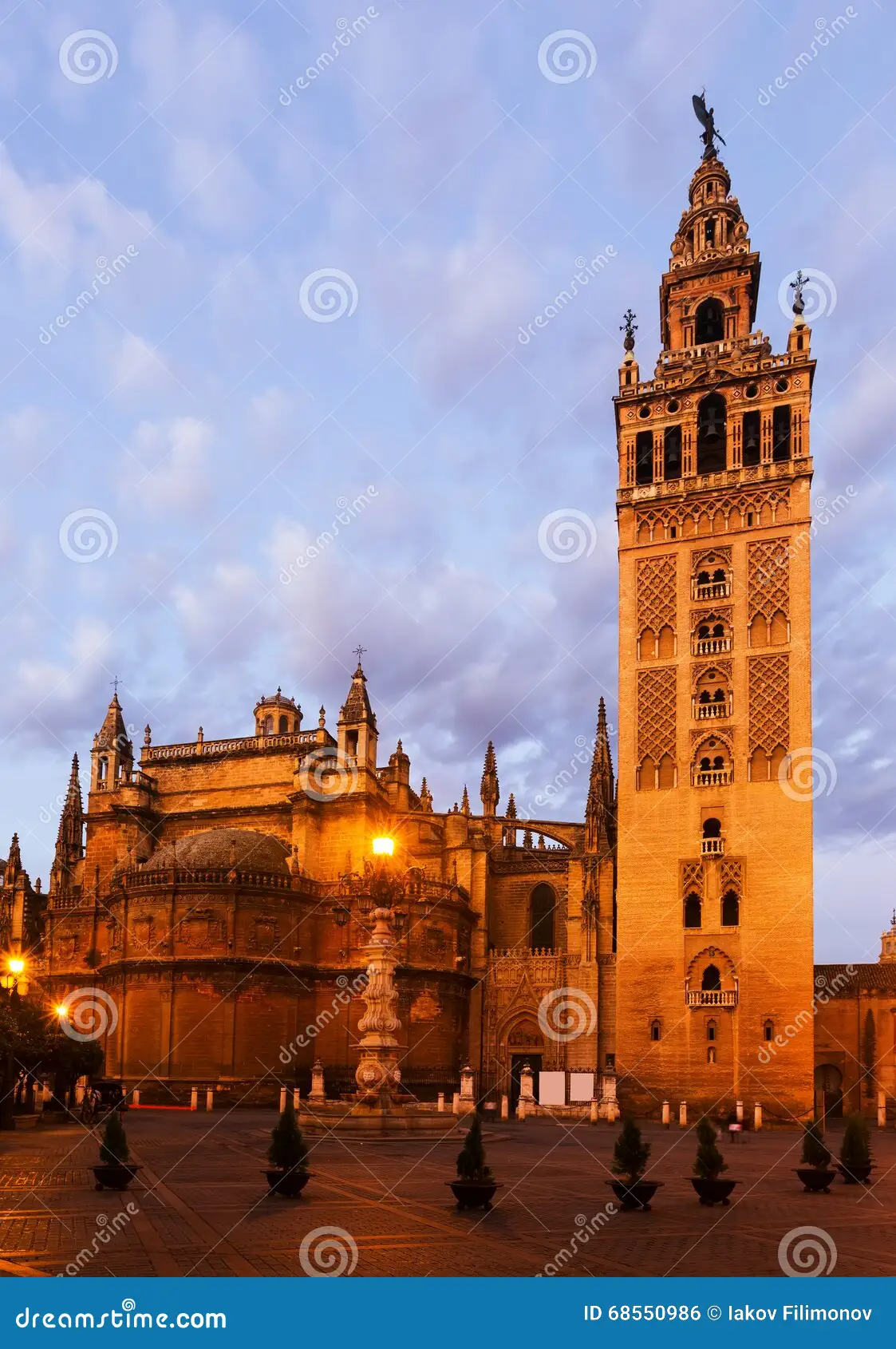
The world's largest Gothic cathedral holds Christopher Columbus's tomb and sits directly across Plaza del Triunfo from the palace entrance.
Originally a 12th-century Almohad minaret, this bell tower offers panoramic city views reached by ramps rather than stairs.
The former Jewish quarter's narrow whitewashed streets and flower-filled patios wrap around the palace's eastern wall.
This Renaissance building holds colonial-era documents on Spain's overseas empire and forms part of the same UNESCO listing.
A 13th-century riverside watchtower along the Guadalquivir now houses a small maritime museum.
A sweeping semicircular plaza built for the 1929 Ibero-American Exposition, lined with hand-painted tile alcoves.
A historic 1920s luxury hotel with Mudéjar-style courtyards a short walk from Puerta de Jerez.
A rooftop-view boutique property directly facing the Cathedral and Giralda.
A dense cluster of small hotels and guesthouses inside the old Jewish quarter, walkable to the palace gate.
A converted 19th-century townhouse near Santa Cruz with a small rooftop terrace overlooking the Giralda.
Join thousands of happy travelers who have discovered this incredible experience
Book Your Experience Now