Beneath the tiled courtyards of the Real Alcázar lies a truth most visitors miss: the Spanish royal family still keeps official apartments on its upper floor, making this the oldest European royal palace in continuous use. That single fact explains the place.
Read moreShow less
It was never abandoned, never left to ruin, and so it accumulated rather than decayed. Each ruler added, adapted, and overwrote, leaving a complex that reads like geological strata rendered in stone and glazed clay.
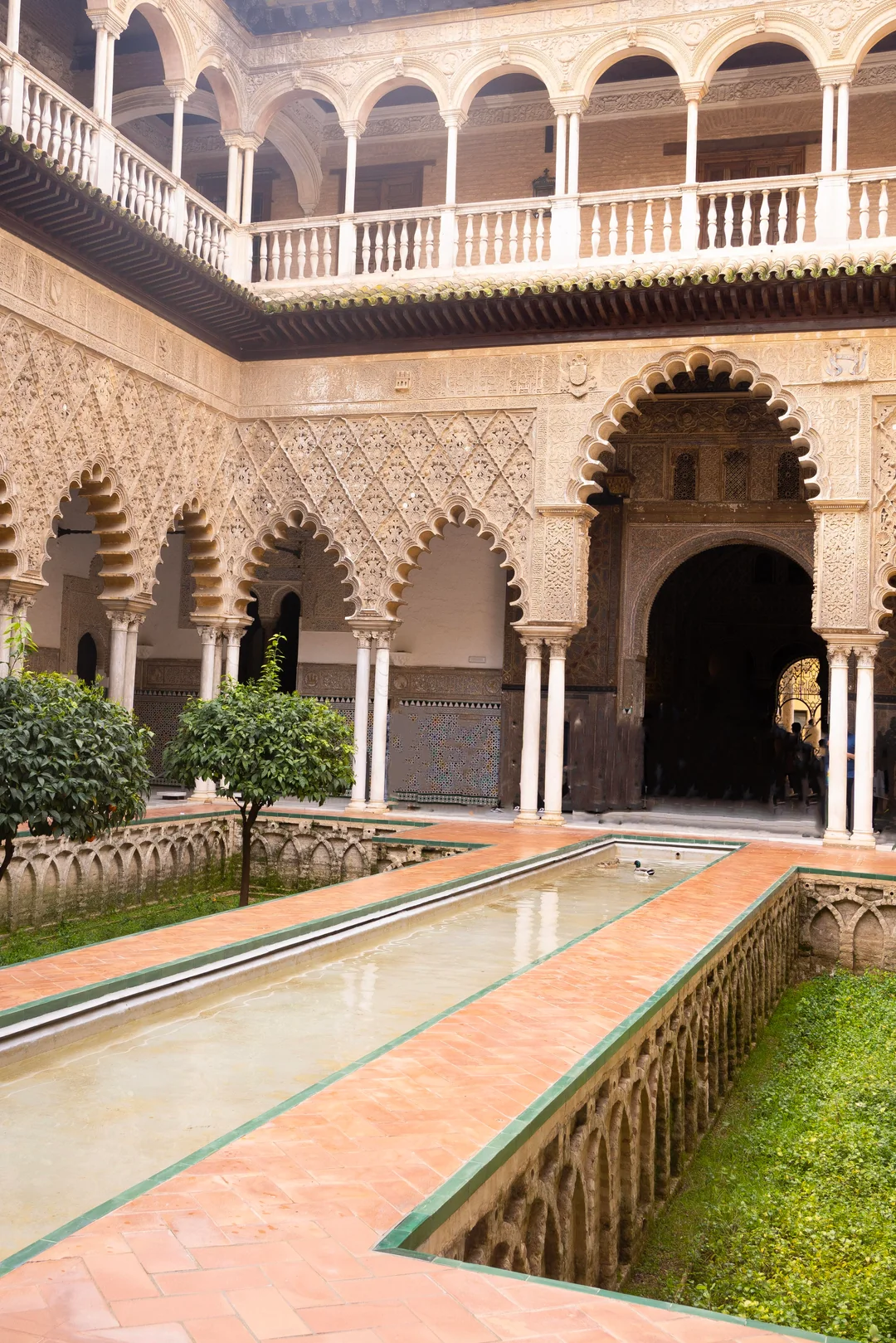
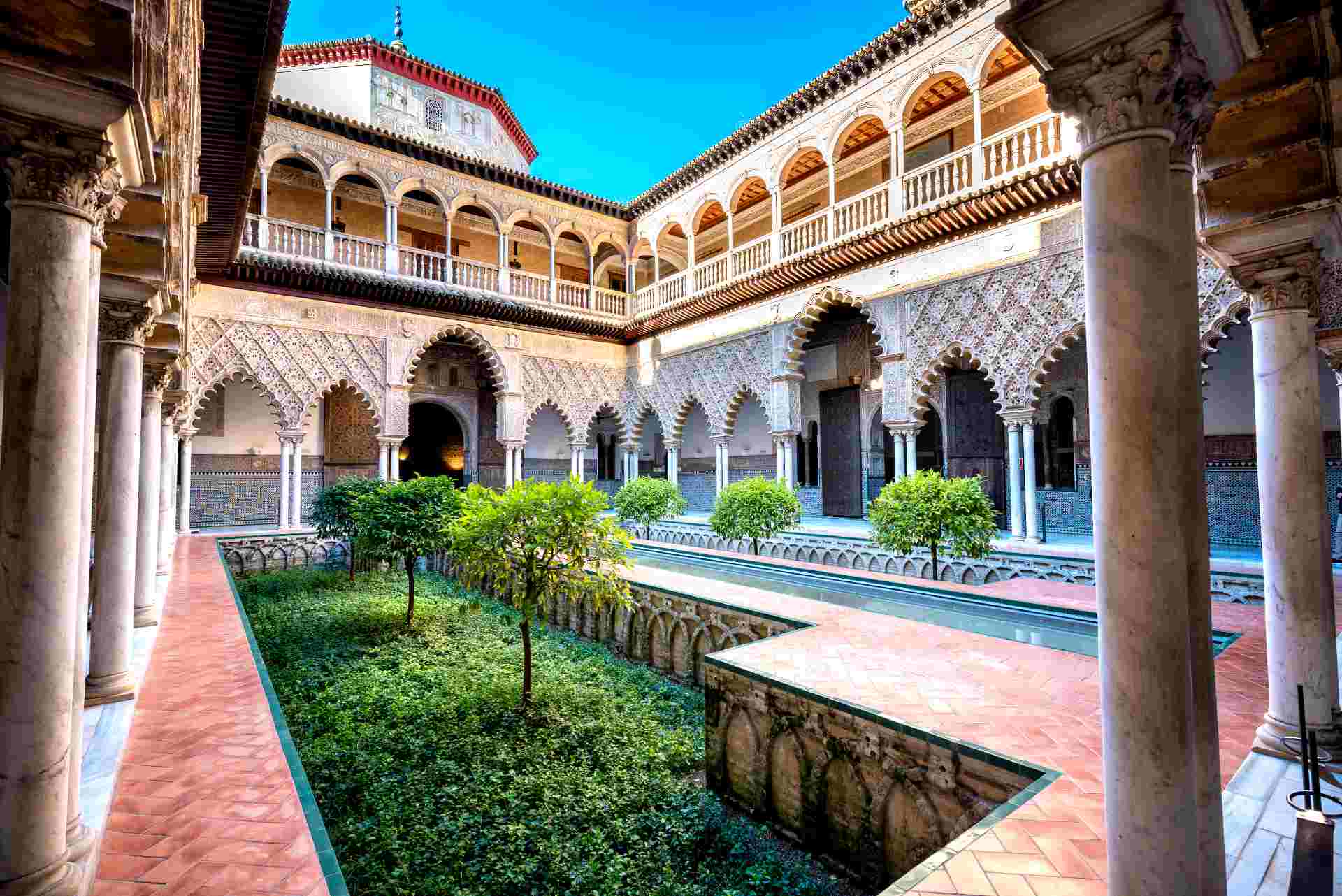
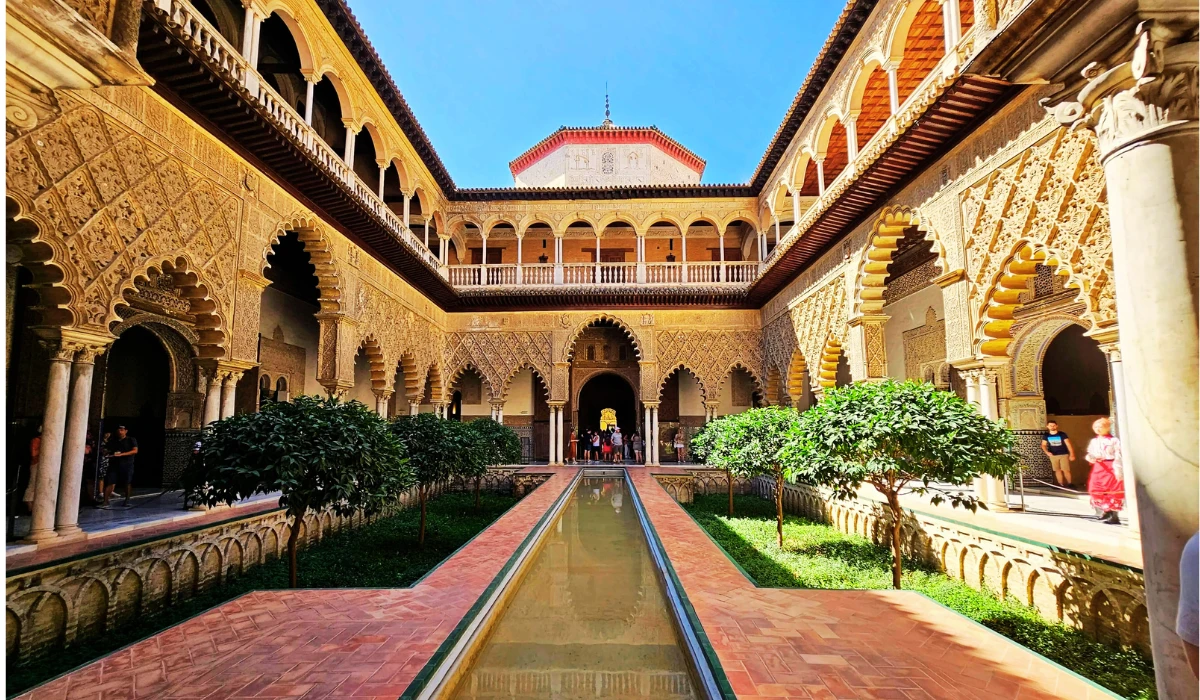
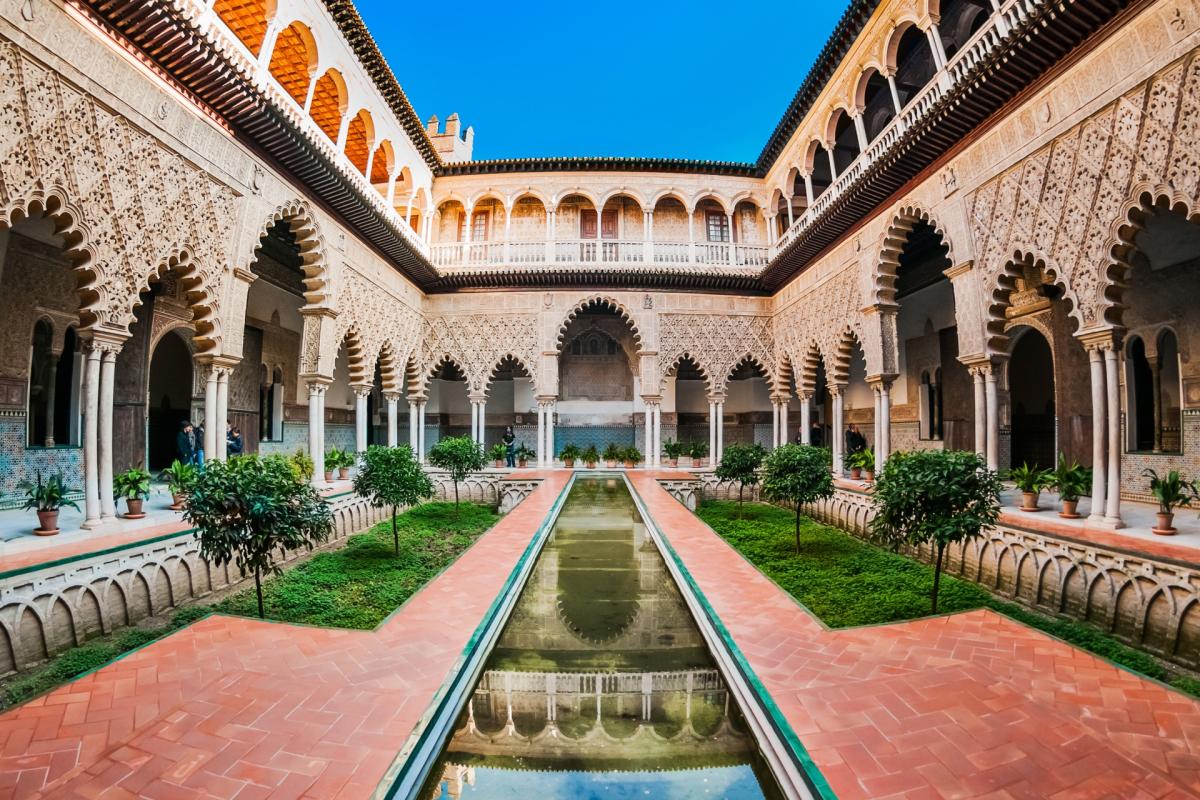
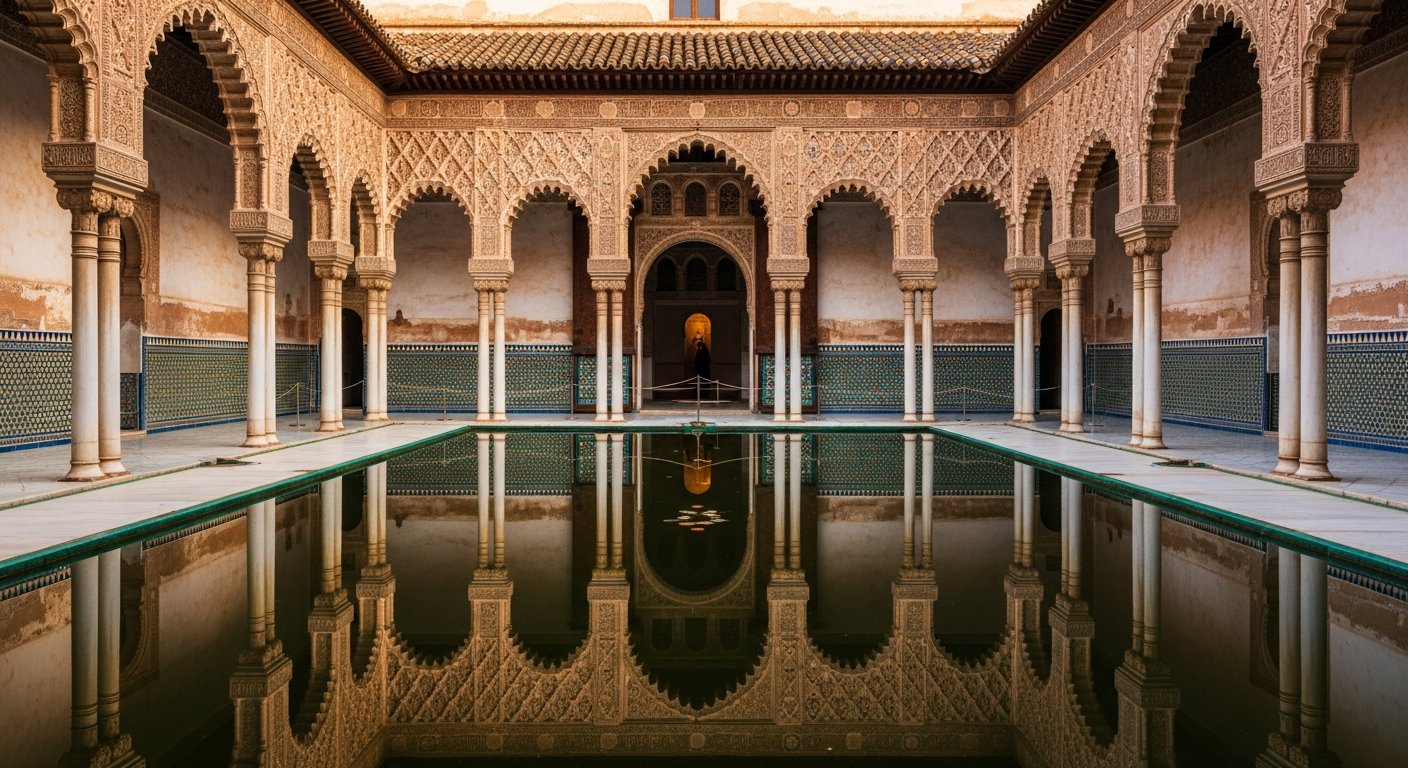
The site began as a Muslim fortress under Abd al-Rahman III in the tenth century, expanded by the Almohads, then transformed after the Christian conquest. Its defining chapter is the fourteenth-century Palace of Pedro I, built by Castilian kings using Mudéjar craftsmen from Granada and Toledo. The result is a paradox in plaster: Arabic inscriptions praising a Catholic monarch, horseshoe arches framing throne rooms, the Patio de las Doncellas with its sunken garden and reflecting channel. Travelers weighing Real Alcazar Tickets are really choosing how deeply to read these layers. The Salón de Embajadores, crowned by its gilded cedar dome, remains the visual summit of the whole ensemble.
The landmark attractions cohere as a sequence rather than a checklist. Skip-the-line entry moves visitors past the ticket queue and straight into the Patio de la Montería; a guided walk decodes the carved stucco most people pass without seeing; a private guide slows the pace for those who want the epigraphy and dynastic detail. Because the Cathedral and Giralda stand only a few streets away, many pair the two into a single morning, while evening visits trade heat for lamplight and near-empty courtyards. Fans of Dorne will recognize the Baths of María de Padilla and the Mercury Pond from the screen. Well-chosen Real Alcazar Tickets tours turn what could be a crowded shuffle into a legible story.
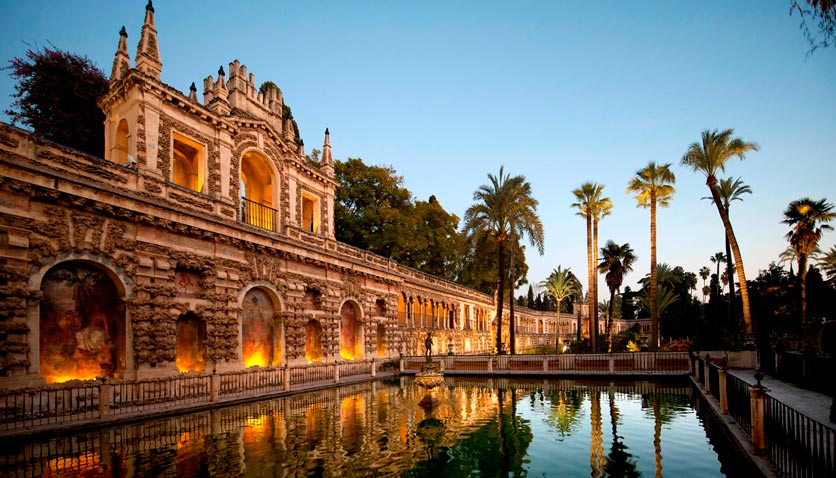
The gardens are the counterweight to all this architecture. Orange trees, myrtle mazes, and the grotto-gallery cool the air behind the palace, and peacocks patrol the terraces as they have for generations. A good Real Alcazar Tickets tour leaves time here, where the water organ once played for guests. Who does the place suit? Anyone drawn to history that never stopped being lived in — students of Islamic and Gothic design, photographers, families, and the screen-tourism curious. It rewards the unhurried. Buying Real Alcazar Tickets tickets ahead is less about saving minutes than about arriving ready to look properly, because the Alcázar gives most to those who read it slowly.
“It was never abandoned, never left to ruin, and so it accumulated rather than decayed.”
Palace of Pedro I
The Mudéjar heart of the complex, its Patio de las Doncellas and carved throne rooms rank among Spain's finest Islamic-influenced interiors.
Gardens & Water
Terraced gardens, the Mercury Pond and hidden grottoes stretch behind the palace, offering shade and birdsong steps from the city center.
Living Royal Site
Still an official residence of the Spanish Crown, the Alcázar remains a functioning palace rather than a frozen museum.
Most popular
Top attractions in Real Alcazar
Every page here is a different way through one monument: the Real Alcázar of Seville. Some visitors want a guide to decode the Mudéjar carving and royal chambers; others just need to bypass the queue, add the Cathedral, or trade daytime crowds for after-dark quiet. Fans of a certain fantasy series come for the filming locations. Start by deciding how much depth, privacy, and time you want, then pick the ticket or tour format that matches rather than the other way around.
Real Alcazar Tickets: How to Plan 1, 2, or 3 Days Around Your Visit
Seville rewards a plan built around your Alcázar entry time. Whether you have one day or three, slot the palace early or on your first afternoon to dodge midday queues, then let the Cathedral, Plaza de España, and Triana fill out the rest. Each framework below anchors the visit at a fixed point and links to the ticket or tour type that fits that slot.
Where the Real Alcázar Sits: Santa Cruz and Seville's Other Neighborhoods
Seville's historic core radiates outward from the Real Alcázar, so most first visits start in Barrio Santa Cruz and branch out to a handful of other walkable districts, each with a distinct rhythm. Triana sits across the Guadalquivir River, while El Arenal and Alameda de Hércules flank the center on the riverside and northern edges. Choosing where to base yourself is largely a question of proximity to the monument versus a more local, nightlife-driven pace.
Barrio Santa Cruz
The former Jewish quarter wraps directly around the Alcázar's walls, a maze of whitewashed alleys, orange-tree squares, and the Jardines de Murillo. It suits first-time visitors who want to walk out the palace gates straight into tapas bars and shaded courtyards.
Triana
Across the river and traditionally home to ceramics workshops and flamenco culture, Triana feels more residential and less scripted for tourists. It works for travelers who want an authentic, local base within a short walk of the center's bridges.
El Arenal
A riverside district anchored by the Torre del Oro and the Maestranza bullring, El Arenal mixes old maritime history with a more polished, upscale feel. It suits visitors who want a central, comfortable base close to the monuments without staying inside Santa Cruz itself.
Alameda de Hércules
Centered on Seville's oldest public square, this northern district has a bohemian streak of galleries, vintage shops, and a dense concentration of bars and terraces. It's suited to travelers prioritizing nightlife and a younger, artsier scene over proximity to the sights.
Getting around
Getting to Real Alcazar Tickets Entrances and Around Seville
Real Alcazar sits at the edge of Santa Cruz, a compact tangle of pedestrian lanes that most visitors cross entirely on foot, with TUSSAM buses, a single tram line, and Sevici docking stations filling in the longer hops across the river or out to Santa Justa station.
Walking
Free
Santa Cruz's narrow streets around the Alcázar are pedestrian-priority and largely closed to cars, so the entrance area, Cathedral, and Giralda are all reachable on foot within 10-15 minutes of each other. Expect uneven cobblestones and no shortcuts for wheelchairs or strollers without some backtracking.
Tram
€1.40 single
TUSSAM's T1 tram line runs from Plaza Nueva, near the Alcázar, up to Prado de San Sebastián, useful for connecting to bus routes toward Santa Justa. It's a short, single-line system, not a full network.
Bus
€1.40 single
TUSSAM city buses cover routes into Triana and out to Santa Justa station; C1 and C2 circular lines loop around the historic center and connect to outlying neighborhoods. Buy tickets onboard or use a rechargeable Tarjeta Turística for multiple rides.
Bike
~€2.59 day pass
Sevici, the city's bike-share network, has docking stations throughout Santa Cruz and across the Guadalquivir in Triana, with short-term passes sold at station terminals. The first 30 minutes of each ride is typically free, making it practical for crossing to Triana without transit transfers.
Walking
Free
Crossing the Puente de Isabel II (Triana Bridge) on foot from the center takes about 15-20 minutes and lands directly in Triana's riverside streets, avoiding any transit wait.
From the airport: From Seville Airport (San Pablo), the EA bus run by TUSSAM reaches the center in 35-40 minutes for €4 one-way (€6 same-day return); a taxi takes 20-25 minutes for a flat €25-28 fare.
Save money
Real Alcazar Tickets vs the Seville City Pass: Which Saves You More
Seville sells two real bundle passes covering the Alcázar and Cathedral: the Seville Super Combo (skip-the-line entry to both plus audio guide) and the more expensive Seville Pass (adds a 48-hour hop-on hop-off bus and guided walking tours). Buying standalone tickets is often cheaper if you only want those two sites.
Yes, via the included bus tour, not TUSSAM city transit
Break-even point
Cheapest if you skip queue-skip perks and only want the two sites
Pays off once skip-the-line access and the audio guide matter more than a few euros
Only pays off if you will actually ride the 48-hour bus and join a walking tour
Best for
Budget travelers comfortable booking each ticket's time slot themselves
Visitors who want both major monuments locked in with one booking and no ticket lines
Visitors staying multiple days who want sightseeing transport bundled in
Verdict: Book the Alcázar and Cathedral separately if you want the lowest price and don't mind two bookings, choose the Seville Super Combo for the same two sites with skip-the-line access at a modest premium, and reserve the pricier Seville Pass only if you will use its 48-hour bus tour and guided walks.
When to go
Best Time to Book Real Alcazar Tickets: Seasons, Heat, and Festival Crowds
March through early May is the strongest window for booking Real Alcázar tickets, pairing mild, sunny weather with manageable crowds before Semana Santa and Feria de Abril push demand and prices sharply higher. Late October and November offer a quieter, cooler-weather alternative for those avoiding festival season entirely.
March
Mild, 11-20°C, occasional rainRising, festival prep begins
April
Warm, 13-25°C, mostly sunnyPeak, Semana Santa and Feria de Abril
May
Warm, 17-27°C, first hot spellsHigh but easing after Feria
Beyond Real Alcazar Tickets: Day Trips to Córdoba, Cádiz, and Ronda
Once the Alcázar and cathedral are checked off, Seville's rail and bus links make three Andalusian towns feasible as single-day trips, each with a distinct character rather than more of the same.
Córdoba
45 min
AVE/AVANT train from Santa Justa station
The Mezquita-Catedral's forest of striped arches makes for a compact old town easily covered between morning and late-afternoon trains back.
Cádiz
1h 25min
Renfe train (Alvia/MD) from Santa Justa station
Spain's oldest continuously inhabited city sits on a narrow peninsula, with a seafront old town and market that suit a slower walking pace than Córdoba's sights.
Ronda
2h 15min
Damas bus from Plaza de Armas bus station
The clifftop town split by the Puente Nuevo gorge is farther out, so an early bus and the last evening return are worth locking in before setting off.
Food & drink
Where to Eat After Your Real Alcazar Tickets Visit
Step out of the Alcázar's gates and you land straight in Santa Cruz, where centuries-old tapas bars serve Andalusian classics within a five-minute walk of the palace walls. For a deeper dive, cross town to the produce halls of Mercado de Triana and Mercado de Feria, where locals shop and eat side by side with visitors.
Bodega Santa Cruz "Las Columnas"
€€
venue
A marble-bar tapas spot steps from the Alcázar gardens in Santa Cruz, known for classic Andalusian tapas chalked up on the counter as you order.
Bar Giralda
€€
venue
Set in a former Moorish bathhouse a few minutes from the Alcázar and Cathedral, this Santa Cruz institution is the place to try espinacas con garbanzos (spinach with chickpeas).
Espinacas con garbanzos
€3-6
dish
A warm, cumin-spiced stew of spinach and chickpeas with Moorish roots, found on nearly every tapas menu in Santa Cruz and Triana.
Salmorejo
€3-6
dish
A thick, chilled tomato-and-bread soup richer than gazpacho, served as a starter tapa across the city's traditional bars.
Mercado de Triana
€
market
Built over the old Castle of San Jorge across the river in Triana, this produce market has small bars serving fresh seafood, tortillita de camarones, and paella by the plate.
Mercado de Feria
€
market
Seville's oldest market, in the Macarena district, draws locals for fishmongers and produce stalls alongside a lively bar scene for a casual bite away from the tourist crowds.
FAQ
Real Alcazar — frequently asked questions
The Real Alcázar features stunning Moorish palaces, lush botanical gardens, tranquil courtyards, and beautiful historic royal apartments.
Plan based on your interests. Architecture lovers should focus on the Mudéjar Palace, while nature enthusiasts will enjoy the extensive gardens, fountains, and pavilions.
The best time to visit is early in the morning right at opening time or late in the afternoon to avoid the midday heat and the largest tourist crowds.
Always book your tickets online well in advance to secure your preferred entry time slot and skip the notoriously long ticket office queues.
Yes, most ground-floor palaces and main gardens are accessible and great for families, though some older cobbled paths may require care with strollers and wheelchairs.
The entire complex is pedestrian-only and best explored on foot. Be sure to grab a map at the entrance to easily navigate the interconnected palaces and gardens.
Yes, many visitors opt for combination tours or Seville city passes that include priority access to the Real Alcázar, Seville Cathedral, and La Giralda.
Visit on a weekday, arrive at the Puerta del León right when it opens, and head straight to the popular Courtyard of the Maidens before exploring the wider gardens.
Ready to Explore?
Choose from amazing attractions and create unforgettable memories in this beautiful city