English| EUR
Suggested for you
More currencies
Book Now
Open today · 09:30 – 19:00

Real Alcazar Private Guide

Real Alcázar — Private Guided Access to Palace & Gardens

Where caliphs once walked, your questions find answers.

142K+ travelers chose this
Free Cancellation
Right now: Moderate — summer weekday Midday heat is intense in late July; morning or early-evening slots are more comfortable
1.5-2.5 hours recommended
1 Languages
Up to 8 guests
Free Cancellation
Free cancellation Instant confirmation Mobile voucher Skip-the-line Verified partner
Choose your ticket

Ticket options at a glance

Compare fares, pick the fit — all bookings are mobile-voucher and eligible for free cancellation where shown.

Seville: Royal Alcázar, Cathedral & Giralda Guided Tour 3 hr
Guided Experience

Seville: Royal Alcázar, Cathedral & Giralda Guided Tour

4.8 (12688)
€53
  • Expert local guide
  • Small group
  • Skip-the-line access
Book this ticket
Cathedral, Giralda Tower & Royal Alcázar Guided Tour 3 hr
Guided Experience

Cathedral, Giralda Tower & Royal Alcázar Guided Tour

4.8 (12157)
€53
  • Expert local guide
  • Small group
  • Skip-the-line access
  • Free cancellation
Book this ticket

Is it worth it?

Worth it for most first-time visitors

For 15.5 EUR general admission you get both the palace and the gardens, and a real alcazar private guide adds context most people miss wandering the Mudéjar halls alone. Compare that ticket to other Seville landmarks: the Cathedral and Giralda run higher for a single monument, while here your fee covers acres of tiled courtyards, the Ambassadors' Hall, and layered Almohad and Christian architecture spanning centuries. Unguided, the site rewards curiosity but leaves the symbolism opaque. Sevilla Alcazar tours or a skip-the-line Alcazar entry solve the queue problem and decode the azulejos, the intersecting reigns, and the horseshoe arches. Who should pay for guiding? First-timers, history-minded travelers, and anyone short on research time. Independent explorers comfortable with a floor plan can skip the upsell and pocket the difference. The base value holds either way.

What makes it worth it

  • Palace and gardens both included for 15.5 EUR
  • Guide decodes Mudéjar symbolism you'd otherwise miss
  • Skip-the-line entry beats long midday queues
  • Cheaper per-square-meter than single-monument tickets
  • Huge site rewards a full unhurried visit

Keep in mind

  • Private guiding costs well beyond the 15.5 EUR fee
  • Midday crowds thin the atmosphere considerably
  • Confident independent visitors gain little from guiding
  • Add-on tours can feel rushed in peak season

Bottom line: If it's your first visit, real alcazar private guide tickets earn their cost; seasoned self-guiders can safely skip the extra.

Head to head

Real Alcazar Private Guide Vs Alhambra: Which Should You Choose?

Choosing between a real alcazar private guide tour and an Alhambra visit comes down to scale versus intimacy: Seville rewards a compact, easily booked afternoon, while Granada demands a full day and months of advance planning.

Top pick
Real Alcázar
Alhambra, Granada
Architectural style
Scale and layout
Booking difficulty
Typical visit duration
Price
Best for

Verdict: Pick the Alcázar for a relaxed, low-hassle afternoon inside Seville, and reserve the Alhambra months out if a full day of Nasrid architecture and mountain views is the trip's centerpiece.

Featured Experiences

Popular tours & activities

Hand-picked experiences loved by thousands of travelers

Recommended Experience

Powered by GetYourGuide

Another traveler favorite

Powered by GetYourGuide
Seville Royal Alcázar Guided Tour with Skip-the-Line Access 1.5 hours

Seville Royal Alcázar Guided Tour with Skip-the-Line Access

Explore Europe's oldest active royal palace with an expert guide and skip ticket queues

4.6 (4260)
FromFrom €33.57
See details
Alcázar, Cathedral & Giralda Tower Guided Tour 3 hours Free Cancellation

Alcázar, Cathedral & Giralda Tower Guided Tour

Explore three UNESCO treasures with an expert guide: royal gardens, Gothic grandeur, and panoramic views

4.9 (445)
FromFrom €62
See details
Seville Cathedral, Alcázar & Giralda Guided Tour 3 to 3.5 hours

Seville Cathedral, Alcázar & Giralda Guided Tour

Explore two UNESCO landmarks in one journey through Seville's most iconic monuments with expert commentary

4.5 (853)
FromFrom €59
See details
Private Cathedral & Royal Alcazar Tour with Entry Tickets 3 hours

Private Cathedral & Royal Alcazar Tour with Entry Tickets

Explore Seville's two UNESCO treasures with a private guide and skip-the-line access

5 (1)
FromFrom €166
See details
Your journey

Step-by-step — what your day looks like

1

Security and entry

Pass through bag screening at Puerta del León before entering Patio de la Montería

2

Palacio de Pedro I

Explore the Mudéjar palace rooms including the Patio de las Doncellas and Salón de Embajadores

3

Gothic Palace and chapel

View the Christian-era rooms built after the 1248 reconquest of Sevilla

4

Gardens

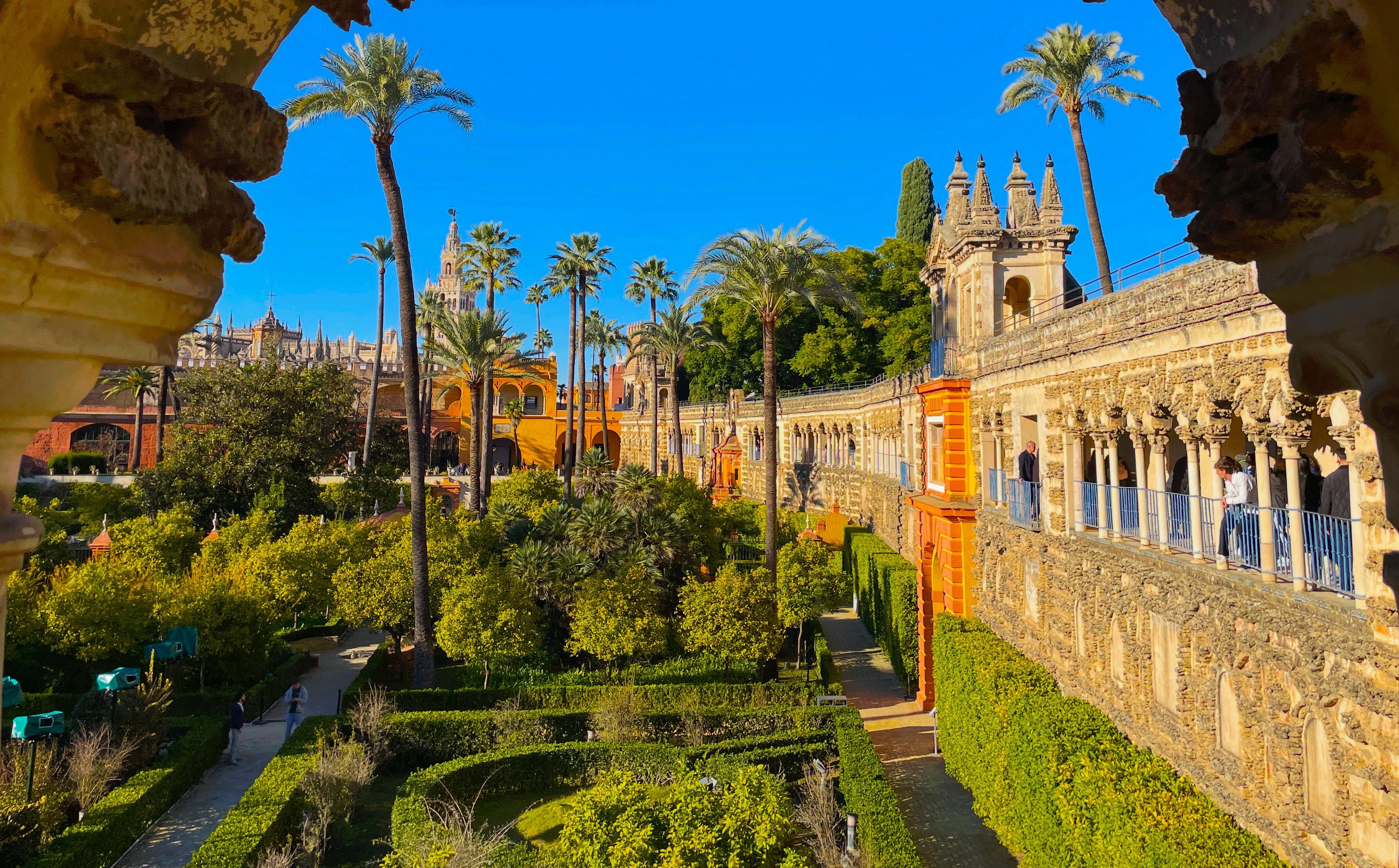
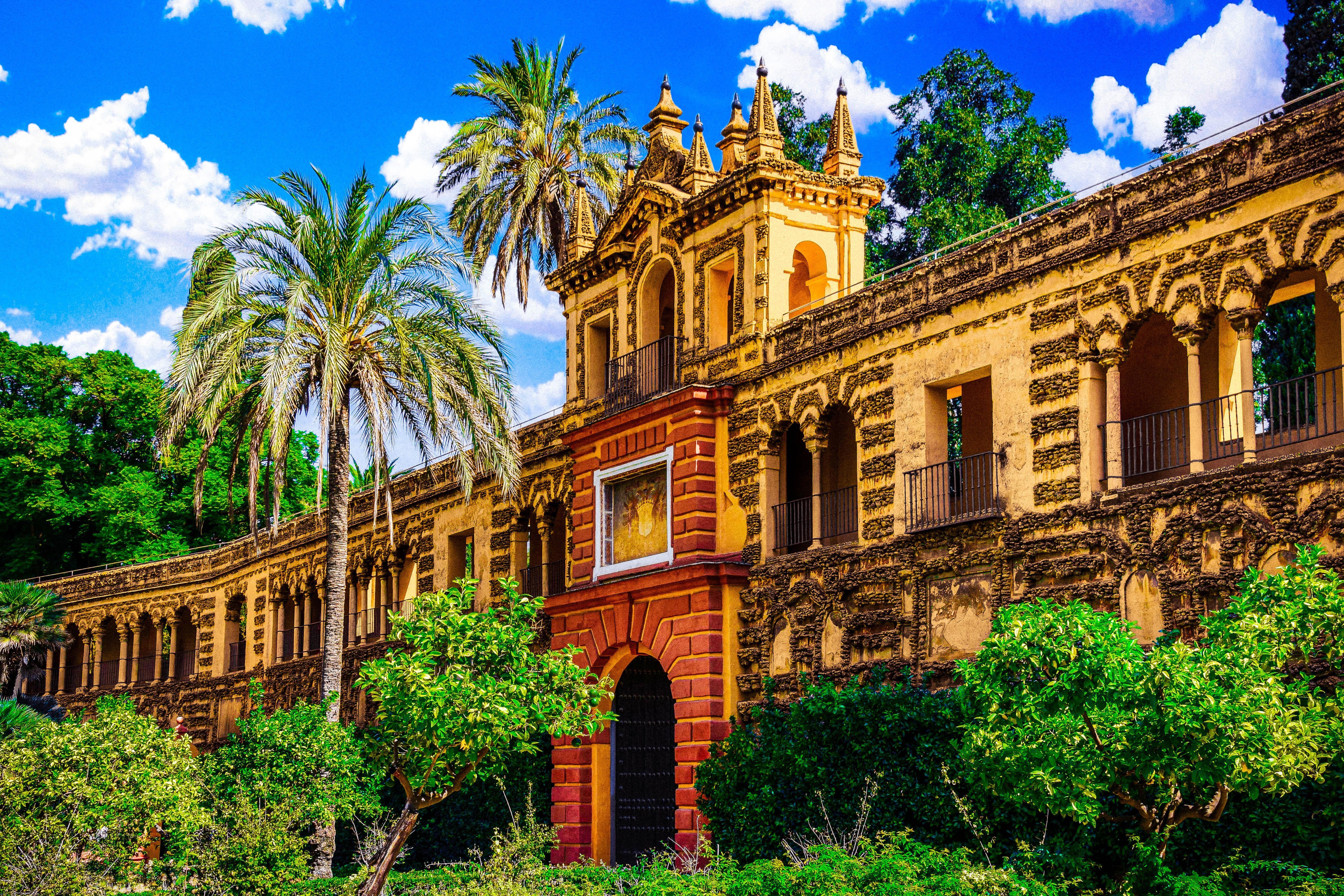
Walk through the Jardín del Príncipe, Jardín de las Damas, and the Galería de Grutesco

5

Patio de Banderas exit

Final courtyard leading back toward the Cathedral and Plaza del Triunfo

What you'll see

Highlights not to miss

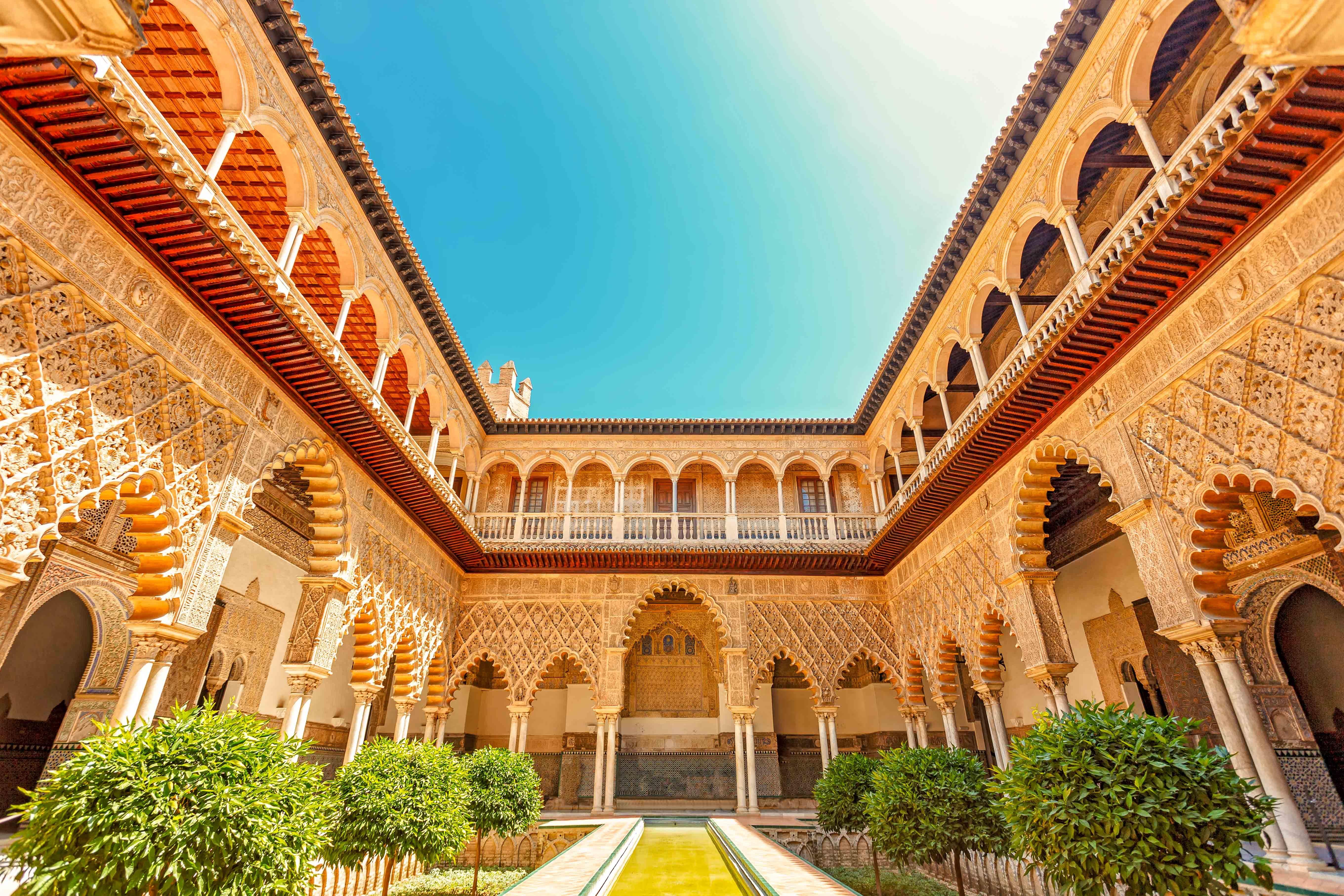
Patio de las Doncellas

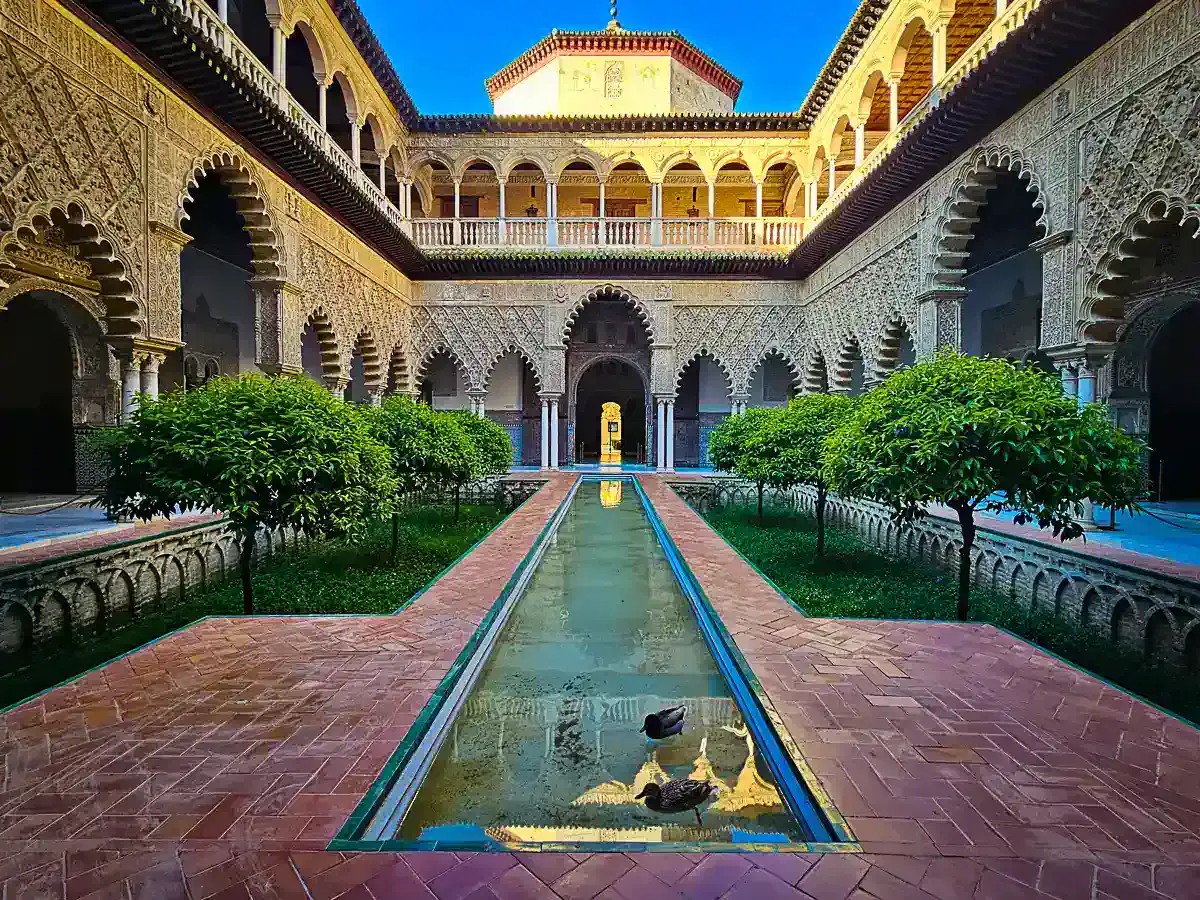
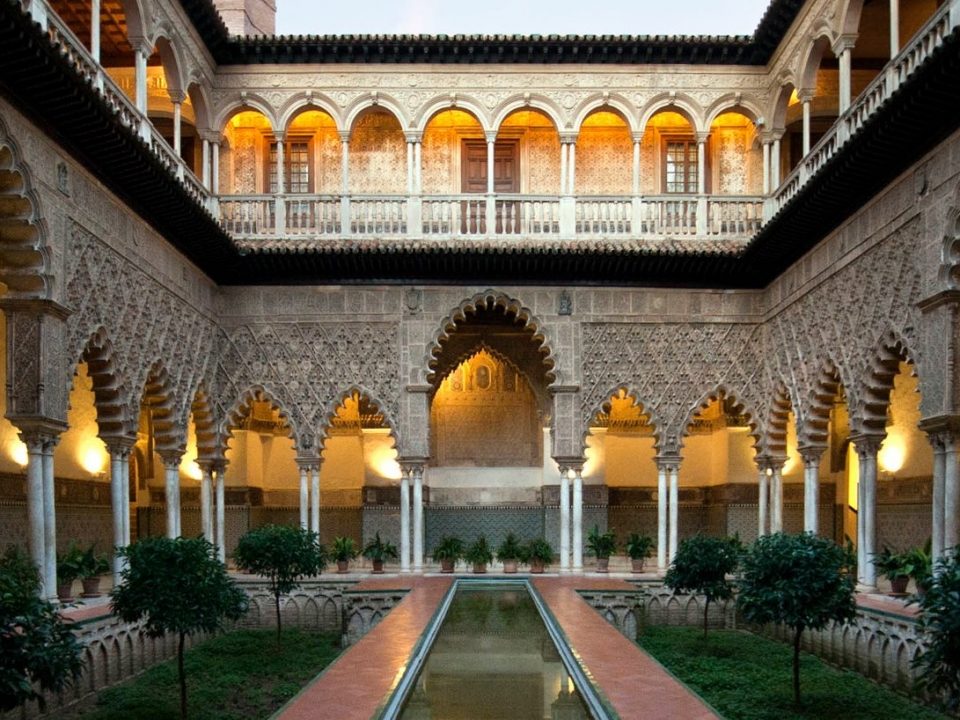
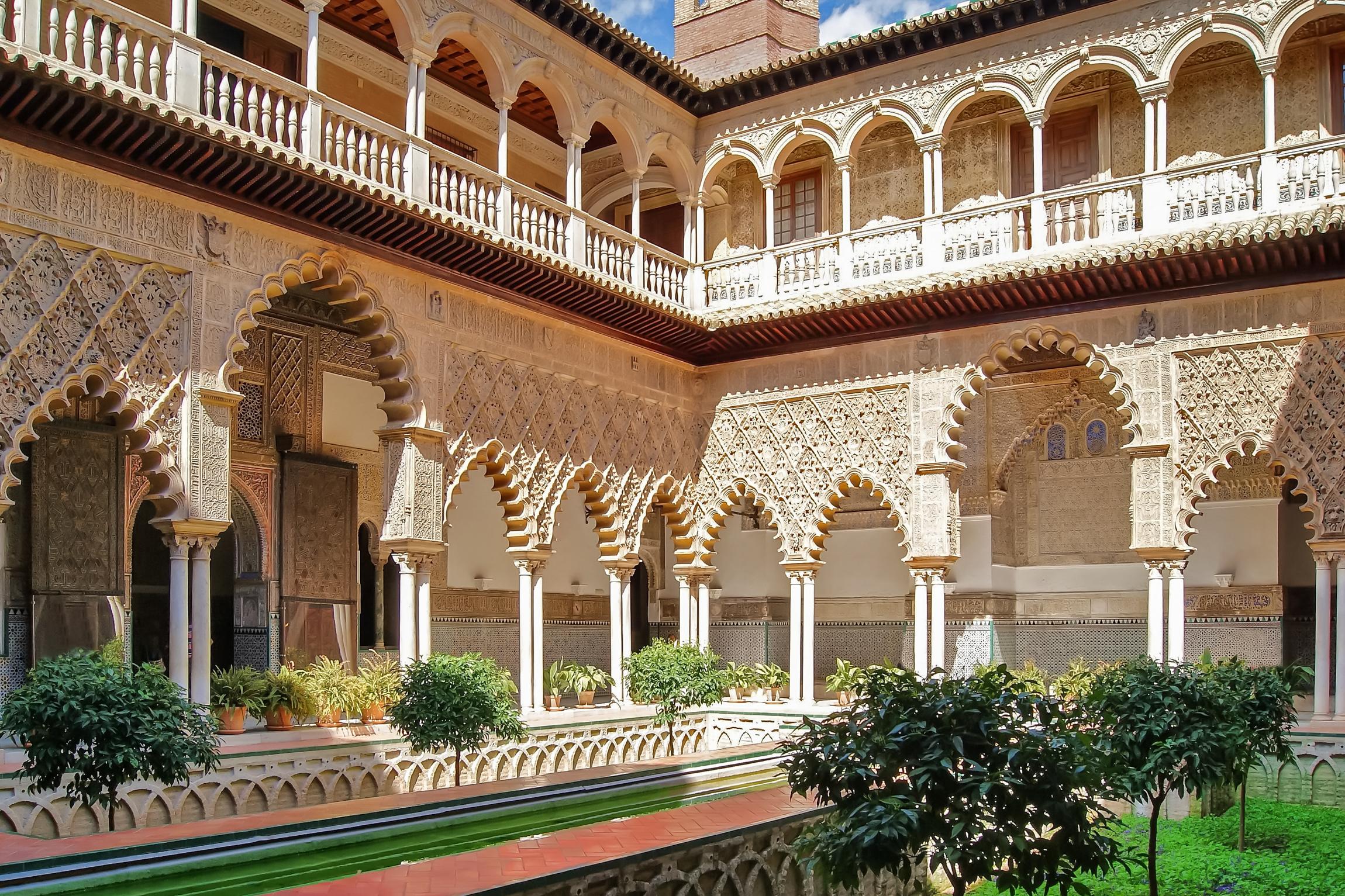
This sunken rectangular courtyard at the heart of the Palacio de Pedro I features a long reflecting pool flanked by sunken gardens, restored in the 2000s after centuries buried beneath a raised marble floor. Its double-tier arcade mixes 14th-century Mudéjar plasterwork below with a 16th-century Renaissance gallery added above.

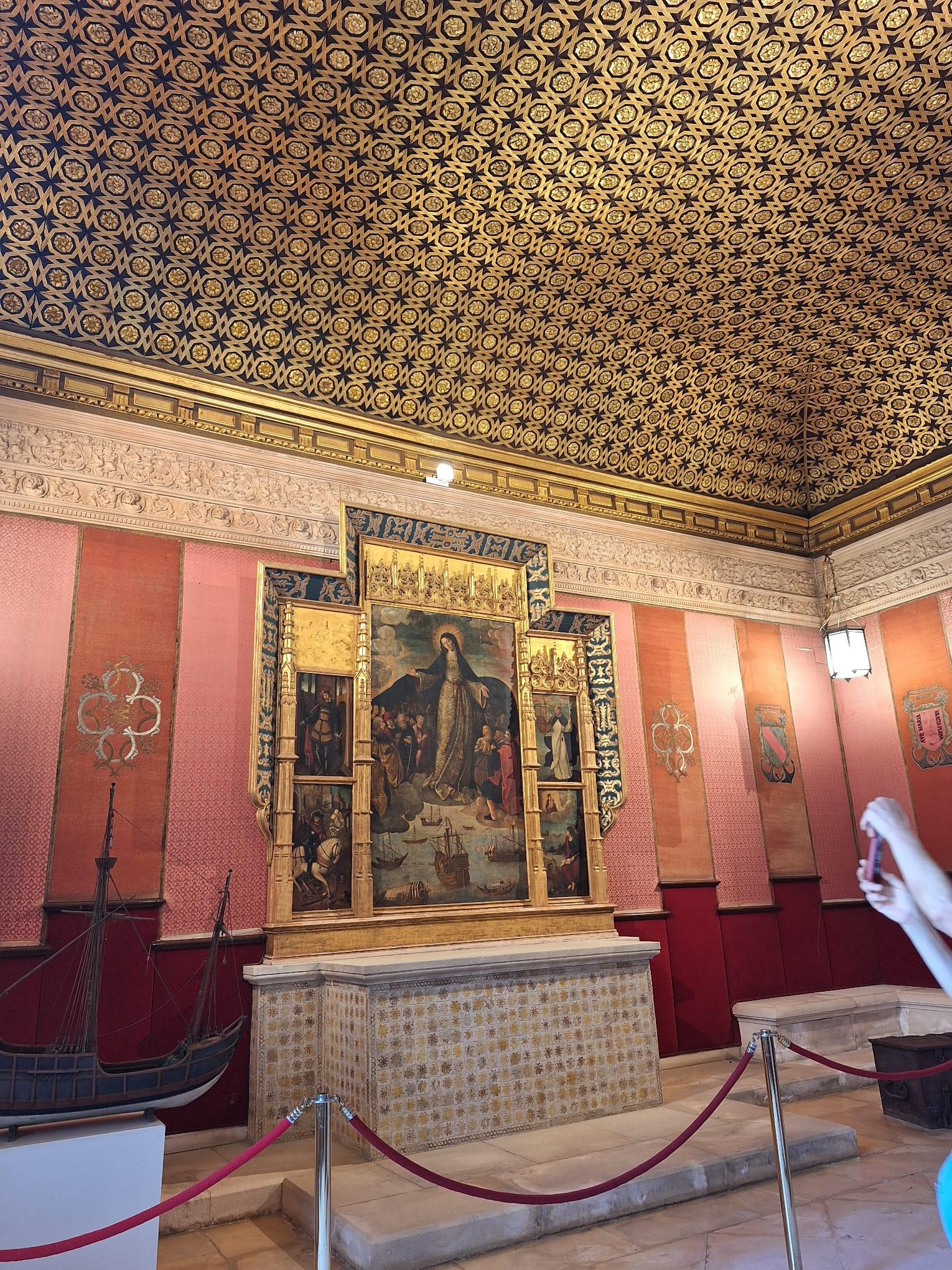
Salón de Embajadores

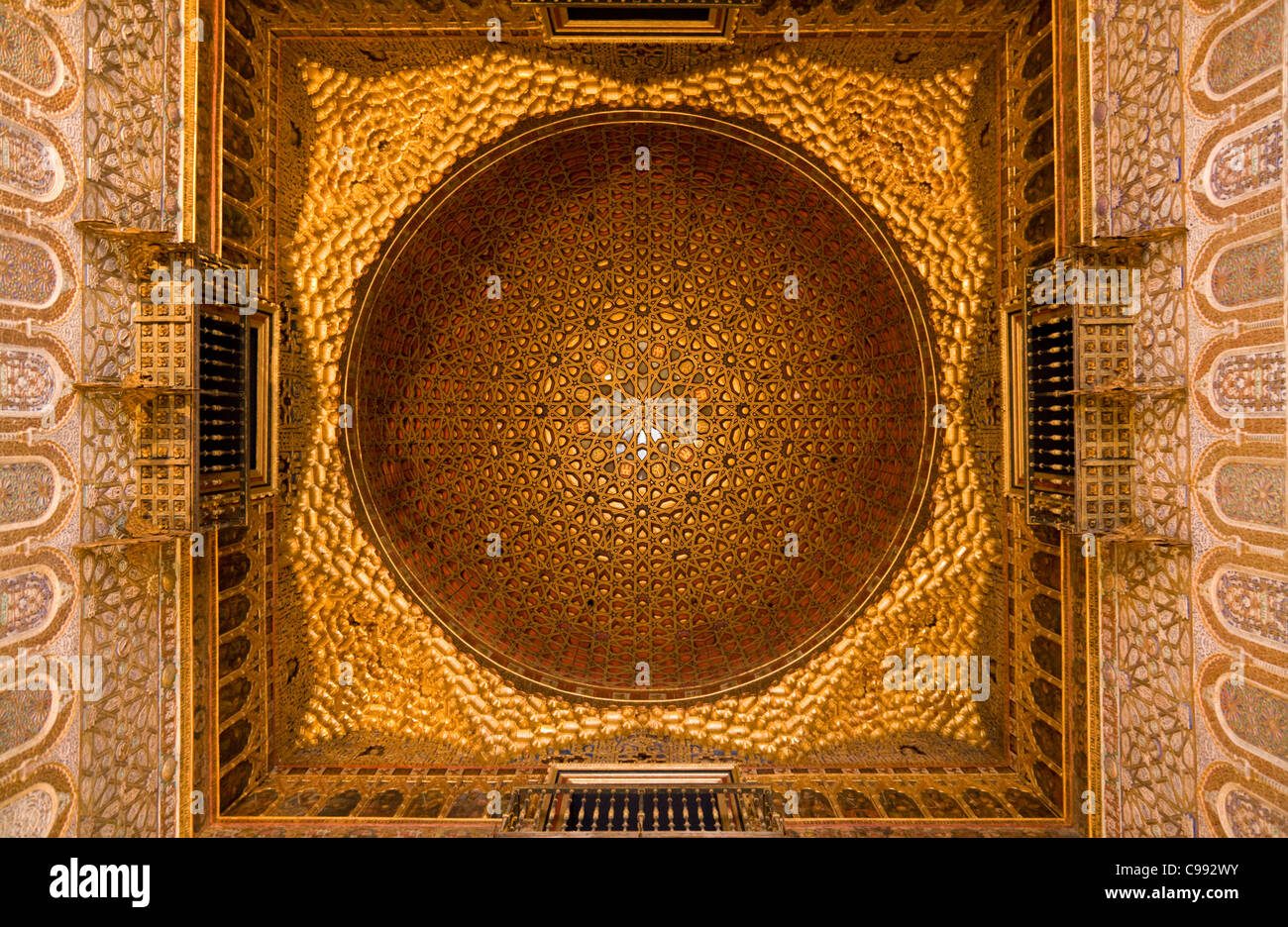
The Hall of Ambassadors is capped by a wooden dome of over 8,000 individual gilded pieces representing the cosmos, completed around 1420. Horseshoe arches and glazed tilework line walls that once received Christopher Columbus after his return from the Americas.

Patio de la Montería

The first courtyard visitors reach after the Puerta del León entrance, its name recalls the hunting parties (monteros) that once assembled here before royal hunts. The Mudéjar facade of the Palacio de Pedro I, completed in 1364, forms its principal backdrop.

Gardens of the Alcázar

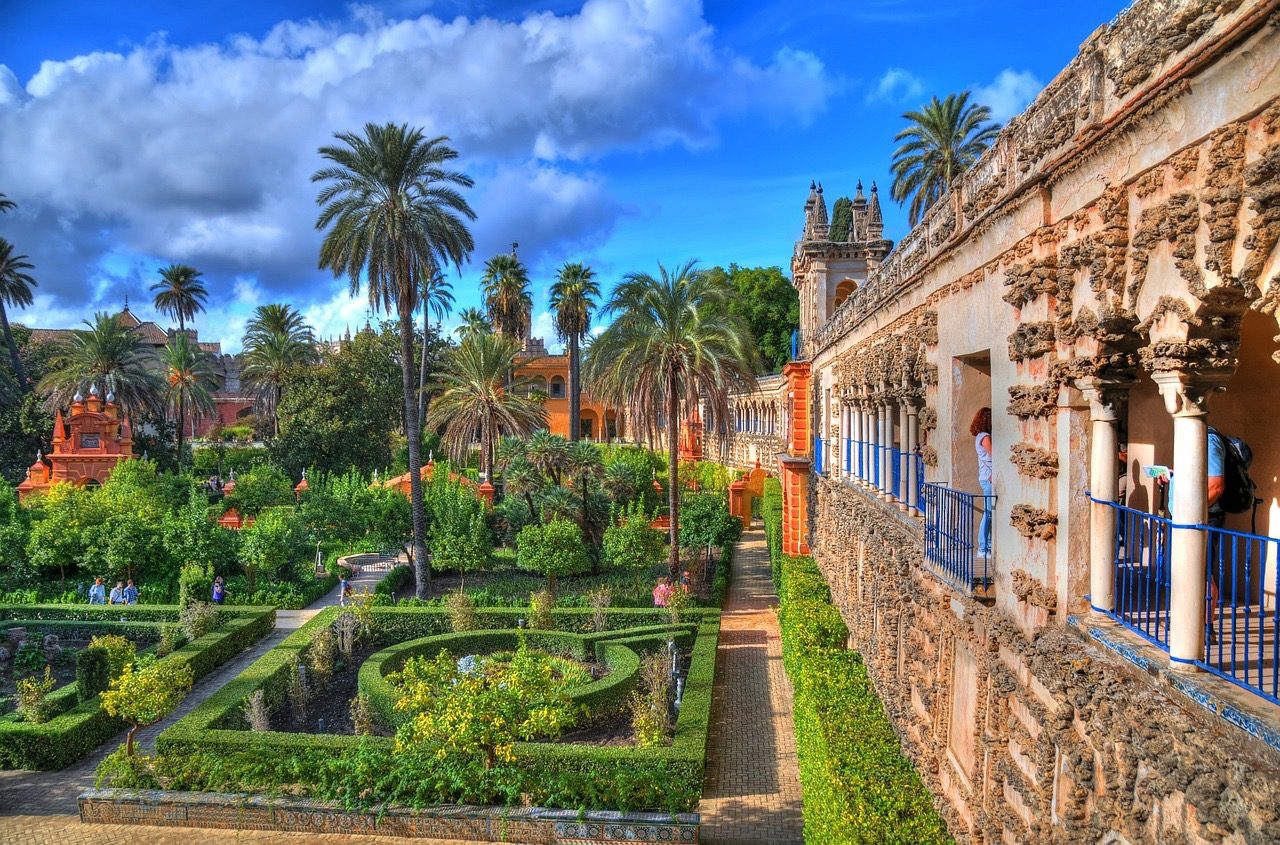
Spanning roughly 7 hectares, the gardens layer Moorish, Renaissance, and Romantic-era design across more than twenty distinct sections, including the Jardín del Príncipe and Jardín de las Damas. Peacocks roam freely among fountains and clipped hedges that took shape over nearly a millennium of continuous modification.

Baths of Lady María de Padilla

Named after Pedro I's mistress, these vaulted underground rainwater cisterns once supplied the palace gardens and now form a cool, arched water feature open to visitors. Local legend holds that courtiers drank from the cistern water to prove their devotion to María.

Gothic Palace

Built after Fernando III's 1248 conquest of the city, this section preserves 13th-century Christian architecture alongside a chapel and hall of tapestries depicting Carlos V's 1535 Tunis campaign. Its vaulted ceilings contrast sharply with the Islamic-influenced stucco of the adjoining Mudéjar palace.

The experience

What the visit is really like

You enter through the Puerta del León, the red gate on the Patio de Banderas, and the noise of the street falls away almost at once. Your guide gathers you in the Patio de la Montería, points up at the crenellated brick, and sets the sequence: fortress first, then palace, then gardens. You pass into the Palacio de Don Pedro and stop at the Patio de las Doncellas, where the reflecting pool doubles the arcade above it. You lean in to read the carved plaster, and a good real alcazar private guide tour slows here, letting you find the Arabic script threaded through the stucco. You climb briefly, then descend into the Salón de Embajadores and tip your head back at the gilded dome. You move outward. You cross the Patio del Crucero, then step down into the cool, echoing Baths of María de Padilla, where still water holds the arches upside down. You emerge blinking into the gardens, walk the myrtle-lined terraces, and pause beside a fountain to feel the temperature drop under the orange trees. You finish near the Galería del Grutesco, looking back across the whole complex. Two hours have passed and you have crossed roughly a thousand years without hurrying. You step back out onto the Patio de Banderas with the plan of the place fixed in your head, ready to wander the courtyards again on your own.

Everything You Need to Know

Your complete experience guide

All the details about your upcoming adventure in one place

Real Alcázar Private Guide Essentials

A real alcazar private guide leads you through the Mudéjar palace, the Patio de las Doncellas, and the Ambassadors' Hall, decoding centuries of Almohad and Christian craftsmanship as you go. These real alcazar private guide tours pair a licensed expert with reserved entry, so you spend your time on the tilework and gardens rather than the queue. Book early for summer 2026, when Seville's UNESCO World Heritage palace draws its heaviest crowds.

The Real Alcázar is still a working royal residence, making it the oldest palace in Europe in continuous use by a ruling family. When Spain's monarchs visit Sevilla, they stay in its upper apartments, above rooms carved and tiled more than six centuries ago. The complex grew across successive dynasties rather than a single reign. Abbadid and Almohad rulers raised the earliest fortifications on the site in the tenth and twelfth centuries; after the Christian conquest, King Pedro I commissioned the Palacio de Don Pedro in the 1360s, importing craftsmen from Toledo and Granada. The result is Mudéjar architecture at its most eloquent — Islamic form built for a Castilian court, its plaster carved with Arabic inscriptions praising a Christian king. A well-briefed real alcazar private guide can read those walls aloud, tracing the layered authorship that makes the building difficult to date at a glance. What distinguishes the site among Sevilla landmarks is this refusal to belong to one era. The Patio de las Doncellas centres on a long reflecting pool flanked by sunken gardens, its arcade a lattice of interlaced arches. The Salón de Embajadores rises to a gilded cedar dome, a half-orange of geometry that visitors crane to photograph. Beyond the palace walls, the gardens spread across terraces of orange trees, myrtle hedges and hydraulic fountains fed by Almohad-era cisterns. The Baths of María de Padilla, a vaulted rainwater tank beneath the Patio del Crucero, hold still water that mirrors its brick arches. The Alcázar earned UNESCO World Heritage inscription in 1987, listed jointly with the neighbouring Cathedral and the Archivo de Indias. Its recent fame owes something to screen: the Kingdom of Dorne in a well-known fantasy series was filmed among these courtyards, drawing a generation of visitors who arrive already half-familiar with the arcades. A visita guiada Real Alcázar untangles fact from fiction, and the best real alcazar private guide tours pace the rooms so the tilework and the timelines both register. Today the palace absorbs thousands of visitors daily without surrendering its intimacy, largely because its plan folds inward — courtyard opening onto courtyard, each shaded and self-contained. The azulejo tiles, the coffered artesonado ceilings, the Renaissance grotesque frescoes added under Charles V: each surface rewards a slow eye. The building does not announce its significance from the street. It waits behind the crenellated Puerta del León, and it reveals itself only in sequence, room by carved room, to those who step inside.

Islamic form built for a Castilian court, its plaster carved with Arabic inscriptions praising a Christian king.

Dress code

There is no formal dress code for visiting the Real Alcázar, but comfortable walking shoes are essential given the uneven stone courtyards and garden paths. Light, breathable clothing is recommended in summer since much of the route is outdoors and unshaded, especially through the gardens.

Bags & security

All visitors pass through an airport-style security check with bag scanning at the Puerta del León entrance before entering the Real Alcázar grounds. Small backpacks and handbags are permitted, but large suitcases, wheeled luggage, and oversized bags are not allowed inside and cannot be stored on site.

Photography

Personal photography and video without flash are permitted throughout most of the palace rooms, courtyards, and gardens. Tripods, monopods, selfie sticks, and commercial or professional shoots require prior written authorization from the Real Alcázar administration.

Families & strollers

Children of all ages are welcome, and prams can navigate most of the ground-floor route and gardens without difficulty. Strollers may need to be folded briefly in a few narrow archways between courtyards.

Accessibility

The Patio de Banderas entrance, gardens, and most ground-floor rooms of the Palacio de Pedro I are accessible via ramps for wheelchair and pushchair users, though some original doorways and thresholds remain narrow. The Cuarto Real Alto (Upper Royal Rooms), reachable only by a staircase on a separate guided tour, is not wheelchair accessible.

Food & drink

Eating and drinking are not permitted inside the palace rooms, though visitors may carry a sealed water bottle throughout the visit, including in the gardens. There is a small on-site café near the garden area where food may be purchased and consumed.

Not allowed

× Large suitcases × Wheeled luggage × Tripods without authorization × Selfie sticks in interior rooms × Drones × Glass containers × Sharp objects × Weapons of any kind × Flammable liquids × Aerosol cans × Umbrellas with pointed tips (in crowded rooms) × Skateboards or scooters × Professional lighting equipment

What to bring

✓ Valid ID or passport ✓ Printed or digital ticket confirmation ✓ Sealed water bottle ✓ Sun hat ✓ Comfortable walking shoes ✓ Sunscreen ✓ Small day bag ✓ Portable phone charger

Opening hours

Mon 09:30 – 19:00

Quiet before 10:30

Tue 09:30 – 19:00
Wed 09:30 – 19:00
Thu 09:30 – 19:00
Fri 09:30 – 19:00

Busier, weekend arrivals

Sat 09:30 – 19:00

Heaviest crowds

Sun 09:30 – 19:00

Group tours common midday

Closures & exceptions

  • ·Jan 1 — New Year's Day
  • ·Jan 6 — Epiphany
  • ·Good Friday — Holy Week closure
  • ·Dec 25 — Christmas Day

At a glance

Hours

Daily 09:30–19:00, seven days a week

Address

Patio de Banderas, s/n, 41004 Sevilla, Spain

Access

Ground-floor palace rooms and gardens are step-free; upper floors are guided-tour only

Best arrival

09:30–11:00 for cooler temperatures and smaller crowds

Bag policy

Small bags and daypacks allowed; large suitcases must be left behind

Getting there

Public transport · 10-20 min · Tram/metro ticket around 1.35 EUR

Take Tram line T1 to the Archivo de Indias stop, a 2-3 minute walk to the entrance, or Metro line 1 to Puerta de Jerez.

Walk · 5-15 min · Free

From the Santa Cruz district or city center near the Cathedral, the palace is reachable on foot along Avenida de la Constitución.

Taxi · 10-15 min from center · Approx. 6-10 EUR

Ask to be dropped at Puerta de Jerez or Plaza del Triunfo, close to the Puerta del León entrance.

Car · Varies · Approx. 2-3 EUR/hour

Street parking in the historic core is scarce; underground garages near Puerta de Jerez are the practical option.

Cancellation policy

Tickets booked for a real alcazar private guide visit can generally be cancelled or rescheduled free of charge up to 24-48 hours before the reserved time slot, depending on the provider; after that window the 15.5 EUR general admission fee is typically non-refundable. Always check the specific cancellation terms shown at checkout before completing payment.

Plan your time

How long do you need?

Recommended time

2-3 hours

Budget 2-3 hours to cover the palace rooms and gardens without feeling rushed, closer to 3 if you want to linger in the Patio de las Doncellas or wander the full grounds. Arriving in the 09:30-11:00 window buys you the calmest rooms of the day, since crowds build steadily from mid-morning as tour groups and later-entry visitors converge on the same bottleneck corridors. A real alcazar private guide can read those pinch points in real time, rerouting you through the Mudéjar halls a few minutes ahead of the crush rather than queuing behind it. Skip the line thinking still matters here: a fixed ticket time reduces gate waits, but it's pacing through the interior, not the entrance, that decides whether your visit feels unhurried or rushed.

Crowd levels through the day

Gate opening Light
Mid-morning Moderate
Late morning Heavy
Early afternoon Peak
Mid-afternoon Heavy
Late afternoon Light
Plan ahead

When to go — year at a glance

Weather · crowds · average price — dots go green to amber to red as each metric rises.

Spring

March through May brings mild temperatures around 20-25°C and blooming gardens, though this coincides with Semana Santa and Feria de Abril crowds.

Summer

June through August sees temperatures regularly above 35°C by midday, making early morning or the last hour before closing the most bearable window.

Autumn

September and October offer cooler air near 22-27°C with thinner crowds than spring, making it a favored season for garden visits.

Winter

November through February is the quietest season with daytime highs around 15-18°C and occasional rain, ideal for unhurried exploration.

Insider tips

Helpful tips for your visit

Book timed-entry tickets ahead

Online booking through the official site secures a fixed entry slot and avoids long ticket-office queues in peak season.

Watch for free entry hours

Sevilla residents and some EU-linked concessions get discounted or free access during specific windows; check the official site before planning around this.

Pair the Upper Royal Rooms separately

The Cuarto Real Alto requires its own reserved slot and sells out independently of general admission.

Mind the heat

Summer interior courtyards trap heat, so carrying water and pausing in shaded galleries helps during a midday real alcazar private guide tour.

Use the Puerta del León entrance

This is the only visitor entrance, located on Plaza del Triunfo directly opposite the Cathedral.

Combine with the Cathedral same day

Both sites sit on the same plaza, making a single-day combined itinerary efficient for walking.

Check holiday closures ahead

The palace closes on Jan 1, Jan 6, Good Friday, and Dec 25, so confirm dates before finalizing any real alcazar private guide tours around holidays.

Where to meet

Meeting points

Puerta del León

Plaza del Triunfo, 41004 Sevilla, Spain

Main visitor entrance, opposite the Cathedral

Get directions

Patio de Banderas

Patio de Banderas, s/n, 41004 Sevilla, Spain

Ticket office and exit courtyard

Get directions
The story

The history behind the site

The Real Alcázar rises on foundations laid in 913, when the Umayyad emir Abd al-Rahman III ordered a fortress on the Guadalquivir's bank. The early enclosure guarded Seville's river trade. By the 11th century the Abbadid rulers expanded it. The Almohads, arriving in the 12th century, added the Patio del Yeso around 1170 and the walls that still frame the Patio de Banderas. A thoughtful real alcazar private guide begins the story here, in raw brick and rammed earth, long before the tilework visitors picture. The defining chapter opens in 1364. Pedro I of Castile, called the Cruel, commissioned the Palacio Mudéjar, completed by 1366. He imported craftsmen from Granada and Toledo. The result fused Christian patronage with Islamic ornament: the Patio de las Doncellas, plaster sebka, and Arabic inscriptions praising a Catholic king. This Mudéjar synthesis remains the core of any Seville Alcázar tour, and the LSI threads run deep — Almohad masonry, azulejo tilework, the coffered artesonado ceilings, and the carved cedar of the Salón de Embajadores. Renaissance rulers kept building. Charles V married Isabella of Portugal in the Alcázar in 1526 and added the vaulted apartments and gardens that bear his name. The Casa de Contratación, founded in 1503, ran Spain's transatlantic trade from these rooms; Amerigo Vespucci and Magellan passed through. A skip-the-line Alcázar visit today crosses centuries in a single courtyard. The palace never became a museum piece. It endured the 1755 Lisbon earthquake, survived neglect, and remains the oldest royal residence in Europe still in use — the Spanish monarch occupies the upper floors when in Seville. In 1987 UNESCO inscribed it as World Heritage. Since 2014 the Patio de las Doncellas and the Baños de Doña María de Padilla have drawn crowds as the Water Gardens of Dorne in Game of Thrones, and demand for real alcazar private guide tours climbed sharply afterward. Booking real alcazar private guide tickets in advance became the norm. Visitors weighing real alcazar private guide tour options among Seville landmarks find the layered history rewards slow attention. Nearly eleven centuries stand in one enclosure, from Abd al-Rahman's fort to a living court.

913

Abd al-Rahman III orders the first fortress on the Guadalquivir's bank.

c.1170

The Almohads build the Patio del Yeso and surrounding walls.

1364–66

Pedro I builds the Palacio Mudéjar with Granadan and Toledan craftsmen.

1503

The Casa de Contratación is founded to govern transatlantic trade.

1526

Charles V marries Isabella of Portugal and adds Renaissance apartments.

1987

UNESCO inscribes the Alcázar as a World Heritage Site.

2014

Filming as Dorne's Water Gardens begins for Game of Thrones.

Photo spots

Best photo spots

Patio de las Doncellas

Best light · Early morning before 10:00

The rectangular reflecting pool doubles the sunken garden and the double-height Mudejar arcade above it, so kneel at the pool's edge on the long side for a full mirror shot. Booking through a real alcazar private guide tour often means entering right at opening, before the pool's surface fills with footprints of other visitors. The plasterwork panels flanking the arches reward a slower, wider frame.

Salon de Embajadores Dome

Best light · Anytime, artificial light

Stand at room center and tilt straight up to frame the gilded cedar cupola, whose star-shaped octagram pattern radiates outward above King Pedro I's former throne room. A wide or fisheye lens captures the full circle without cropping the points.

Patio de las Muñecas

Best light · Midday for even light

This small courtyard of marble columns and carved arches hides tiny carved faces near the arch springers, a detail worth a close-up alongside the wider symmetrical shot from the doorway. The upper gallery, added in a 19th-century remodel, frames the lower arcade nicely from a slight downward angle.

Mercury Pond

Best light · Golden hour

The rectangular pool named for its central bronze statue sits at the foot of the Galería del Grutesco wall, giving a clean long shot of the gallery reflected in still water. Shoot from the garden path opposite the gallery for the classic symmetrical composition.

Galería del Grutesco

Best light · Late afternoon

This 160-meter former Almohad wall was reworked into a raised gallery with rough grotto-style stonework, and the upper walkway is open to visitors for panoramic views over the gardens and pond below. Climb the stairs at either end and shoot along the arched openings for a layered garden-and-wall composition.

Gallery

Moments from the experience

With kids

Visiting with kids

A real alcazar private guide for visiting with kids means shorter dwell times in the crowded Mudéjar rooms and more freedom to let children run in the gardens once inside. Families do fine here, but the mix of steps, narrow doorways, and dense palace interiors rewards a plan that leans on open-air spaces.

Strollers

Patios and gardens roll fine, but several palace thresholds and the raised passage to the Cuarto Real Alto have steps a foldable stroller handles better than a full-size one. A baby carrier is worth packing as a backup for the tightest doorways.

Best ages

Kids around 5 and up tend to engage the longest, since the peacocks in the gardens and the maze-like patios give them something to chase between rooms. Toddlers can manage the outdoor sections but get restless in the ornate interior halls.

Facilities

Toilets with baby-change stations sit near the Puerta del León entrance and again in the gardens, so plan bathroom breaks around those two points rather than mid-palace. A private sevilla alcazar tour with a guide can time the route so a facilities stop lands naturally between sections.

Pacing

A guide who knows the layout can move a family through the Salones and Patio de las Doncellas quickly, then let kids decompress in the gardens for as long as they need. This front-loads the indoor structure and saves open-air time for when attention spans run out.

Keeping kids engaged

The Patio de las Muñecas' tiny carved faces and the garden mazes give children a scavenger-hunt feel, and peacocks roam freely enough to hold their interest. Framing rooms around a simple game, like spotting horseshoe arches, keeps younger visitors moving forward instead of stalling.

Food & drink

Where to eat nearby

There are no restaurants inside the monument itself, so the working plan for a real alcazar private guide visit is: a quick garden-café break mid-tour, then a proper meal just outside in Barrio Santa Cruz or around Patio de Banderas.

Real Alcázar Cafeteria

Café inside the gardens

Tucked in the English Garden with peacocks wandering nearby; good for a coffee, cold drink, or slice of carrot cake if a longer palace and gardens visit runs past two hours. Service is self-service and can be slow, so it suits a short pause rather than a sit-down lunch.

Bodega Santa Cruz Las Columnas

€€

Tapas bar — 3 min walk

A Patio de Banderas-area classic for cod and pork in whiskey sauce, popular with visitors heading straight from the palace gates. It fills up fast at lunchtime, so arrive just before or after the midday rush.

La Sacristía

€€

Tapas bar — 5 min walk

On Calle Mateos Gago, Seville's dense tapas strip near the Cathedral, known for oxtail stew and solomillo al whiskey at fair prices. English menus and generous portions make it an easy stop before or after Real Alcázar private guide tours.

Bar Catedral

€€

Tapas bar — 5 min walk

A Mateos Gago staple since 2013, popular for patatas bravas and sangria with Giralda views from outside tables. Best for a relaxed pre-visit breakfast or a late lunch once tour groups thin out.

Taberna Alvaro Peregil

Historic wine tavern — 5 min walk

Family-run since 1850, this no-frills tavern is known for its sweet orange wine and simple traditional tapas. It gets packed with locals and tourists alike, so it works best for a quick glass and a bite rather than a full sit-down meal.

Customer Reviews

What travelers say

Real experiences from real travelers

4.5
Based on undefined reviews
1 ★ 610
2 ★ 540
3 ★ 1150
4 ★ 3400
5 ★ 15200
M
Marta R.
Spain · 2026-06-18

Worth the private option

We booked a real alcazar private guide for a Tuesday morning and having someone explain the layered Mudéjar and Almohad history made the arches and tilework click. The Patio de las Doncellas was quiet before the tour groups arrived, and the plasterwork detail is finer up close than any photo suggests.

J
James P.
United States · 2026-05-27

Cool refuge from the heat

Sevilla in late May was already hot, so ducking into the shaded arcades and the Salón de Embajadores felt like relief. Our guide knew exactly which courtyards catch the best light and paced us slowly through the palacio mudéjar.

L
Lena K.
Germany · 2026-04-11

Rich detail, book ahead

The gardens went on far longer than I expected, with peacocks wandering near the Galería de Grutescos. A real alcazar private guide tour is the way to understand the Christian and Islamic layers, though our slot started fifteen minutes late.

H
Hiroshi T.
Japan · 2026-07-09

Early slot recommended

We arrived for a 9:30 entry and the low summer sun through the Ambassadors' dome was something to see. The gilded muqarnas ceiling and the azulejo benches were the highlights of this Seville Alcázar tour for me.

C
Camila S.
Brazil · 2026-03-22

History that stays with you

Standing in the Patio de la Montería while our guide sketched the timeline of the palace made the whole visit coherent. Real alcazar private guide tickets were easy to arrange and meant we skipped the long ticket queue entirely.

O
Oliver M.
United Kingdom · 2026-02-14

Winter light, empty courts

Mid-February meant cool air and hardly any crowds, so the reflecting pool in the main patio was glassy and still. A knowledgeable guide turned what could have been a wander into a proper narrative of Seville landmarks.

S
Sofia A.
Italy · 2025-11-08

Gardens stole the show

The palace interiors are ornate, but the gardens under autumn light with orange trees fruiting were my favourite part. The real alcazar private guide tours cover a lot of ground, so wear comfortable shoes.

D
David N.
Canada · 2025-09-16

Filming spots and stucco

Our guide pointed out where the Water Gardens were filmed for a well-known series, then walked us through the carved cedar ceilings. The skip-the-line Real Alcázar access saved us a hot afternoon standing outside.

A
Amelia F.
Australia · 2025-06-30

Layers upon layers

Seeing the Almohad walls give way to Pedro I's Mudéjar palace in one continuous route was fascinating. Booking a real alcazar private guide meant we could linger in the Salón de Embajadores without being rushed along.

T
Thomas B.
France · 2025-04-03

Good but busy midday

We went early afternoon in spring and the courtyards were packed, which made hearing our guide harder in spots. The tilework and the sunken gardens were still remarkable, just aim for an earlier entry than we did.

FAQ

Frequently asked questions

Everything you need to know for your journey

Around the corner

Nearby landmarks worth a detour

Seville Cathedral

2 min

church

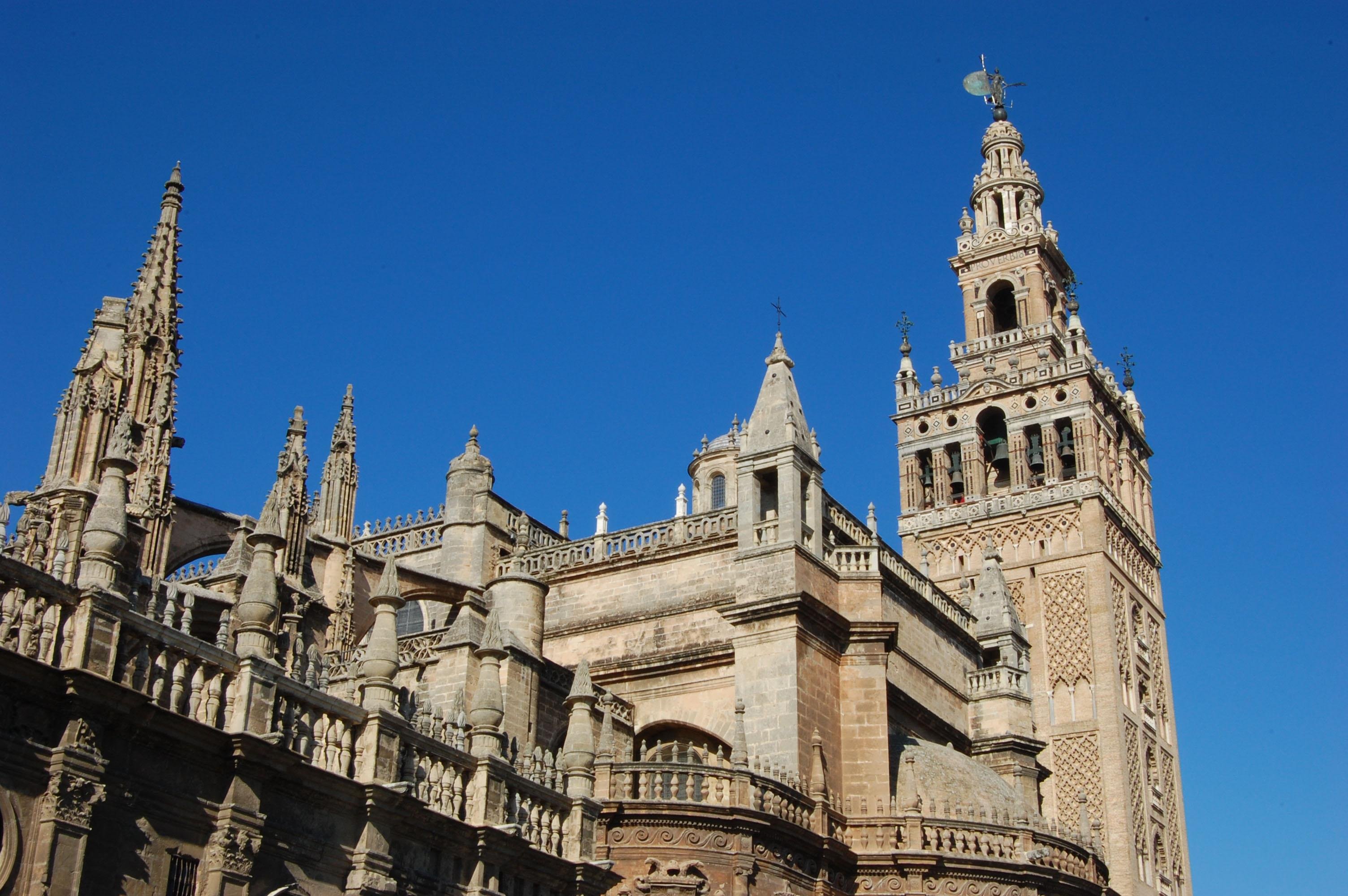
The world's largest Gothic cathedral, adjoining the palace grounds, holds Christopher Columbus's tomb and the Giralda bell tower.

Giralda Tower

3 min

landmark

Originally a 12th-century Almohad minaret, the tower's ramps rather than stairs lead to panoramic city views.

Archivo General de Indias

2 min

museum

This Renaissance building holds colonial-era documents and maps and forms part of the same UNESCO listing as the palace and cathedral.

Barrio Santa Cruz

5 min

square

The former Jewish quarter's narrow whitewashed lanes and small plazas sit immediately behind the palace walls.

Jardines de Murillo

5 min

park

Public gardens laid out in the early 20th century along the former palace orchard walls.

Torre del Oro

12 min

landmark

A 13th-century riverside watchtower built to control access along the Guadalquivir.

Where to stay

Where to stay nearby

Hotel Alfonso XIII

5 min

luxury

A 1920s historic hotel a short walk from the palace, built for the Ibero-American Exposition.

Santa Cruz district

2-8 min

district

Boutique guesthouses line the winding streets of the old Jewish quarter around the palace.

EME Catedral Hotel

3 min

boutique

A rooftop-terrace hotel facing the Cathedral and Giralda tower.

Casco Antiguo mid-range hotels

5-10 min

mid-range

Numerous mid-range hotels cluster in the historic center within walking distance of the palace.

Ready for Adventure?

Join thousands of happy travelers who have discovered this incredible experience

Book Your Experience Now